
Lieferung heute & morgen

Qualitätsgarantie

Willkommens-Angebote freischalten: KOSTENLOSE Lieferung | Bis zu 80 % RABATT | Kostenlose 30-Tage-JoyPlus-Testphase
App herunterladen
As a Joybuy Product Recommendation Officer, I see every day how easy it is to be misled when choosing solar lights for your garden. The market is flooded with products that overpromise and underdeliver. So, before you invest in atmospheric garden lighting, let's shine a light on the three most common pitfalls that lead to disappointment and wasted money.
To make an informed decision that suits your garden and local weather conditions, you should carefully examine three key technical features.
The IP (Ingress Protection) rating is an international standard that indicates how well an electrical device is protected against the intrusion of foreign objects (first digit) and water (second digit).
The efficiency of your solar garden lighting depends directly on the quality of the solar panel and the capacity of the battery.
Not every LED solar light serves the same purpose. The lumen and Kelvin ratings tell you what a light is suitable for.
Based on these objective criteria, we have identified a few products well-suited for specific needs.
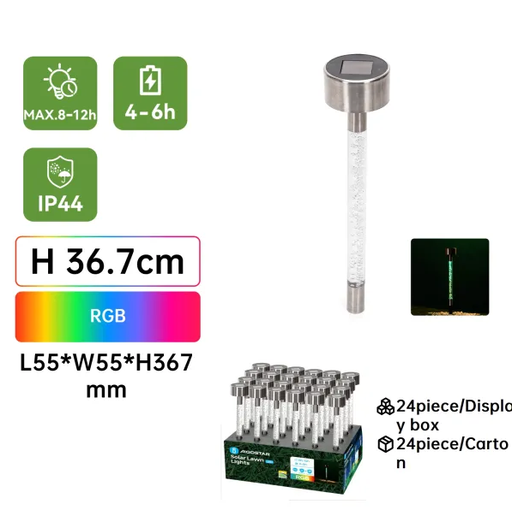
Why This Fits Their Persona: Ideal for renters with balconies or garden owners who want to effortlessly add colourful accents to flowerbeds or along patios. The simple ground-stake installation and automatic colour-changing feature make them a hassle-free decorative solution.
This product is clearly positioned as decorative mood lighting (RGB, 0.006W). It doesn't create false expectations of high brightness, thus avoiding the lumen trap.
Automatic RGB colour-changing for dynamic effects. The installation requires no tools. Its amorphous solar panel charges even in less-than-optimal light conditions.
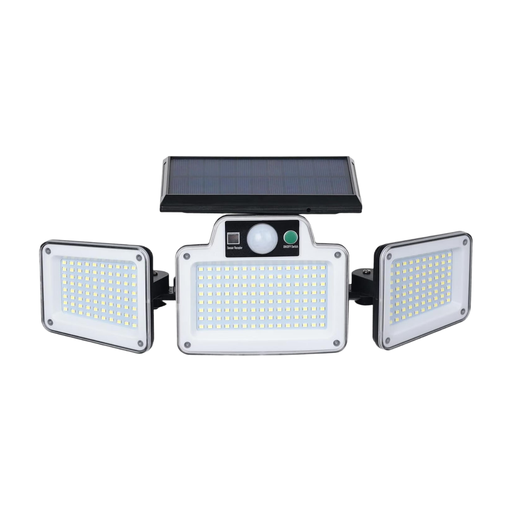
Why This Fits Their Persona: Perfect for homeowners looking to secure a driveway, garage, or dark corners of their property. The high brightness from 280 LEDs, combined with the motion sensor, provides on-demand security while conserving battery life.
With an IP65 rating, this light is explicitly designed for heavy rain, sidestepping the pitfall of inadequate weather resistance. The three operating modes allow for use adapted to the season, avoiding the disappointment of short runtimes.
A separate solar panel with a long cable allows for optimal sun exposure. Three adjustable light heads provide flexible illumination. The 2400mAh battery offers solid capacity for security applications.
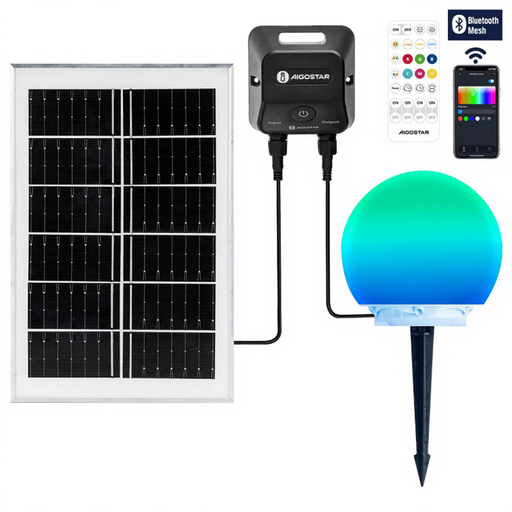
Why This Fits Their Persona: For tech and design enthusiasts who want to control their outdoor space via smartphone and create custom lighting scenes. The ability to adjust colours (RGBCCT) and brightness allows for a perfect match for any mood or occasion.
This model escapes the runtime trap by combining a high-efficiency monocrystalline solar panel with a powerful 4000mAh lithium battery. This ensures reliable performance even in less-than-ideal lighting conditions.
Full control over colour and brightness via the Bluetooth-Mesh app. The IP65 certification ensures durability. The separate panel allows for flexible, sun-optimised placement.
We have compiled a complete, real-time updated list of products that fully meet these strict selection criteria and all relevant safety standards.
1. How long do solar garden lights really last? The lifespan of a solar light depends on several components. The LEDs themselves often have a rated lifespan of 15,000 hours or more. The critical factor is the battery. Ni-MH batteries typically last 1-3 years before their capacity noticeably degrades. Lithium-ion batteries, found in higher-end models, can last 3-5 years or longer. The lifespan is determined by the number of charge-discharge cycles.
2. Do solar lights work in winter or on overcast days? Yes, but with reduced performance. Solar panels can charge in diffuse light, but much more slowly than in direct sunlight. During winter, with shorter days and often overcast skies, the nightly runtime will be significantly shorter than in summer. Models with high-efficiency monocrystalline panels and large batteries are better suited for year-round use. Solar lights with motion sensors are also a great option, as they only consume energy when needed.
3. Is there anything special to consider when installing solar path lights? The most important factor is the orientation of the solar panel. Position the lights so that the panel receives as many hours of direct sunlight as possible each day, ideally with a south-facing orientation and free from shadows cast by trees, walls, or roof overhangs. Also, make sure the lights are not placed directly under another artificial light source (e.g., a street lamp), as the dusk sensor may not trigger, preventing the light from turning on at night.