
Lieferung heute & morgen

Qualitätsgarantie

Willkommens-Angebote freischalten: KOSTENLOSE Lieferung | Bis zu 80 % RABATT | Kostenlose 30-Tage-JoyPlus-Testphase
App herunterladen
A solar garden light warm white can illuminate paths, flower beds, lawns and patios without the need for a mains connection. However, to avoid disappointment shortly after purchase, buyers should look beyond design and advertised burn time. Key factors include the right colour temperature, installation location, weather protection and the quality of the technical specifications.
Claims such as "up to several hours of light" usually apply only when there is sufficient sunlight and the solar panel is correctly positioned. In shade, during short winter days or in heavily overcast weather, the actual operating time may be shorter. A garden light should therefore not be placed in a spot that is permanently shaded by house walls, trees or fences.
An IP44 solar light is protected against solid objects above a certain size and against splashing water from any direction. However, it is not designed for submersion. For areas that are regularly flooded, near open water or in persistently damp conditions, this level of protection is insufficient. The light must also be used in accordance with the manufacturer's instructions.
The term "warm white" primarily describes the colour temperature, not necessarily the light output. 2700K appears yellowish-warm and is suitable for decorative garden lighting, but does not automatically provide strong illumination. If you are looking for a solar path light for safe navigation, you should also consider the design, LED technology and intended application.
For a calm atmosphere on a patio, balcony or in a flower bed, a warm white outdoor light at 2700K is a sensible choice. The light feels less cool than neutral white or daylight. With a solar lantern outdoors or a decorative light along a path, the focus is usually on visual orientation rather than illuminating large areas.
Pay attention to the specific colour temperature and whether the manufacturer distinguishes between decorative light and functional lighting. An LED solar garden light with low power consumption can be suitable for accents, but does not necessarily replace a bright outdoor lamp at the entrance.
Ingress protection is indicated by the code IP followed by two digits. With IP44, the first digit indicates protection against solid objects, while the second describes protection against splashing water. For a solar ground light in a flower bed or a solar light for the garden, it is also important that the ground spike sits securely in soft, but not permanently waterlogged, soil.
Before installation, you should check:
A solar-powered garden lamp requires an integrated battery that is charged during the day via the solar panel. Information on battery type, capacity, charging time and operating duration helps with assessment. However, these values are always dependent on light conditions and ambient temperature.
With a Ni-MH battery, the light should not be opened or modified independently. If the battery needs to be replaced later, the manufacturer's instructions and the disposal regulations for batteries and electrical appliances applicable in the UK must be followed. A clean solar panel supports the charging process; dust and pollen can be removed with a soft, dry cloth.
The following selection matches different designs and technical specifications to specific usage scenarios. This makes it easier to decide whether a battery-powered solar light works as a path marker, accent light or lantern.
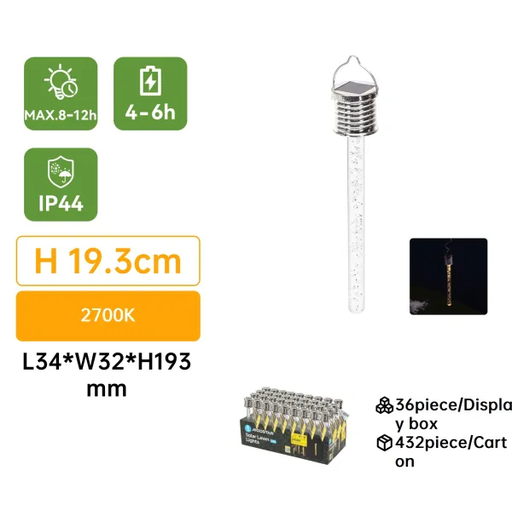
Why this product suits the profile: The compact pendant design at 193 mm height is ideal for small flower beds, balcony boxes or individual decorative accents. The light requires no mains connection and operates with warm white light at 2700K.
The specifications state charging time and operating duration clearly: approximately 4–6 hours charging and 8–12 hours operation under suitable conditions. The IP44 rating makes the intended outdoor use clear.
2700K, integrated Ni-MH battery with 40 mAh, 40 g weight and compact dimensions of 34 × 32 × 193 mm.
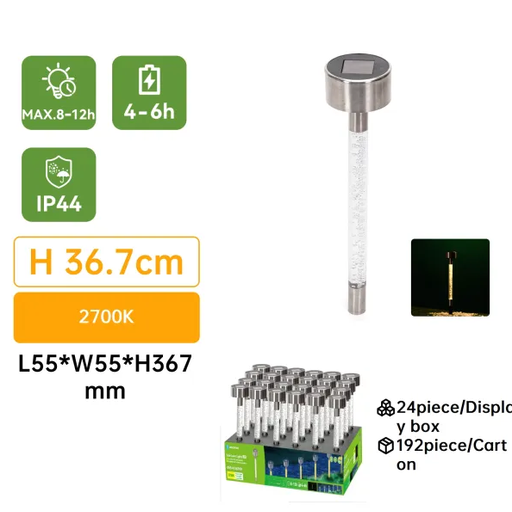
Why this product suits the profile: The 367 mm high ground spike light is designed for clearly visible accents in lawns, flower beds and along garden paths. Information on colour temperature, colour rendering and ingress protection makes for an informed choice.
The product data specifies IP44, 4–6 hours charging time and 8–12 hours operating duration under suitable charging conditions. This makes expectations around weather resistance and run time clearer.
2700K, CRI Ra≥70, 80 g weight, integrated 40 mAh Ni-MH battery and stated lifespan of up to 15,000 hours.
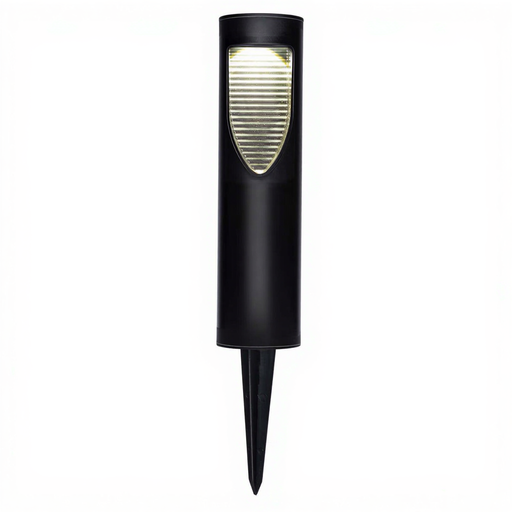
Why this product suits the profile: The freestanding solar lantern at 31 cm height with a 600 mAh Ni-MH battery is suitable for patios, paths and larger outdoor areas where a visibly placed light is needed.
The battery capacity of 600 mAh is clearly stated. At the same time, it is noted that the solar panel requires direct sunlight and the light must not be left standing in water permanently.
SMD LED, black plastic housing, 8 cm diameter, 31 cm height and integrated rechargeable battery.
We have compiled a complete, regularly updated list of products that fully meet these strict selection criteria and the safety regulations applicable in the UK.
The location affects performance more than many decorative product images suggest. Position the solar panel as free from shade as possible and point it upwards. Before first use, the battery should be charged according to the product instructions. Ground spikes belong in loose, load-bearing soil; on very hard ground, a pre-drilled hole can prevent damage to the plastic or light housing.
Clean the surface of the panel regularly with a soft cloth. Remove leaves and debris from around the light. During frost, flooding or extended periods of non-use, the manufacturer's storage instructions may be useful.
The run time depends on battery capacity, panel, sunlight, temperature and shading. Product claims such as 8–12 hours generally apply under suitable charging conditions. In winter or on heavily overcast days, a shorter lighting duration is possible.
IP44 is suitable for many sheltered outdoor areas and splashing water. However, the light must not be submerged. For hollows with standing water or particularly exposed spots, the stated ingress protection should be carefully matched to the installation location.
No. The solar panel charges the integrated battery during the day, so no direct mains connection is required. The purchase cost, potential battery replacement costs and the lifespan of the battery should still be considered when making your buying decision.