
Lieferung heute & morgen

Qualitätsgarantie

Willkommens-Angebote freischalten: KOSTENLOSE Lieferung | Bis zu 80 % RABATT | Kostenlose 30-Tage-JoyPlus-Testphase
App herunterladen
Solar garden lighting can illuminate garden paths, flower beds, lawns and patios without a mains connection. Before you buy, though, it’s worth taking a closer look at the technical specifications and conditions of use. Many products look similar in photos, but can differ considerably in IP rating, charging time, run time and lighting function.
Claims such as ‘up to 12 hours’ generally assume plenty of direct sunlight and a fully charged battery. In autumn, during prolonged cloudy weather or in a shady spot, the actual run time may be shorter. So it’s worth looking beyond the number of hours and checking:
An IP rating describes how well a product is protected against the ingress of solid objects and water. IP44, for example, protects against solid objects larger than 1 mm and splashing water. This doesn’t mean the product is protected against prolonged heavy rain, standing water or being submerged.
IP65 offers greater protection against dust and water jets, but still doesn’t allow the product to be submerged. So avoid placing solar lights in dips where rainwater can collect. Neither the solar panel nor the light unit should be underwater.
An RGB solar light or solar string lights with changing colours can add decorative accents for celebrations and seasonal displays. For paths or an entrance, though, a warm white solar light with a consistent colour may feel more comfortable. If you need practical lighting to help you find your way, also check that the brightness and beam angle are suitable for the area.
For reliable performance, the panel should receive as much direct sunlight as possible during the day. Trees, walls, awnings and tall hedges can reduce charging efficiency. An amorphous silicon solar panel can also be used in diffuse light, but its actual performance will still depend on the location and weather.
Before first use, it’s best to charge the product fully, following the instructions. The products featured here will only switch on automatically at dusk once the on/off switch has been activated.
For waterproof outdoor lighting, the specific IP rating matters more than a general marketing claim. IP44 is suitable for sheltered outdoor areas and normal exposure to splashing water. IP65 offers a higher level of protection against rain and dust, but it’s no substitute for a covered or raised location in persistently challenging conditions.
The material should also suit the intended location. Stainless steel-effect finishes, plastic, ABS and copper wire all have different properties when it comes to weight, flexibility and care. Position flexible wires so they don’t rub against sharp edges.
Warm white light with a colour temperature of around 2700 K is a good choice for a relaxing atmosphere on a balcony or patio. RGB solar lights, on the other hand, create colourful effects for flower beds, lawns or garden parties. For string lights, useful points of comparison include their length, the number of LEDs per metre and the available modes.
Automatic switching on and off means less manual operation. Even so, it’s a good idea to clean the solar panel occasionally with a soft, dry cloth to prevent dust and debris from needlessly reducing charging efficiency.
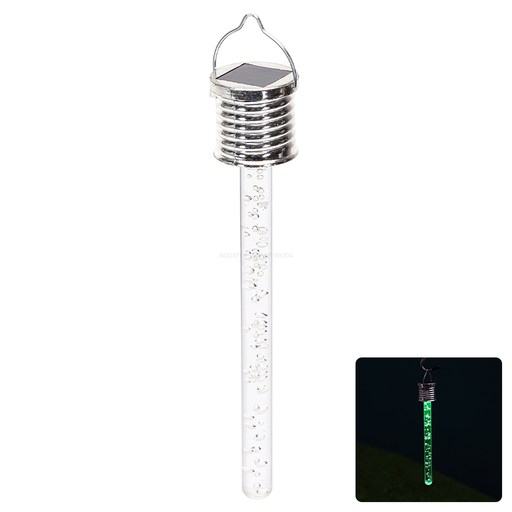
Why it suits these needs: This compact solar garden stake is designed for flower beds and lawns, and doesn’t need a mains connection. Its RGB lighting adds colourful accents to smaller outdoor spaces.
The specifications give a charging time of 4–6 hours, a run time of 8–12 hours and an IP44 rating. This makes it easier to set realistic expectations about location and weather limitations.
RGB lighting, automatic switching on and off, and a stated run time of 8–12 hours. Dimensions: 34 × 32 × 193 mm.
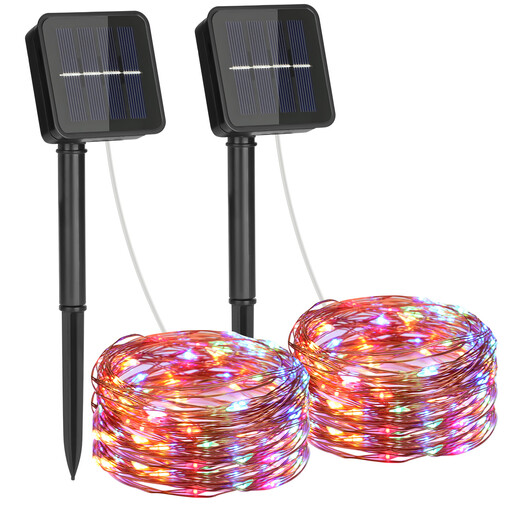
Why it suits these needs: The two 12-metre strings offer plenty of ways to decorate a patio, balcony, railing or garden party, as well as for seasonal displays.
The product details state an IP65 rating and make clear that the lights must not be submerged. They also specify a charging time of 6–8 hours and a weather-dependent run time of 8–14 hours.
120 LEDs per 12-metre string, eight lighting modes with a memory function, and flexible copper wire. The set includes two strings of lights.
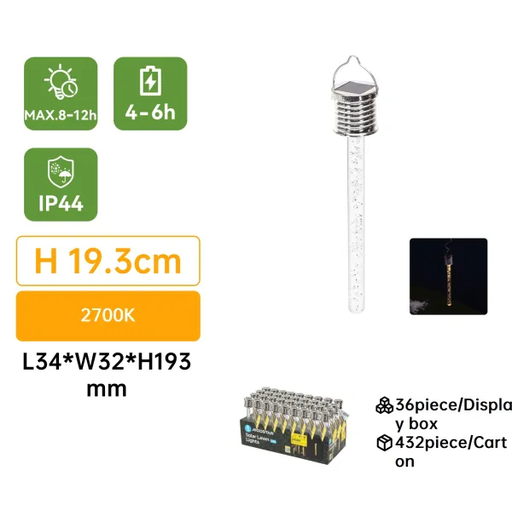
Why it suits these needs: The warm white light, with a colour temperature of 2700 K, is ideal for decorative patio lighting, seating areas and subtle accents along paths or flower beds.
The product description clearly states the light colour, charging time of 4–6 hours, run time of 8–12 hours and IP44 rating. This makes it easier to choose a suitable spot in a sheltered outdoor area.
Warm white light at 2700 K, a built-in 40 mAh Ni-MH battery and automatic lighting in the dark. The light weighs 40 g.
When choosing a spot for solar garden lights, start by considering how much sunlight it gets, rather than simply placing them where you want the decoration. Solar garden stakes need soft ground or a lawn so the spike can be secured firmly. On very hard surfaces, a product with a base or a string of lights may be a better choice.
Keep the following points in mind when installing them:
Solar garden lighting doesn’t use mains electricity while it’s running. However, you should still factor in the purchase cost, possible battery replacements and weather-dependent charging performance. If you use decorative lighting regularly, it’s also worth checking whether the batteries are replaceable or clearly specified.
We’ve put together a complete, regularly updated list of products that meet these strict selection criteria and fully comply with the safety regulations in force in the EU.
It depends on the solar panel, the amount of sunlight and the battery. The products featured here have stated charging times of between 4 and 8 hours. In winter or in shady conditions, charging may take longer and the run time may be shorter.
That depends on the IP rating, operating temperature range and the manufacturer’s instructions. IP44 models should be protected from standing water and particularly severe weather. In freezing temperatures, snow or during long periods without use, storing the lights somewhere dry can help protect the electronics and battery.
While they’re on, solar lights draw energy from the battery charged during the day and don’t need a mains connection. However, their brightness and run time depend on how much solar energy has been stored. Depending on the model and how it’s used, the battery may need replacing eventually.