
Lieferung heute & morgen

Qualitätsgarantie

Willkommens-Angebote freischalten: KOSTENLOSE Lieferung | Bis zu 80 % RABATT | Kostenlose 30-Tage-JoyPlus-Testphase
App herunterladen
Solar garden lighting promises straightforward outdoor illumination without a mains connection or complicated cables. In practice, however, how useful it is depends heavily on the location, IP rating, battery and desired light output. A small solar light for the edge of a flower bed serves a different purpose from a bright LED garden spotlight for a driveway or garage.
As a Joybuy Product Recommendation Officer, I assess product details against transparent criteria and match them to suitable use cases. This helps you avoid common unsuitable purchases.
Specifications such as wattage or a long service life do not automatically indicate how brightly a light will illuminate a path. For practical selection, you should also consider the number and type of LEDs, the beam angle and – where stated – the luminous flux in lumens.
Decorative solar ground lights or solar lights with ground spikes usually provide guide or ambient lighting. For a driveway, front entrance or larger wall area, you will often need a more powerful LED garden spotlight or solar floodlight.
An IP rating such as IP44 means protection against solid foreign objects measuring 1 millimetre or more and against splashing water. This means the light is not designed to be immersed in water or exposed to permanently standing moisture. IP65 protects against dust and water jets, while IP67 even allows temporary immersion under specified conditions.
The IP rating must suit the installation location. IP44 may be sufficient beneath a roof overhang. For an exposed position in the garden or a façade heavily exposed to rain, a higher IP rating is worth considering.
A stated lighting duration assumes that the battery has received sufficient charge. Shade from trees, short winter days, dirt on the solar panel and low temperatures can all reduce runtime. Figures such as “8–12 hours” should therefore be understood as product values under suitable charging conditions, not as a guaranteed duration every night.
Warm white solar lights at around 2700 Kelvin usually create a subtle atmosphere and are suitable for patios, flower beds or decorative paths. Cool white solar lights at approximately 6500 Kelvin produce a noticeably cooler light and may be suitable for areas where orientation is important.
RGB garden lighting offers changing colours, but is primarily decorative. For clearly illuminating steps or paths, neutral or cool white LEDs are often more practical. A CCT function allows you to choose between different shades of white on suitable lights.
Pay attention to the battery type, capacity and stated charging time. The Aigostar lights featured here, for example, use NiMH batteries. The decorative models specify a charging time of approximately 4–6 hours and a runtime of 8–12 hours under suitable conditions.
The solar panel should receive as much direct daylight as possible. Regularly cleaning it with a soft, damp cloth can help prevent dust from affecting charging performance. Even a well-made solar light will only work to a limited extent if placed in deep shade.
Solar path lights with ground spikes can be placed in soft soil without permanent wiring. For hard surfaces, walls or façades, you will need a different installation method. Motion-activated lighting is useful for entrances and driveways, while continuous lighting is better suited to guiding paths and decoration.
You should also check the ambient temperature range, materials and instructions for disposing of the battery. Damaged lights should no longer be used, and batteries must be disposed of in accordance with local requirements.
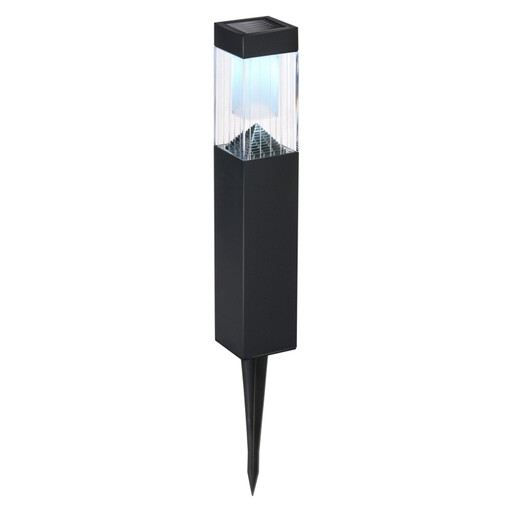
Why this product suits the profile: This black solar light, standing 34 cm tall and equipped with two LEDs, is designed for simply marking paths, flower beds or driveways without power cables.
The product description specifies integrated solar power, an AAA battery and automatic lighting. This clearly identifies the light as a guide light rather than a high-power spotlight.
Wireless installation with a ground spike; 402 g weight and a classic black housing.
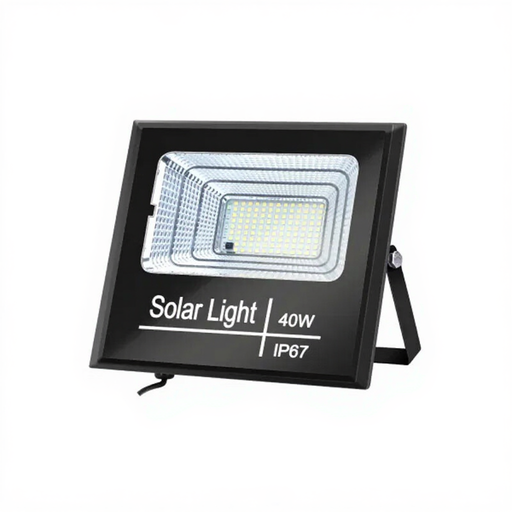
Why this product suits the profile: With a separate panel, this solar floodlight is aimed at users who want to illuminate a larger area such as a garage, courtyard or garden more precisely.
The separate solar panel can be installed in a brighter location independently of the light head. The stated IP67 rating is more relevant for outdoor areas than a general description such as “weatherproof”.
Aluminium and glass construction; 10,000-mAh battery and up to 12 hours of lighting according to the product details.
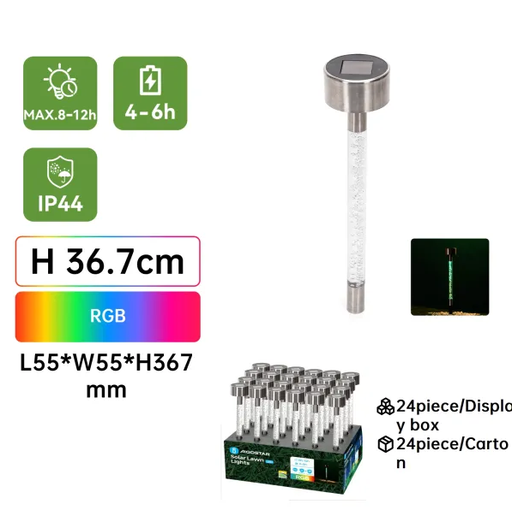
Why this product suits the profile: Standing 36.7 cm tall, this Bubble light with RGB illumination is ideal for adding colourful accents to lawns, flower beds and decorative paths.
The product details explicitly list RGB as a lighting function. IP44 is also specified, so the light should not be placed in standing water or permanently immersed.
RGB lighting; NiMH battery with 40 mAh and a stated runtime of 8–12 hours under suitable charging conditions.
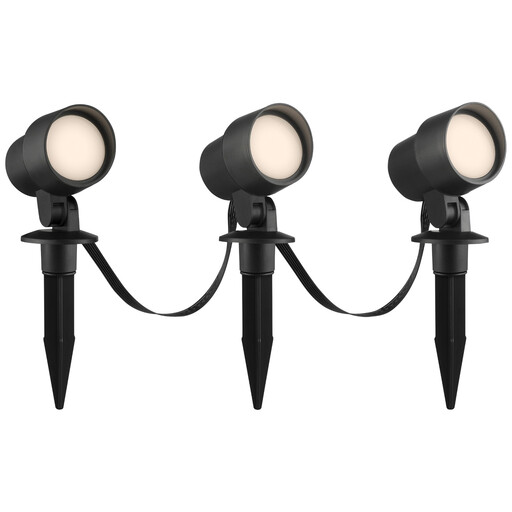
Why this product suits the profile: This set of three is designed for users who want to control multiple light points with RGB, CCT and dimming functions along paths, patios or flower beds.
The product description clearly distinguishes the functions: Tuya smart control, CCT, RGB and dimming. However, this is not a solar light, but a set with mains power or a low-voltage transformer.
Three lights; app and voice control via Tuya Smart; IP44 and adjustable light colour.
We have compiled a complete, regularly updated list of products that fully meet these strict selection criteria and the safety regulations applicable in the EU.
A light with IP44 should not be left permanently in a dip where rainwater collects. For safety lighting at a garage or driveway, you should also consider the installation height, direction and glare. A bright spotlight should not point directly at windows or neighbouring properties.
Its actual service life depends on the battery, charging cycles, temperature, sunlight and care. A stated LED lifespan of, for example, 15,000 hours does not automatically describe the service life of the entire product. The battery and seals may wear out sooner.
Yes, it can also provide light in winter, although usually with a reduced runtime. Shorter days, the low winter sun, cloudy conditions and lower temperatures reduce the available charging energy. In winter, choose a particularly bright, unshaded location and observe the stated temperature range.
During operation, a genuine solar light does not require mains electricity, as it collects energy through the panel during the day and stores it in the battery. Mains-powered LED garden spotlights or smart sets such as the Brilliant lights, on the other hand, require an external power supply. Before buying, therefore, check whether solar or mains operation is actually suitable for your installation location.