
Lieferung heute & morgen

Qualitätsgarantie

Willkommens-Angebote freischalten: KOSTENLOSE Lieferung | Bis zu 80 % RABATT | Kostenlose 30-Tage-JoyPlus-Testphase
App herunterladen
An illuminated garden or balcony creates a unique ambiance after sunset and enhances security. However, installing conventional outdoor lighting is often a hassle: cables need to be laid, power outlets must be available, and electricity costs have to be monitored. Solar garden lights offer a practical and energy-efficient alternative. They harness the power of the sun, can be placed anywhere, and require no complex installation.
This article is designed to be your guide. We'll explain which features to look for when making your selection and introduce you to various models suitable for different outdoor applications.
To find the right lights for your needs, it's helpful to understand a few key technical specifications.
The runtime of a solar lamp is directly dependent on its battery capacity and the efficiency of the solar panel. Most models charge within 4 to 8 hours in direct sunlight and then provide light for 6 to 12 hours. Keep in mind that charging performance is lower on cloudy days or in winter, which can shorten the runtime. Pay attention to the manufacturer's specifications for charging and illumination times to get an idea of the light's performance.
Since LED garden lighting remains outdoors permanently, its resistance to the elements is crucial. The IP rating indicates how well a light is protected against the ingress of foreign objects and water.
The lighting mood is largely determined by the light colour. Warm white light (under 3,300 Kelvin) creates a cosy and inviting atmosphere, ideal for seating areas or the balcony. Cool white light (over 5,300 Kelvin) appears brighter and more functional, making it well-suited as solar path lights to safely illuminate walkways.
Many modern solar lights also offer useful additional features:
Here, we present a selection of solar lights suitable for various uses in the garden, on the patio, or on the balcony.
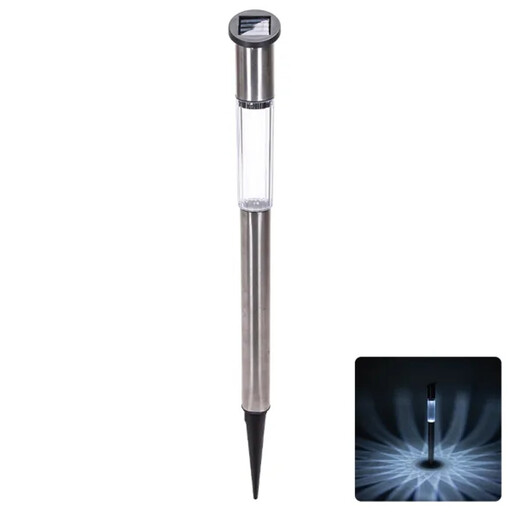
What makes it stand out: These garden lights with ground stakes are designed for functionality and durability. The plastic housing with a stainless steel head offers a modern look, while the cool white light at 6500K ensures clear illumination of paths, driveways, or flowerbeds. Thanks to the ground stake, installation is incredibly simple: just push it into the ground in a sunny spot, and you're done.
Advantages:
Who is it for? Ideal for home and garden owners looking for reliable and hassle-free lighting for garden paths, lawns, or to define flowerbeds.
To the Aigostar Solar Path Light

What makes it stand out: These outdoor solar string lights create a magical atmosphere with their 160 warm white LEDs. With a total length of 10 metres, they are perfect for decorating patios, pergolas, trees, or balcony railings. The high IP65 protection rating makes them particularly robust against rain and dust, so they can stay outside all year round. Eight different lighting modes offer additional creative freedom.
Advantages:
Who is it for? Perfect for anyone looking for decorative and atmospheric lighting for parties, cosy evenings, or as festive decoration in their outdoor space.
To the Aigostar Solar String Lights

What makes it stand out: This 5-pack set from Grundig offers maximum flexibility in lighting design. A switch allows you to choose between a classic warm white light and an automatic colour-changing (RGB) mode. The spherical lights create decorative accents in flowerbeds as well as along paths. Thanks to the ground stakes, they are quick and easy to place in the garden.
Advantages:
Who is it for? Suitable for users who appreciate variety and want to adapt their garden lighting to the occasion and mood—from subtle and cosy to colourful and festive.
To the Grundig LED Garden Lights
Solar lights come in countless designs. If you prefer lighting with a more natural, rustic charm, lanterns made from woven material could be an interesting alternative.
Discover our selection of wicker lanterns for a warm and organic atmosphere in your garden.
1. Do solar lights work in winter or on cloudy days? Yes, modern solar panels can generate energy even in diffuse light, but the charging performance is lower than in direct sunlight. This results in a shorter runtime at night during winter or on heavily overcast days. For optimal performance, the solar panels should always be clean and, if possible, south-facing.
2. What is the lifespan of solar garden lights? The lifespan is determined by two main components: the LEDs and the battery. The LEDs themselves are very durable, often with a lifespan of over 15,000 hours. The battery (usually NiMH or Lithium-ion) has a limited number of charge cycles, and its capacity will decline after about 1-3 years. In many higher-quality models, the battery can be easily replaced, which significantly extends the life of the light.
3. Do I need to bring solar lights indoors during winter? This depends on the product. Pay attention to the manufacturer's specified operating temperature and the IP rating. Models with a high protection rating (e.g., IP65) and a housing and battery designed for low temperatures can usually be left outside. However, it may be wise to bring the lights in during severe frost or heavy snow to preserve the battery's lifespan.