
Lieferung heute & morgen

Qualitätsgarantie

Willkommens-Angebote freischalten: KOSTENLOSE Lieferung | Bis zu 80 % RABATT | Kostenlose 30-Tage-JoyPlus-Testphase
App herunterladen
Thoughtful garden lighting can transform paths, flowerbeds, and patios into atmospheric oases after sunset. However, installing conventional lights often involves considerable effort: cables must be laid, power connections planned, and electricity costs monitored. Solar garden lights offer a practical and sustainable alternative. They harness the sun's energy, are completely wireless, and can be placed flexibly anywhere you need them.
This article serves as your comprehensive guide. We'll explain the key technical features to look for when choosing your lights and present a curated selection of models to help you find the perfect solar-powered LED garden lighting for your needs.
To find the right lights for your specific needs, a few key characteristics are crucial. The following points will help you better assess the features and quality of solar garden lamps.
The colour of the light has a major impact on the atmosphere in your garden.
Since outdoor lights are exposed to the elements year-round, their durability is a key criterion. Pay close attention to the IP (Ingress Protection) rating. For garden use, a rating of at least IP44 is recommended. This classification means the light is protected against solid objects larger than 1 mm in diameter and against splashing water from all directions. This makes the lights sufficiently weatherproof for typical outdoor use. Common materials include rust-resistant stainless steel, which offers a modern look and longevity, as well as durable plastic.
The convenience of solar lights lies in their ease of use. Most models are garden lights with ground stakes, which can be easily inserted into the ground without any tools. An integrated dusk-to-dawn sensor enables automatic operation: the lights switch on by themselves as darkness falls and turn off again at daybreak. This not only saves energy but also ensures your garden is reliably illuminated every evening. A solar outdoor light set is often a practical solution for implementing a cohesive lighting scheme across larger areas.
Based on the criteria mentioned above, we have compiled a selection of solar lights that cater to different requirements for design, functionality, and control.

Why they stand out: This 5-piece set from Grundig combines atmospheric warm white light with a dynamic RGB colour-changing mode. This flexibility makes it a versatile solution for different moods and occasions.
Key Features:
Who are they for? Ideal for garden owners who want to create both functional path lighting and decorative colour accents with a single set. The set is perfect for defining flowerbeds or illuminating garden paths.

Why it stands out: The Aigostar solar light is distinguished by its robust stainless steel housing and its clear, functional light. The modern design, featuring a distinctive spiral-patterned shade, seamlessly integrates into contemporary garden aesthetics.
Key Features:
Who is it for? Perfect for users who value durability, a modern design, and bright, functional lighting. It is particularly suitable for marking driveways, paths, and entrance areas.
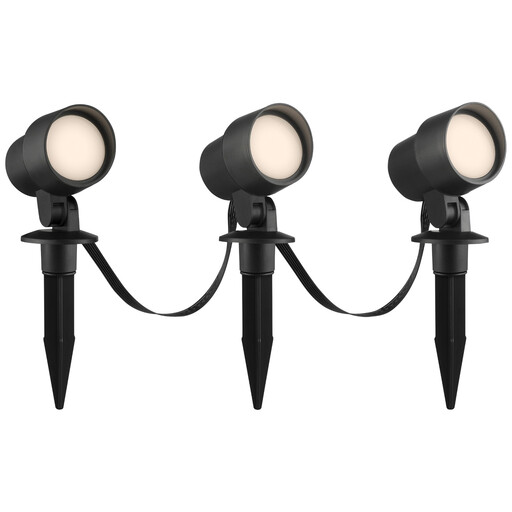
Why they stand out: This set from Brilliant takes garden lighting to the next level with its smart home compatibility. Brightness, colour temperature, and colour can be precisely controlled via the Tuya Smart app or by voice command.
Key Features:
Who are they for? For tech-savvy users who want to integrate their garden lighting into their smart home system and desire full control over lighting moods and effects.
The models featured here cover a wide range of needs. However, if you are looking for a different type of lighting, such as bollard lights for a more robust and permanent installation, you may find the perfect fit in our broader selection.
Explore our full range of Low-Voltage Garden Bollard Lights and find the ideal solution for your outdoor space.
The operating time depends on several factors: the battery's capacity, the intensity and duration of sunlight exposure during the day, and the efficiency of the solar panel and the LED. On a full charge, most models provide between 6 and 12 hours of light, which is sufficient for most nights.
Yes, modern solar panels can generate energy even in diffuse light, such as on overcast days. However, the charging process is less efficient than in direct sunlight. In winter, when days are shorter and often cloudier, the operating time may be noticeably reduced. Positioning the panel in a south-facing location free from shade will help maximise performance.
IP44 is an internationally standardised protection rating for electrical devices. The first digit (4) indicates that the housing is protected against solid foreign objects with a diameter of 1 mm or more. The second digit (4) means the device is protected against splashing water from all directions. Lights with this rating are therefore suitable for outdoor use and can withstand normal rainfall.