
Lieferung heute & morgen

Qualitätsgarantie

Willkommens-Angebote freischalten: KOSTENLOSE Lieferung | Bis zu 80 % RABATT | Kostenlose 30-Tage-JoyPlus-Testphase
App herunterladen
Solar garden lights promise an easy and cost-effective way to illuminate paths, create ambiance on patios, and enhance security—all without wiring or additional electricity costs. But the reality is often different: many buyers are disappointed when their new lights are only glowing dimly after a few weeks, or fail completely after the first heavy downpour. To avoid these bad investments, it's crucial to understand the common pitfalls lurking behind vague product descriptions.
This guide shows you which technical features really matter and how to find the right power-free garden lighting for your needs.
Marketing promises can be misleading. Instead of relying on flowery descriptions, you should check three specific technical parameters that determine the performance and longevity of a solar light.
The term "weatherproof" is not standardised and offers no reliable information about a light's durability. The decisive factor is the IP rating (Ingress Protection), which consists of two digits.
For reliable use in a climate with variable weather, a rating of at least IP65 is a sensible benchmark for most applications.
A long runtime, especially on cloudy days or in winter, depends directly on the quality of the battery and the solar panel.
The wattage rating on LED lights refers to energy consumption, not brightness. The relevant unit for light output is the luminous flux, measured in lumens (lm).
Also, pay attention to the light colour, specified in Kelvin (K). Values around 2700 K produce a warm, cosy white light, while values around 6500 K correspond to a cool, daylight-like white.
Based on these objective criteria, we have put together a selection of products for different user profiles.
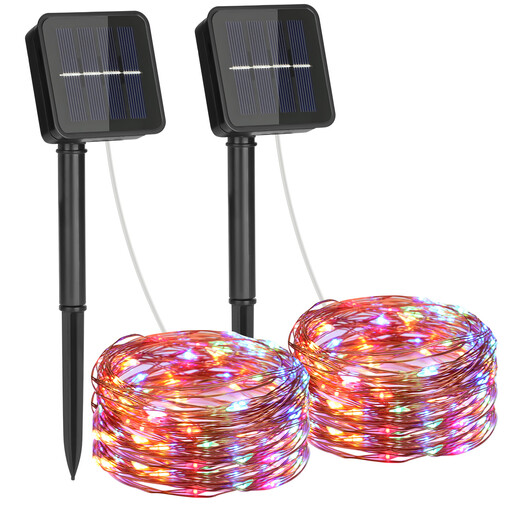
Why This Fits Their Persona: Ideal for users who want to create a flexible and atmospheric ambiance on a balcony, patio, or in the garden. This outdoor solar string light is perfect for parties, holidays, or simply for year-round decoration of plants and railings.
With an IP65 rating, the string light is protected against jets of water, making it well-equipped for outdoor use. The specified runtime of 8–14 hours indicates a solid combination of solar panel and battery.
8 different lighting modes with a memory function offer creative versatility. The flexible copper wire is easy to shape and install.
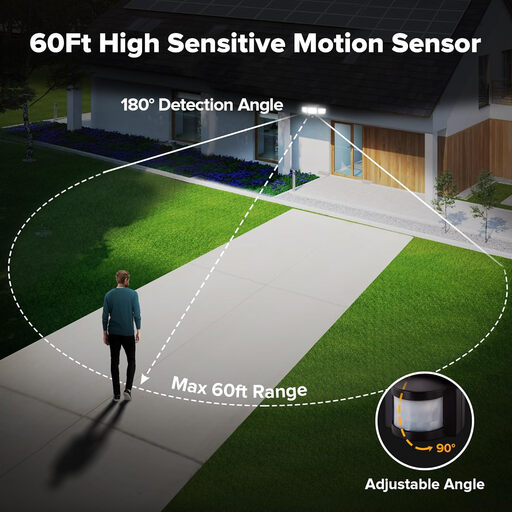
Why This Fits Their Persona: Perfect for homeowners who want to reliably illuminate driveways, garages, or dark corners of their property. The solar floodlight with a motion sensor enhances security and deters unwanted visitors.
The brightness is clearly specified at 3000 lumens, which is a very high light output. The IP65 rating and the motion sensor, which only draws power when needed, address the common issues of weather resistance and battery life.
Three adjustable light heads provide a wide 270° illumination angle. Three different operating modes offer flexibility for various security needs.
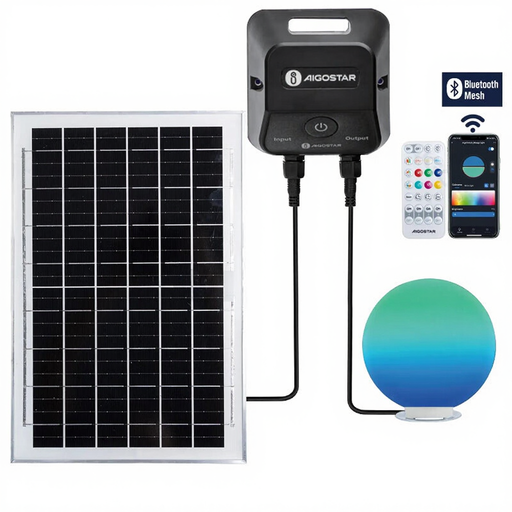
Why This Fits Their Persona: For users who want full control and connectivity. This smart solar light with app control allows you to manage colours, brightness, and schedules directly from your smartphone and can be linked with other lights to form a system.
The IP65 certification ensures durability in bad weather. The high battery capacity of 8000 mAh and the efficient monocrystalline panel provide a reliable power supply. App control allows for intelligent energy management.
Bluetooth Mesh technology allows for the networking of over 200 devices. The RGBCCT function offers a huge selection of colours as well as adjustable white tones (2700K-6500K).
We have compiled a complete, real-time list of products that fully satisfy these strict selection criteria and UK safety regulations.
The lifespan of a solar light depends on two main components. The LEDs themselves have a very long life, often between 15,000 and 30,000 operating hours. The limiting factor is usually the battery. Depending on its quality and how often it's used, a battery may need to be replaced after about 1 to 3 years. On many higher-quality models, the battery is easily accessible and can be replaced.
Yes, but with limitations. Modern solar lights, especially those with monocrystalline panels, can charge even in diffuse light. However, the charging performance on dark winter days is significantly lower than on a sunny summer day. This results in a shorter runtime at night. Models with large, high-quality panels and high battery capacity are better suited for year-round use.
Solar lights are very low-maintenance. To ensure optimal charging performance, the solar panel should be regularly wiped clean of dust, dirt, or leaves with a soft, damp cloth. In winter, it can be helpful to remove snow from the panel. Otherwise, no further maintenance is required.