
Lieferung heute & morgen

Qualitätsgarantie

Willkommens-Angebote freischalten: KOSTENLOSE Lieferung | Bis zu 80 % RABATT | Kostenlose 30-Tage-JoyPlus-Testphase
App herunterladen
Solar garden lights promise a simple and cost-effective way to illuminate paths, accentuate patios, and create an ambient atmosphere—all without complex electrical wiring. However, the market is flooded with products whose performance often falls short of their promises. Many buyers are disappointed when their new lights only emit a dim glow after a short time or fail completely after the first heavy rain.
To help you make an informed decision, we'll highlight the three most common pitfalls when buying solar-powered garden lights and explain which technical features you should look for.
Before you invest, you should be aware of the typical weaknesses that often only become apparent after the purchase.
To avoid these problems, you should focus on objective technical specifications rather than trusting marketing promises.
The IP (Ingress Protection) rating is an international standard that specifies how well a device is protected against the ingress of foreign objects (first digit) and water (second digit). For outdoor solar lights, the following values are relevant:
The battery's capacity, measured in milliampere-hours (mAh), directly determines how long an LED solar light can stay lit after dark. A higher mAh value generally means a longer runtime. Look for models with at least 600 mAh for path lights and over 1200 mAh for brighter spotlights. Equally important is a sufficiently sized solar panel that can generate enough energy even in diffuse light.
The light color significantly influences the atmosphere. Warm white solar lights (approx. 2700–3300 Kelvin) create a cozy and inviting ambiance, ideal for seating areas and as solar garden decor. Cool white light (over 5300 Kelvin) appears more functional and brighter, making it well-suited for utility areas or as a solar spotlight with a motion sensor for deterrence.
Here are some recommendations tailored to different use cases that meet the quality criteria mentioned above.
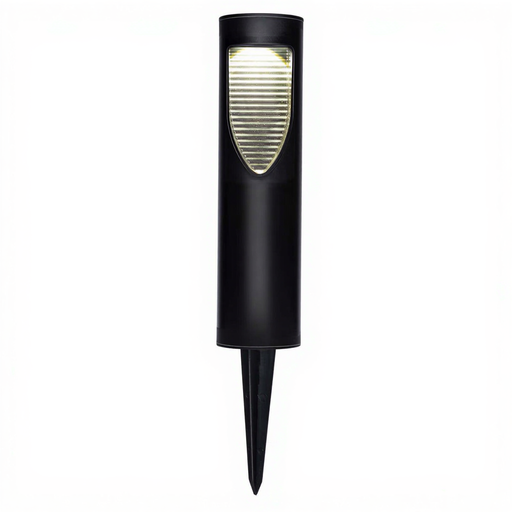
Why This Fits Their Persona: Ideal for users who want to add initial accents to their garden without a major investment. This light is suitable as a path light or for marking flower beds.
The product provides clear specifications, including a 600 mAh Ni-MH battery. This sets realistic expectations for runtime and avoids the disappointment of overblown promises.
Creates a pleasant, warm white light for a cozy atmosphere. Installation is tool-free and simple using the included ground stake.
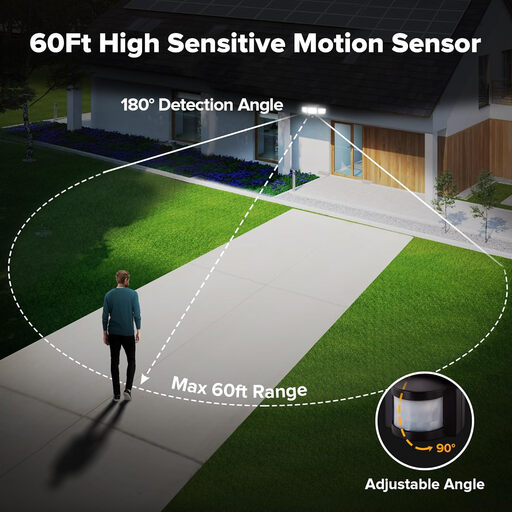
Why This Fits Their Persona: Perfect for illuminating driveways, home entrances, or dark corners of the garden. The focus here is clearly on functionality and security, delivering high brightness upon motion detection.
This spotlight tackles the problem of weak performance with a high light output of 3000 lumens. The IP65 rating ensures the electronics are protected even in heavy rain, promoting a long lifespan.
Features three adjustable heads for a wide 270° illumination angle. The integrated solar spotlight with a motion sensor offers three different modes for on-demand lighting.

Why This Fits Their Persona: For creative individuals looking to add a sparkling accent to trees, railings, pergolas, or balconies. The flexibility of the wire allows for countless decorative possibilities.
This outdoor solar string light is classified with an IP65 rating, making it robust enough for year-round use. The product description points to a reinforced solar panel, which suggests more reliable charging and runtime.
Offers 8 different lighting modes (from steady on to flashing) with a memory function. The flexible copper wire is discreet and easy to shape as desired. The solar light set includes two separate string lights.
We have compiled a complete, up-to-date list of products that fully meet these strict selection criteria and safety standards.
The lifespan of a solar light depends on the quality of its components. The LEDs themselves can last for many years. The critical factor is the battery, which loses capacity after about 2 to 4 years, depending on the type and usage. On higher-quality models, the battery (often a standard AA or AAA type) can be easily replaced, significantly extending the life of the entire unit.
Yes, solar lights do work in less-than-optimal light conditions, but with reduced performance. On overcast days or during the shorter days of winter, the battery will not fully charge. This results in a shorter runtime at night. Models with larger, more efficient solar panels and higher-capacity batteries are better suited for year-round use.
The IP rating indicates how well a light is protected against the ingress of foreign objects and water. IP44 means protection against splashing water and is sufficient for sheltered areas. For lights that are exposed to the elements, an IP65 rating (protection against water jets) or higher is recommended to ensure long, trouble-free operation.