
Lieferung heute & morgen

Qualitätsgarantie

Willkommens-Angebote freischalten: KOSTENLOSE Lieferung | Bis zu 80 % RABATT | Kostenlose 30-Tage-JoyPlus-Testphase
App herunterladen
Solar lights promise a simple and cost-effective way to illuminate your garden, balcony, or patio. With no wiring required and no extra electricity costs, they transform sunlight into atmospheric or functional lighting. Yet, the reality is often different: many buyers are disappointed by lights that only glow dimly after a short time, have housings that leak after the first rain, or batteries that don't survive the winter.
To help you avoid these poor investments, we'll highlight the most common pitfalls and show you which technical specifications truly matter when selecting solar garden lights.
Manufacturers' advertising claims can be overwhelming. To separate quality from hype, you should focus on three objective criteria that determine the durability and performance of your outdoor solar lights.
The IP (Ingress Protection) rating indicates how well an electrical device is protected against the ingress of foreign objects and water. For waterproof outdoor lighting, this is a crucial quality indicator.
solar path lights in the garden, this may be insufficient during heavy rain.solar spotlight or a solar wall light with motion sensor should ideally have this rating.The advertised runtime is often only achievable under ideal conditions. The actual performance depends on the battery's capacity (measured in milliampere-hours, mAh) and the solar panel's efficiency.
decorative string lights for the balcony can manage with lower capacities, whereas powerful spotlights or long solar string lights need batteries of 1200 mAh or more to last through the night.Brightness is measured in lumens (lm), and light colour in Kelvin (K). These two values determine the character and purpose of the light.
outdoor LED string light, low lumen values are sufficient. For illuminating paths or for security lighting, higher values are necessary. A solar wall light with a motion sensor should reach several hundred lumens to effectively light up an area.RGB garden lights also offer the ability to change the colour to suit your mood.Based on these objective criteria, we have identified several products that offer a suitable solution for specific user profiles.

Why This Fits Their Persona: Ideal for users looking for a straightforward and functional solution to mark garden paths or flowerbeds. The installation is incredibly simple and requires no technical expertise.
The housing combines plastic with a stainless steel ground stake, offering greater stability than all-plastic models. The stated IP44 rating is sufficient for path-side lighting and is an honest specification for this price range.
Easy installation with a ground stake; automatic on/off via a light sensor; 4-6 hour charging time for 8-12 hours of light, according to the manufacturer.
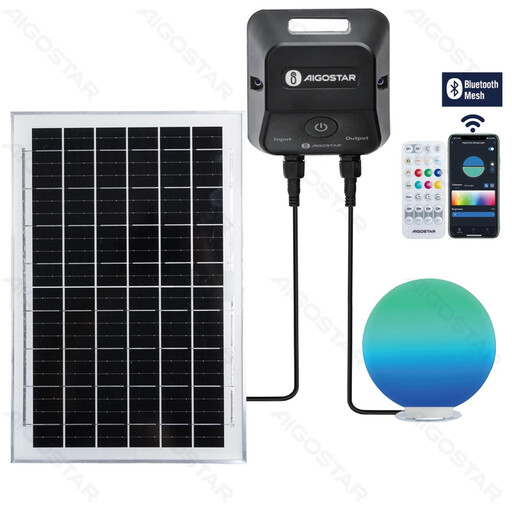
Why This Fits Their Persona: Perfect for users who want full control over their garden lighting. The app allows you to manage colours, brightness, and schedules to create custom lighting scenes.
This model avoids the trap of short-lived "smart" gadgets by using high-quality components. The IP65 rating reliably protects the electronics against the elements, and the lithium iron phosphate (LiFePO4) battery offers a longer lifespan and greater safety than standard batteries.
App control via Bluetooth Mesh; customisable light colours (RGBCCT from 2700K-6500K); high weather resistance (IP65); durable battery type (LiFePO4).
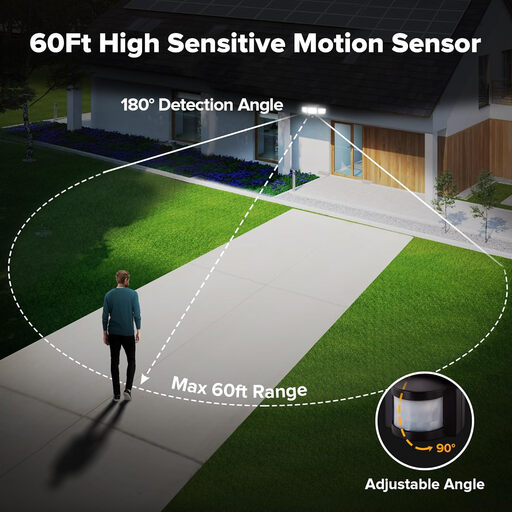
Why This Fits Their Persona: Designed for reliably securing driveways, garages, and dark corners of the property. The high brightness and sensitive motion sensor act as a deterrent and enhance security.
This model delivers a high, verifiable brightness of 3000 lumens, unlike many "security lights" that offer little more than accent lighting. The IP65 certification and robust ABS housing ensure the durability that is essential for a security-related device.
Very high brightness (3000 lm) for effective illumination; three flexibly adjustable light heads for a wide 270° beam angle; reliable motion sensor and IP65 protection.
We have compiled a comprehensive, up-to-date list of products that fully meet these strict selection criteria and relevant safety regulations.
The lifespan of a solar light is primarily determined by its battery. The built-in LEDs often have a lifespan of 15,000 hours or more. However, the rechargeable battery is a consumable part, and its capacity diminishes over time. With high-quality models, you can expect the battery to last for two to three years before a replacement becomes necessary. On many budget models, the battery is permanently installed and cannot be replaced.
Yes, solar lights do work in diffused light, but with reduced performance. The shorter days and less intense sunlight in winter mean the battery won't fully charge. This results in a shorter runtime at night. For the best possible performance in winter, the solar panel should be kept free of snow and optimally angled towards the low-lying sun.
The IP rating is an international standard that classifies the protection of enclosures against the ingress of foreign objects (first digit) and water (second digit).
4, means protection against solid objects larger than 1.0 mm in diameter. The second digit, 4, means protection against splashing water from all directions. This is a common standard for many outdoor lights.6, means the device is dust-tight. The second digit, 5, means protection against water jets from a nozzle from any angle. These lights are significantly more robust against rain and weather.