
Lieferung heute & morgen

Qualitätsgarantie

Willkommens-Angebote freischalten: KOSTENLOSE Lieferung | Bis zu 80 % RABATT | Kostenlose 30-Tage-JoyPlus-Testphase
App herunterladen
Solar lights promise simple, atmospheric lighting for your garden, balcony, and patio—all without complex wiring or added electricity costs. But the reality is often disappointing: lights that fail after a single summer, offer underwhelming brightness, or have plastic housings that quickly become brittle.
As your Joybuy Product Recommendation Officer, I'm here to help you navigate the common pitfalls. Instead of falling for marketing hype, you should focus on verifiable features. We'll shine a light on the three most common reasons for a bad purchase and show you what really matters when making your choice.
Many disappointments can be avoided by understanding the typical weaknesses of budget models. Pay close attention to these three points:
To make an informed decision, focus on technical specifications rather than promotional images. These three criteria are crucial for durable and functional solar garden lighting.
The IP (Ingress Protection) rating indicates how well an electrical device is protected against the intrusion of foreign objects and water. For outdoor use, this is an indispensable quality feature.
The combination of the battery and solar panel determines how long and how brightly your light will shine.
The brightness and atmosphere a light creates depend on these two values.
We have selected products that, based on their specifications, are suited for different needs and locations in any garden.
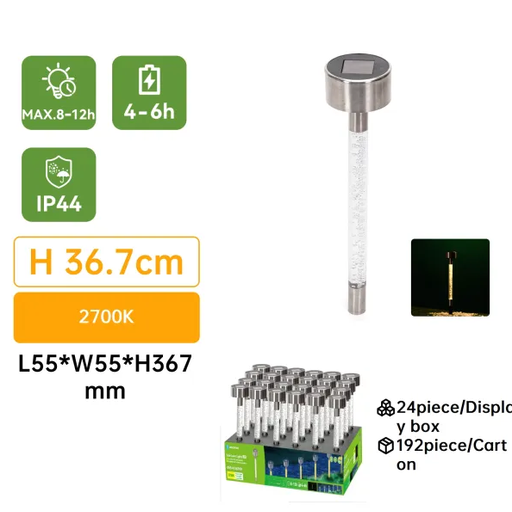
Why This Fits Their Persona: Ideal for users who want to enhance flowerbeds, paths, or balconies with a soft, decorative light. The focus here is clearly on atmosphere, not bright illumination.
This light is explicitly designed as an accent light, thus avoiding the pitfall of false brightness expectations. The IP44 certification provides sufficient protection for use in flowerbeds and sheltered locations.
Creates an especially warm white, inviting light at 2700K. The decorative bubble effect inside provides a visual accent even during the day.
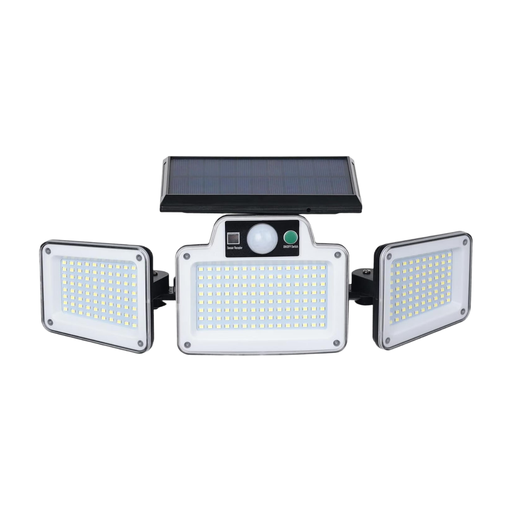
Why This Fits Their Persona: Perfect for homeowners who want to reliably and brightly illuminate driveways, garages, or entryways. The motion sensor provides light on demand and enhances security.
With an IP65 rating, this floodlight is designed for exposed outdoor areas and can withstand heavy rain. The separate solar panel with a long cable allows for optimal alignment with the sun, avoiding the short-runtime trap.
Three flexibly adjustable light heads and 280 LEDs ensure wide-area illumination. Three modes selectable via remote control (including constant-on and sensor mode) offer high flexibility.
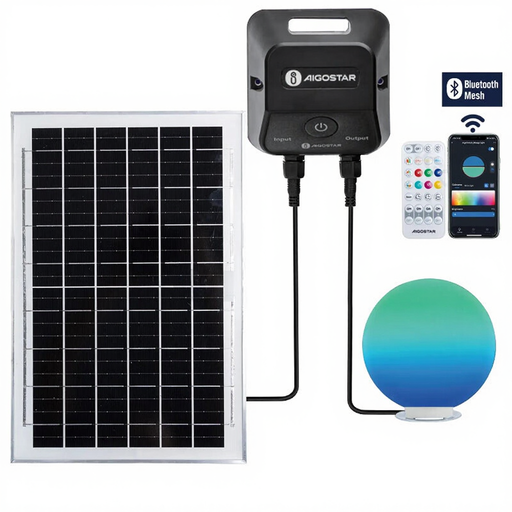
Why This Fits Their Persona: For discerning users who see lighting as part of their home design and want full control over colour, brightness, and scenes, without sacrificing the benefits of solar technology.
This model avoids the trap of limited functionality. Thanks to Bluetooth Mesh control and app connectivity, it offers flexibility far beyond the standard. The large 8000mAh battery and 12W panel ensure reliable performance.
Offers full control over the light spectrum (RGBCCT: colours + adjustable white light from 2700K-6500K). The light can be networked with up to 200+ other devices to create complex lighting scenes.
We have compiled a complete, up-to-date list of products that fully meet these strict selection criteria and safety regulations.
Yes, solar lights do work during the darker seasons, but with limitations. The reduced number of daylight hours and the lower angle of the sun mean the battery won't fully charge. Consequently, the runtime per night is significantly shorter than in summer. Models with high-efficiency (monocrystalline) solar panels and large battery capacities are better suited for winter use.
The IP rating is critically important for the lifespan of the light. IP44 (protection against splashing water) is the absolute minimum for outdoor use. For lights exposed to the elements, such as path lights in an open area, a higher rating like IP65 (protection against water jets) or IP67 (protection against temporary immersion) is strongly recommended. This ensures that no moisture can penetrate the electronics.
Yes, the battery is a consumable part. Most solar lights use rechargeable Ni-MH (Nickel-Metal Hydride) batteries in standard sizes like AA or AAA. After a few years (typically 2-3), their capacity diminishes, leading to shorter runtimes. On many models, the battery can be easily and inexpensively replaced, significantly extending the life of the entire light. When buying, check if the battery is accessible and replaceable.