
Lieferung heute & morgen

Qualitätsgarantie

Willkommens-Angebote freischalten: KOSTENLOSE Lieferung | Bis zu 80 % RABATT | Kostenlose 30-Tage-JoyPlus-Testphase
App herunterladen
Thoughtful garden lighting not only creates an inviting atmosphere after sunset but also enhances safety on paths and steps. Many garden owners are looking for a solution that avoids complex wiring and additional electricity costs. Solar-powered garden lighting offers a practical and eco-friendly alternative.
This article serves as a comprehensive guide. It explains the key features to consider when making your selection and introduces various models designed for different applications in your garden.
To find the right lights for your outdoor space, it helps to understand a few technical and material aspects.
Since the lights are exposed to the elements year-round, material quality is crucial for their durability. Solar lights made of stainless steel offer high corrosion resistance and a modern aesthetic. Plastic variants are often lighter and more cost-effective but should be UV-resistant to prevent them from becoming brittle.
Pay close attention to the IP rating. A designation like IP44 means the light is protected against splashing water from all directions (e.g., rain) and solid foreign objects larger than 1 mm in diameter. This is a common standard for weather-resistant outdoor lights.
The function of the light determines the ideal light colour.
Most solar lights for the garden are designed for simple, tool-free installation. Solar lamps with ground spikes are particularly popular because they can be flexibly placed in lawns, flowerbeds, or along pathways. The spike is simply pushed into soft ground, and the light is ready to use. This requires no prior expertise or external power supply.
Here is a selection of solar-powered lights that meet different functional and design requirements.

What sets it apart: This light is designed for functionality. With its tall post and stainless steel head, it is ideal for illuminating garden paths or marking property lines. The polycrystalline solar panel ensures reliable charging.
Advantages:
Who it's for: Users looking for reliable and functional solar-powered garden lighting to safely illuminate paths, driveways, or dark corners.
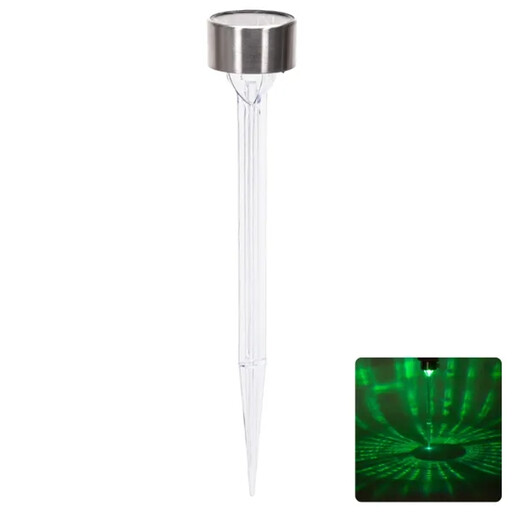
What sets it apart: This solar lamp with a ground spike combines a low-profile, discreet design with a dynamic lighting effect. The automatic RGB colour-changing feature makes it a decorative element for flowerbeds, lawns, or party areas.
Advantages:
Who it's for: Garden owners who want to add colourful and decorative light accents with minimal effort to liven up their outdoor atmosphere.
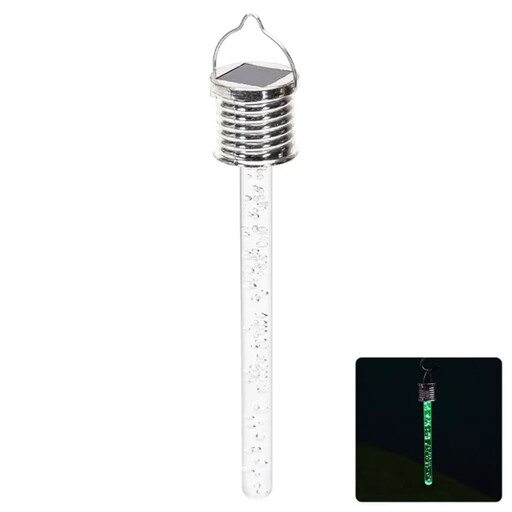
What sets it apart: This light focuses purely on its decorative effect. The slender acrylic rod contains air bubbles that refract the transitioning RGB light, creating a shimmering "bubble effect." The amorphous silicon panel allows for charging even on overcast days.
Advantages:
Who it's for: Users looking for a discreet, purely decorative light object to add special visual accents to planters or flowerbeds.
The models presented here cover common use cases for solar lights in the garden. If you are looking for other solutions such as wall lights, floodlights, or special fence lighting, you can find more products in our broader category.
? Discover our entire range of Low-Voltage Outdoor Fence Lighting here.
The lifespan of a solar light depends on two main components: the LED and the battery. The LEDs themselves often have a very long lifespan, such as the 15,000 hours specified for the Aigostar models. The rechargeable battery (usually NiMH) is a consumable component, and its capacity will decrease over time, typically after 1–3 years, depending on quality and usage intensity. Regularly cleaning the solar panel can positively impact its lifespan and performance.
Yes, solar lights do work in diffuse light, but with limited performance. On cloudy days or in winter, the hours of sunlight are shorter and the light intensity is lower. As a result, the battery does not fully charge, leading to a shorter illumination time at night. Models with amorphous solar panels, like the Aigostar light stick, are slightly better suited for low-light conditions than polycrystalline panels, although they achieve lower efficiency in direct sun.
Installation is incredibly simple and requires no electrical knowledge. The most important factor is placement: choose a location where the solar panel receives as much direct, unobstructed sunlight as possible during the day. Avoid shadows from trees, walls, or overhanging plants. Before first use, it is recommended to turn the light off (if a switch is present) and let it charge for a full day in the sun to reach maximum battery capacity.