
Lieferung heute & morgen

Qualitätsgarantie

Willkommens-Angebote freischalten: KOSTENLOSE Lieferung | Bis zu 80 % RABATT | Kostenlose 30-Tage-JoyPlus-Testphase
App herunterladen
Solar garden lights promise a simple, cost-effective, and eco-friendly way to illuminate paths and create a pleasant atmosphere. Installation is straightforward, as no cables need to be laid. However, not every product delivers on its promise. Many buyers are disappointed after a short time when the brightness fades or the lamps don't survive the first autumn storm.
As your Joybuy Product Recommendation Officer, I'll help you identify the typical pitfalls and make an informed decision. We'll look at which features truly matter, so your garden lighting will still work reliably even after months.
Marketing claims can be misleading. Pay attention to three critical points to avoid a bad purchase:
To avoid these problems, you should check three technical features before buying. These will give you an objective basis for your decision, far from advertising promises.
The IP (Ingress Protection) rating indicates how well an electrical device is protected against the ingress of foreign objects and water. For outdoor solar lights, two values are particularly relevant:
The battery's capacity, measured in milliampere-hours (mAh), determines how much energy can be stored. A battery with a higher capacity (e.g., 1200 mAh or more) can store more energy to get through cloudy days and ensure a longer illumination time. Most manufacturers specify a runtime of 8 to 12 hours after a full charge. Check if this specification is based on a realistic charging time (e.g., 6–8 hours of direct sunlight).
The lighting effect depends on the light colour and brightness:
Here are some product suggestions tailored to different needs and applications.
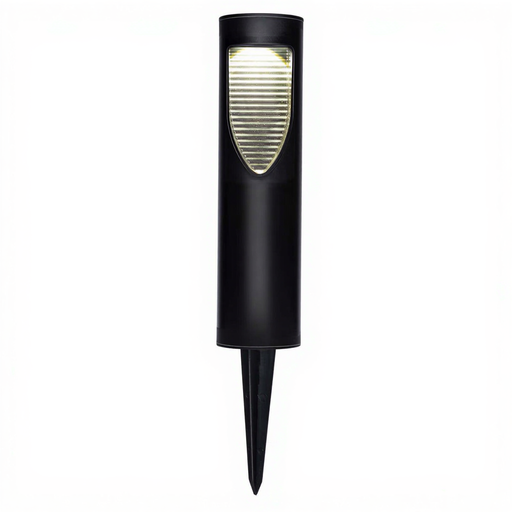
Why This Fits Their Persona: Ideal for anyone looking for a straightforward and affordable solution to add initial accents to their garden or balcony. Perfect as orientation lighting along flowerbeds or small paths.
This model avoids the "Dim Light Problem" by being clearly positioned as mood and orientation lighting. The integrated 600 mAh Ni-MH battery is appropriate for this performance class and avoids the "Fair-Weather Trap" when placed correctly.
Simple installation as a solar ground spike light. The warm white light from the SMD LED creates a pleasant atmosphere without being harsh.
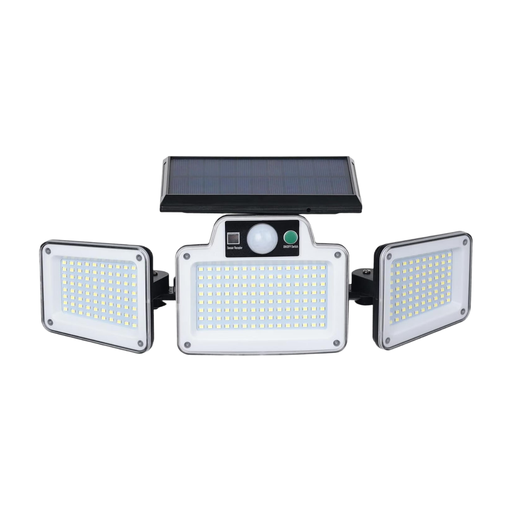
Why This Fits Their Persona: Perfect for illuminating driveways, garages, or dark corners of the property. The focus is on bright, on-demand lighting to increase security.
Solves the "Dim Light Problem" with 280 LEDs and three adjustable heads. The "Single-Season Disappointment" is avoided thanks to the IP65 rating. The separate, large solar panel with a long cable ensures optimal charging and bypasses the "Fair-Weather Trap."
High flexibility with three lighting modes, a remote control, and separate installation of the light and solar panel. The 2400 mAh battery provides a solid energy reserve.
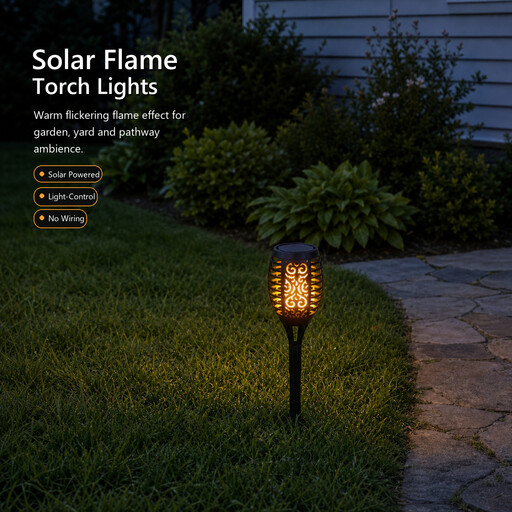
Why This Fits Their Persona: For garden owners who want to create atmospheric and decorative lighting. The realistic flame effect of these solar garden torches provides a warm and inviting atmosphere for garden parties or on mild evenings.
These torches focus on the decorative effect, not maximum brightness. The "Single-Season Disappointment" is addressed by the explicitly stated IP65 waterproof rating, ensuring durability in all weather conditions.
The dancing flame effect creates particularly atmospheric solar garden decor. The automatic on/off function ensures convenient operation without manual intervention.
We've compiled a complete, up-to-date list of products that fully meet these strict selection criteria and safety regulations.
1. Do solar lights also work in winter or on very cloudy days? Yes, but with limitations. Modern solar garden lighting is designed to charge even in diffuse light. However, the charging performance is lower than in direct sunlight. Therefore, on short, gloomy winter days, the illumination time can be significantly shorter. Models with high-quality solar panels and large batteries have an advantage here.
2. What is the lifespan of solar garden lights? The lifespan depends on several components. The LEDs themselves often have a lifespan of 15,000 hours or more. The critical factor is the battery, which can lose capacity after 1-3 years depending on its type and quality. On many models, the battery (often a standard AA or AAA NiMH cell) can be easily replaced, which significantly extends the life of the light. The weather resistance of the housing (IP rating) is also crucial for longevity.
3. What does the IP rating mean for outdoor solar lights? The IP rating indicates how well the housing is protected against the ingress of dust and water. IP44 means protection against splashing water and is sufficient for most sheltered areas. IP65 means it is dust-tight and protected against water jets, making the light much more resistant to heavy rain and weather influences. For long-term durability in an unprotected outdoor area, IP65 or higher is a good choice.