
Lieferung heute & morgen

Qualitätsgarantie

Willkommens-Angebote freischalten: KOSTENLOSE Lieferung | Bis zu 80 % RABATT | Kostenlose 30-Tage-JoyPlus-Testphase
App herunterladen
As a Joybuy Product Recommendation Officer, I see countless customers disappointed by solar lights that stop working after a short time. Atmospheric, solar-powered garden lighting is an attractive idea: no wiring, no electricity costs, and automatic operation. But the market is flooded with products whose performance doesn't live up to their promises. Before you invest, it's crucial to understand the most common pitfalls that lead to frustration and wasted money.
The three most common problems with low-quality solar garden lights are:
To avoid these issues, let verifiable technical specifications—not marketing promises—guide your decision.
To find the right solar lights for your garden, balcony, or patio, focus on three core parameters. These will determine whether a light performs reliably or is destined for the bin after the first autumn storm.
The IP (Ingress Protection) rating indicates how well an electrical device is protected against the entry of solid particles (first digit) and water (second digit). For outdoor lights, the second digit is crucial.
The best LED is useless if the battery is dead in no time. A battery's capacity is measured in milliampere-hours (mAh). A higher mAh number generally means a longer runtime. Pay attention to the combination of battery capacity and the quality of the solar panel:
Good solar-powered LED garden lighting should have a balanced ratio of panel size, panel type, and battery capacity to ensure reliable charging even on less sunny days.
Don't be dazzled by the number of LEDs. The crucial factor is the light output, measured in lumens (lm).
The light colour, measured in Kelvin (K), affects the atmosphere:
Here are some product recommendations tailored to specific use cases and the quality criteria mentioned above.
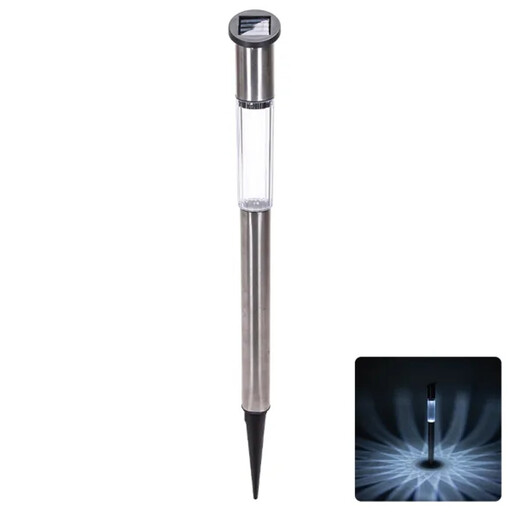
Why This Fits Their Persona: Ideal for users looking for a simple, cost-effective solution to mark garden paths or flowerbeds. The ground stake installation is straightforward and requires no tools. The classic stainless steel design blends discreetly into most gardens.
The product clearly states an IP44 rating, which is sufficient for splash-proof areas. It makes no exaggerated brightness claims; it is designed as an orientation light with 6500K cool white light.
Easy, tool-free installation. The combination of plastic and stainless steel offers a good balance of durability and low weight.
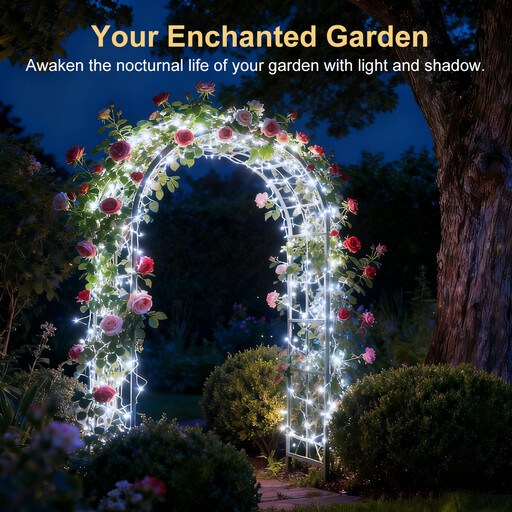
Why This Fits Their Persona: Perfect for anyone wanting to decorate balcony railings, fences, trees, or shrubs. The flexible copper wire is easy to bend into any desired shape, and the eight different lighting modes allow for a customised atmosphere.
These string lights have an IP65 certification, making them resistant to rain and snow and avoiding the pitfall of poor weather resistance. The performance specs (6-8h charge time for 8-14h runtime) are realistic for a product with an efficient panel.
Eight lighting modes with a memory function. The flexible copper wire is discreet and versatile.
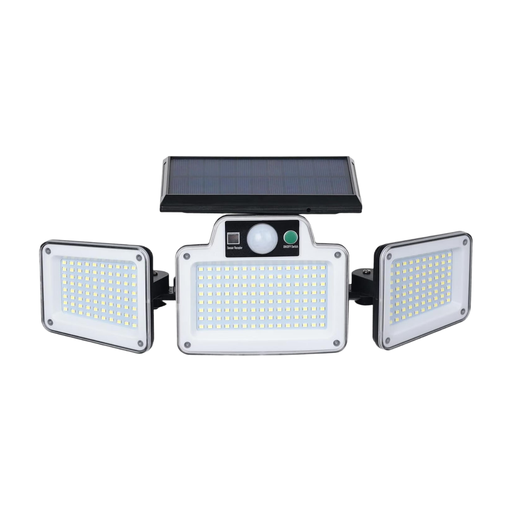
Why This Fits Their Persona: For homeowners who need bright, functional lighting for garages, driveways, or dark corners of the garden. The motion sensor enhances security while saving energy, as the light only shines at full brightness when needed.
This model solves the brightness problem with 280 LEDs and three adjustable heads for wide illumination. The IP65 rating ensures it works in all weather. The separate solar panel with a long cable allows for optimal alignment with the sun, even if the light itself is mounted in a shaded area.
High brightness, motion sensor with three modes, and a remote control. The flexible installation thanks to the separate panel is a significant practical advantage.
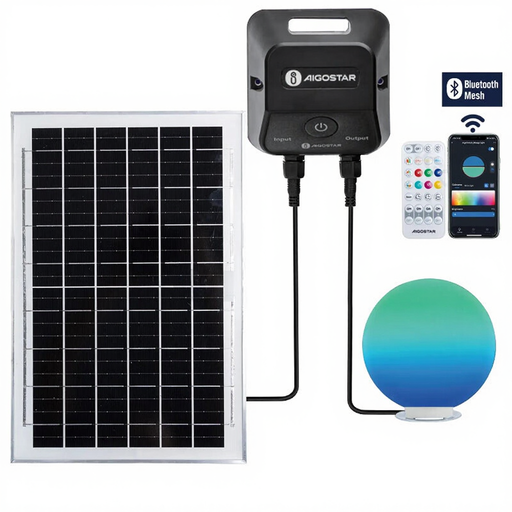
Why This Fits Their Persona: For users who want more than just light. This smart light offers full control over colours (RGBCCT) and brightness via Bluetooth. It can be networked with over 200 other devices to create complex lighting scenes throughout your entire outdoor space.
This premium product avoids performance traps with high-quality components: a large 12W monocrystalline solar panel and a powerful 8000mAh battery ensure reliable performance. The IP65 rating guarantees longevity.
Smart control via Bluetooth Mesh, full colour and brightness control (RGBCCT), and high scalability through its networking capabilities.
We have compiled a complete, up-to-date list of products that fully meet these strict selection criteria and safety regulations.
1. Do solar lights work in winter or on overcast days? Yes, but with reduced performance. High-quality solar lights with efficient monocrystalline solar panels and large batteries can store enough energy for several hours of light, even on cloudy days. However, the runtime will be shorter in winter than in summer. Look for models specifically designed for good performance in low light.
2. What is the lifespan of solar garden lights? The lifespan depends on the quality of the components. The LEDs themselves often last 15,000 hours or more. The critical component is the battery, which can lose capacity after 2-4 years, depending on the type and usage. On some models, the battery can be easily replaced, which significantly extends the entire light's lifespan.
3. Do I need to bring solar lights indoors for the winter? That depends on the IP rating and the specified operating temperature range. Lights with a rating of IP65 or higher are generally designed to be left outdoors year-round. However, during heavy frost and snow, it can be a good idea to bring the lights inside to preserve the battery's lifespan if they are not needed.