
Lieferung heute & morgen

Qualitätsgarantie

Willkommens-Angebote freischalten: KOSTENLOSE Lieferung | Bis zu 80 % RABATT | Kostenlose 30-Tage-JoyPlus-Testphase
App herunterladen
Solar lights promise a simple and cost-effective way to illuminate your garden. No laying cables, no additional electricity costs—the advantages are obvious. But the reality is often different: lights that stop working after one summer, a disappointingly dim output, or a runtime that barely lasts through the first few hours of the evening.
As your Joybuy Product Recommendation Officer, I see it as my duty to guide you through the jungle of product claims. Instead of falling for marketing hype, you should focus on verifiable facts. Below, I'll show you the three most common pitfalls when buying solar garden lights and what really matters.
To avoid a bad purchase, you should focus on technical specifications that provide a reliable indication of the product's quality and durability.
The IP rating indicates how well an electrical device is protected against the ingress of foreign objects (first digit) and water (second digit). For weatherproof outdoor solar lights, the following values are relevant:
The combination of the battery and solar panel determines how much energy is stored and how quickly it is charged.
The brightness and atmosphere a light creates depend on lumens and Kelvin.
Based on these objective criteria, we have selected some products for different needs and applications.
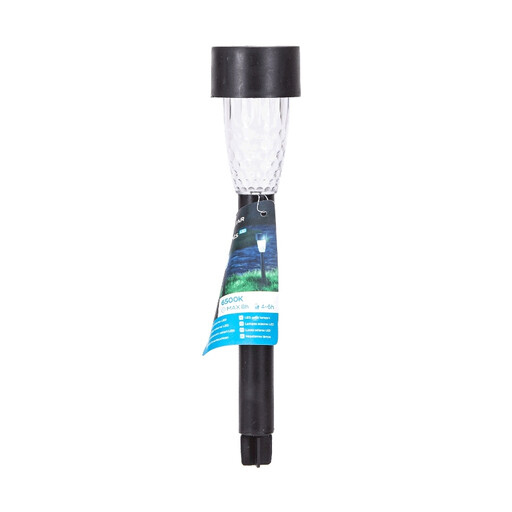
Why This Fits Their Persona: Ideal for users looking for a straightforward and affordable solution to add initial accents to a garden or balcony. The focus is on simple functionality without complex extras.
The product description sets realistic expectations. The IP44 rating is clearly declared for splash protection, not for extreme weather conditions. The runtime of up to 8 hours is linked to the small battery capacity (40mAh Ni-MH) and should be seen as a guideline.
Very simple installation thanks to solar lights with ground stakes. Automatic operation via a dusk-to-dawn sensor. Low purchase price for decorative purposes.

Why This Fits Their Persona: Perfect for garden owners who want to implement a unified lighting concept and change the atmosphere depending on the occasion. The solar light set allows for a cohesive design of flower beds or pathways.
This set avoids the trap of an inflexible light colour. Users can actively choose between atmospheric warm white and dynamic RGB colour change. The 600mAh Ni-Mh battery provides a solid foundation for the specified 6-8 hour runtime.
Practical 5-pack set for a uniform design. Switchable light modes (Warm White & RGB). Weather-resistant design for outdoor use.
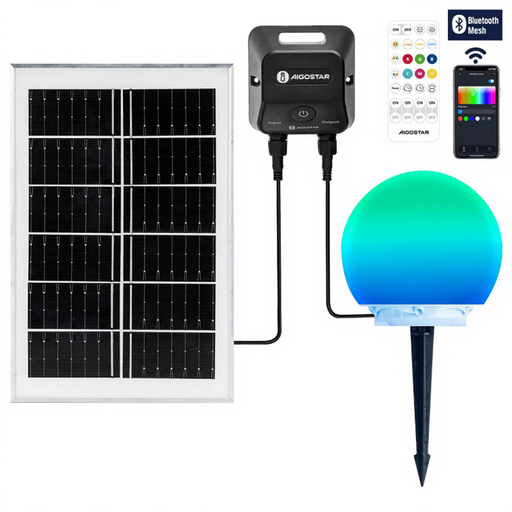
Why This Fits Their Persona: For users who want full control and connectivity. This light enables a complete smart garden lighting system that can be controlled, synchronised, and automated via an app.
This model specifically addresses the weaknesses of simpler lights: a separate, high-performance 5W monocrystalline solar panel and a large 4000mAh battery ensure reliable performance. The IP65 certification guarantees high weather resistance.
Control over 200 lights via Bluetooth-Mesh. Full colour and white tone control (RGBCCT). Long runtime of up to 24 hours after 4-6 hours of charging, according to the manufacturer.
We have compiled a complete, up-to-date list of products that fully meet these strict selection criteria and safety regulations.
The lifespan depends on two main components: the battery and the LED. A built-in NiMH battery typically lasts 1-3 years before its capacity noticeably decreases. Higher-quality lithium-ion batteries can last longer. The LEDs themselves have a very long lifespan, often 15,000 hours or more, and are rarely the cause of failure. On many models, the battery is the component that limits the usable life.
Yes, but with reduced performance. Modern solar panels, especially monocrystalline ones, can generate energy even in diffuse light (cloudy skies). However, the charging performance is significantly lower than in direct sunlight. In winter, the days are shorter and the sun's angle is lower, which further reduces charging time. Therefore, expect a shorter runtime in winter than in summer.
That depends on the IP rating and the battery type. Lights with a rating of IP65 or higher are generally robust enough to remain outdoors year-round. For models with a lower rating (e.g., IP44) or if you live in a region with very heavy frost, it may be wise to store the lights in a dry, frost-free place over the winter. This particularly protects the battery and extends its lifespan.