
Lieferung heute & morgen

Qualitätsgarantie

Willkommens-Angebote freischalten: KOSTENLOSE Lieferung | Bis zu 80 % RABATT | Kostenlose 30-Tage-JoyPlus-Testphase
App herunterladen
As a Joybuy Product Recommendation Officer, my role is to provide you with clear, factual information so you can make an informed purchasing decision. Solar garden lights promise a simple and cost-effective way to illuminate paths and create an ambient atmosphere. However, the market is flooded with products whose performance often falls short of expectations. Before you invest, it's crucial to understand the most common pitfalls.
Many buyers report three key problems that can quickly render initially promising solar garden lighting useless:
To avoid these disappointments, you should check a few technical basics before buying.
Instead of being swayed by marketing promises, focus on three verifiable features that determine the longevity and functionality of your solar lights.
The IP (Ingress Protection) rating indicates how well an electrical device is protected against the ingress of foreign objects and water. For an outdoor LED solar light, this value is critical.
Products without a specified IP rating should generally be avoided for outdoor use.
The combination of the battery and solar panel is the engine of your light. The battery capacity, measured in milliampere-hours (mAh), determines how much energy can be stored. A polycrystalline or monocrystalline solar panel ensures efficient conversion of sunlight into electricity.
Look for a balanced ratio: a large battery is of little use if the solar panel is too small to fully charge it on an average sunny day. As a rule of thumb, models with a specified runtime of 8 hours or more generally have more solid technical specifications.
The durability of a solar light depends heavily on the materials used.
Based on these objective criteria, we have identified some products suitable for different user profiles and applications.
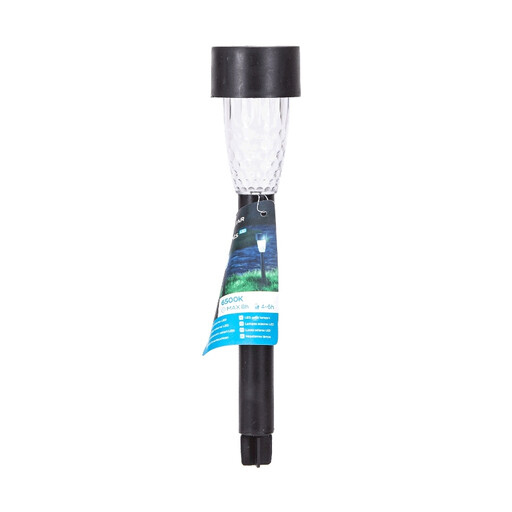
Why This Fits Their Persona: Ideal for users looking for straightforward and functional basic lighting for paths or flowerbeds without a large budget. Installation is incredibly simple and requires no prior experience.
With its certified IP44 rating, this light is explicitly protected against splashing water, thus avoiding the typical premature failure due to moisture.
Offers a runtime of up to 8 hours and a specified lifespan of 20,000 hours, which is solid performance for a model in this price range.

Why This Fits Their Persona: Perfect for garden owners who want to not only illuminate but also design their space. This solar light set allows for flexible and creative lighting design for parties or for accentuating plants.
The set is declared as weather-resistant for outdoor use and features a 600mAh battery that provides a runtime of 6-8 hours, thus bypassing the trap of insufficient runtime.
The main strength is its versatility: users can choose between atmospheric warm white and an automatic color change (RGB) to individually tailor the garden's atmosphere.
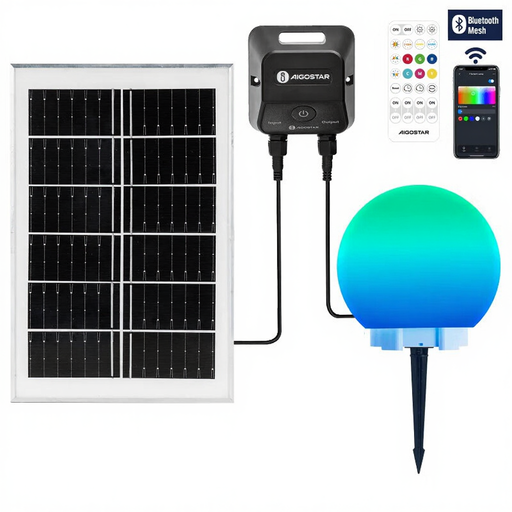
Why This Fits Their Persona: For users who want full control and smart features. The app control allows for adjusting brightness, color, and schedules without having to touch the light.
Solves the problem of rigid, often too-dim lighting. The brightness can be adjusted via the app to meet specific needs, bypassing the "insufficient brightness" trap through individual control.
The Bluetooth Mesh technology allows for the seamless control of multiple lights. The RGBCCT function offers full flexibility in color choice (full-color RGB) and color temperature (2700K–6500K).
We have compiled a complete, up-to-date list of products that fully meet these strict selection criteria and safety regulations.
The lifespan of a solar light is determined by two main components: the LED and the battery. The LEDs themselves are very durable, often with a rated operating time of 15,000 to 20,000 hours. The limiting factor is usually the rechargeable battery. Depending on its quality and usage intensity, its capacity can diminish after 1 to 3 years. On some models, the battery can be replaced, which extends the overall life of the light.
Yes, modern solar path lights also work in diffuse light, albeit with reduced performance. On cloudy days or during the shorter winter days, the battery charges more slowly and less completely. This results in a shorter runtime at night. For optimal performance, the solar panels should always be facing south and kept free of dirt, leaves, or snow.
Maintenance is minimal. It is recommended to regularly clean the solar panel with a soft, damp cloth to remove dust and dirt. A clean surface ensures maximum absorption of sunlight and thus efficient charging of the battery. In winter, snow should be removed from the panel. Otherwise, no further maintenance is required.