
Lieferung heute & morgen

Qualitätsgarantie

Willkommens-Angebote freischalten: KOSTENLOSE Lieferung | Bis zu 80 % RABATT | Kostenlose 30-Tage-JoyPlus-Testphase
App herunterladen
Solar lights promise a simple and eco-friendly way to showcase your garden—all without complex wiring or additional electricity costs. However, the market is flooded with products whose real-world performance often fails to match the promises on the packaging. Many buyers find their new garden lighting quickly loses its brightness, fails in the rain, or creates a completely different atmosphere than they had hoped for.
This guide will show you which technical details truly matter and how to avoid the common pitfalls when buying solar lights for the garden. This way, you can ensure your investment provides the desired mood and security for your outdoor space in the long run.
Before we get to our recommendations, it's important to understand the most common flaws that lead to dissatisfaction.
To avoid a bad purchase, you should check three core technical parameters. These provide a reliable indication of the quality and longevity of garden solar lights.
The IP (Ingress Protection) rating is an international standard that indicates how well a device is protected against the intrusion of foreign objects (first digit) and water (second digit).
LED solar garden lights are significantly more robust and better suited for exposed locations in the garden that are subject to rain and garden hoses.The performance of a solar lamp depends directly on the quality of its energy system.
The material affects not only the appearance but also the durability. Stainless steel solar lights are corrosion-resistant and more durable than many plastic alternatives, which can become brittle from UV radiation.
The light colour, measured in Kelvin (K), is crucial for setting the mood:
solar path lights to improve orientation.Instead of making a one-size-fits-all recommendation, we have selected products for different needs and use cases.
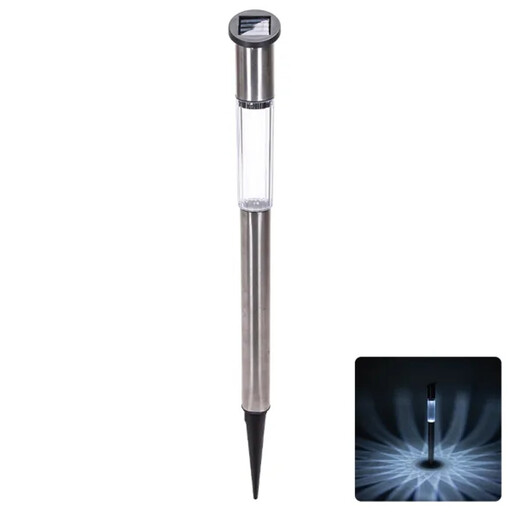
Why it's a good fit: Ideal for users seeking functional and durable lighting for garden paths or driveways. The design is simple, and the focus is on reliable orientation.
The stainless steel housing prevents rust and weather damage. The clear specification of the light colour (6500K cool white) avoids unwanted surprises with the light's atmosphere.
Robust material and clear, bright light for safety and orientation. The polycrystalline silicon solar panel ensures efficient charging.
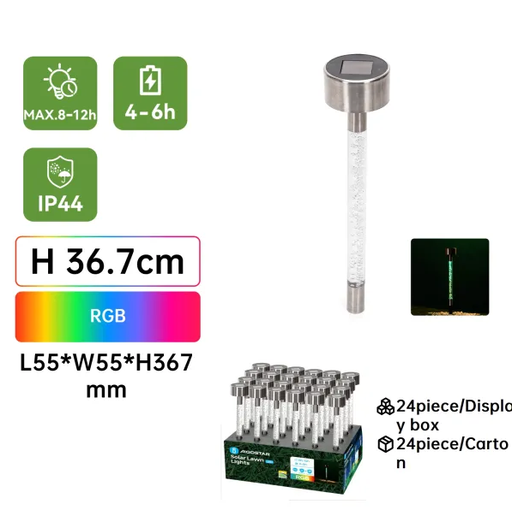
Why it's a good fit: Perfect for anyone who wants to play with light and add colourful accents to flowerbeds, pond edges, or parties. The focus here is clearly on the decorative effect.
This model doesn't promise high brightness but instead focuses on being a decorative `colour-changing solar light`. This clearly sets expectations on the atmospheric RGB effect.
Automatic RGB colour change for a dynamic and playful atmosphere. The bubble design inside creates an interesting light refraction.
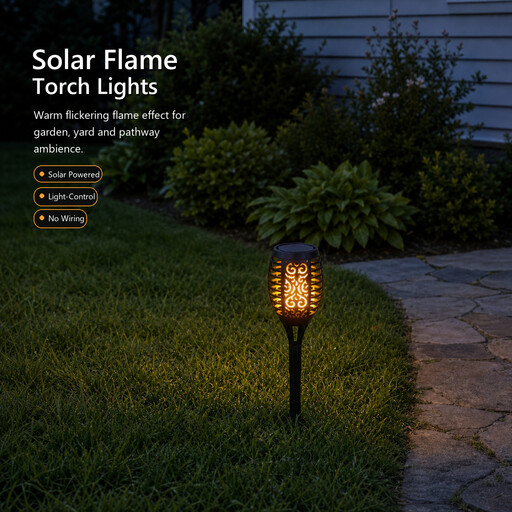
Why it's a good fit: These `solar garden torches` are ideal for creating a warm and lively campfire atmosphere. The flickering light effect is perfect for patios, barbecue areas, or as a decorative element along flowerbeds.
It sidesteps the pitfall of poor weather resistance with a high protection rating of IP65. This ensures the torches are reliably protected even in heavy rain and are suitable for year-round use in exposed areas.
The realistic flame effect creates a unique, warm atmosphere. The high IP65 certification promises above-average durability.
If you're looking for other models that meet our criteria for performance and durability, you can find a wider selection of tested `outdoor solar lamps` here.
The lifespan depends on three components: the LED bulb, the battery, and the housing. LEDs have a very long life, often 15,000 hours or more. The battery is usually the first component to lose performance; in most models, the capacity diminishes after 1-3 years. A robust housing made of stainless steel or high-quality plastic protects the electronics and significantly extends the overall lifespan. Regularly cleaning the solar panel of dirt and leaves ensures optimal charging performance.
Yes, but with some limitations. The shorter days and the lower angle of the sun in winter significantly reduce the solar panel's charging performance. Frequent cloud cover also decreases the energy yield. As a result, the lighting duration will be noticeably shorter in the winter months than in the summer. However, high-quality models with efficient panels and good batteries can still provide a few hours of light even in winter.
The location is crucial for functionality. Place the solar ground stake in a spot that receives as much direct sunlight as possible during the day—ideally with a south-facing orientation and free from shadows cast by trees, walls, or eaves. Also, be careful not to position the lights near other strong light sources (e.g., streetlights or windows), as their light can trick the dusk sensor and prevent the lights from turning on automatically at night.