
Lieferung heute & morgen

Qualitätsgarantie

Willkommens-Angebote freischalten: KOSTENLOSE Lieferung | Bis zu 80 % RABATT | Kostenlose 30-Tage-JoyPlus-Testphase
App herunterladen
As a Joybuy Product Recommendation Officer, I see every day how simple and enriching the right lighting can be for a garden. Solar garden lights promise a straightforward, wire-free, and eco-friendly solution. However, the market is flooded with products whose promises vanish after the first downpour or during the shorter winter days. To prevent you from investing in lights that need to be thrown away after just one season, I'll show you the most common pitfalls and what to look for when making your choice.
Many buyers are disappointed because their new solar lights don't live up to the promises on the packaging. These three points are often the cause:
To make an informed decision, you should check three technical features. These determine the performance, longevity, and actual utility of your solar light.
The heart of every solar light is the combination of the solar panel and the battery. There are significant quality differences here:
The IP rating indicates how well a light is protected against the ingress of foreign objects (first digit) and water (second digit).
These two values determine the effect of the light:
Based on these objective criteria, we have selected products that suit different needs and use cases.
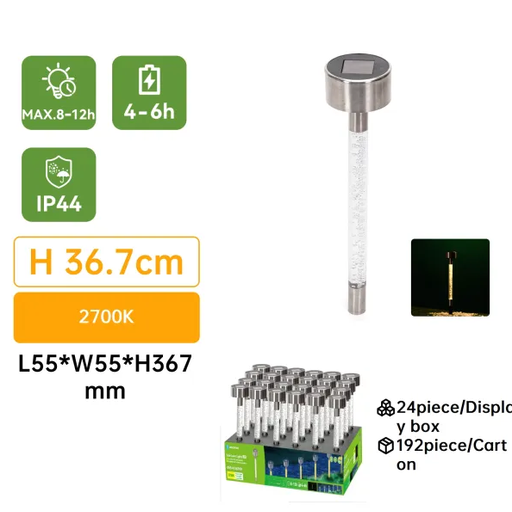
Why This Fits Their Persona: Ideal for users who want to create atmospheric accents in flowerbeds or on the balcony on a small budget. The warm white light and decorative bubble design create ambience without claiming to provide functional brightness.
This model is clearly positioned as mood lighting. The low price reflects the simple technology (amorphous panel, 40mAh Ni-MH battery), so no false expectations are set for its runtime in poor weather. Also available as a colour-changing solar light.
Very simple installation as solar lights with ground stakes; automatic operation from dusk till dawn; decorative design.

Why This Fits Their Persona: Perfect for homeowners looking for reliable and functional lighting for garden paths, driveways, or entrance areas. Safety and orientation are the main priorities here.
This light avoids the brightness trap by offering a clear, cool white light (6500K) for good visibility. The stainless steel design is more robust than pure plastic. The IP44 rating is sufficient for its intended use on splash-proof paths.
Functional, bright light for path safety; more robust material combination of plastic and stainless steel; polycrystalline solar panel for solid charging performance.
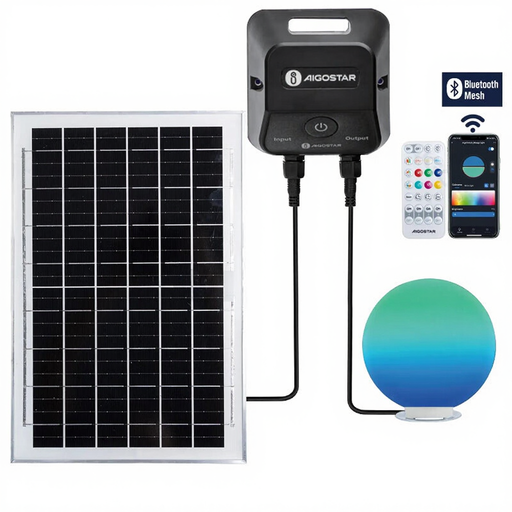
Why This Fits Their Persona: For users looking for a modern smart solar light with full control, high performance, and an attractive design. Ideal as an outdoor solar floor lamp on the patio or as a highlight in the garden.
Solves the problems of runtime and weather resistance with high-quality components: a large 8000mAh lithium battery, an efficient monocrystalline solar panel, and an IP65 protection rating. The brightness of 350 lumens is remarkable for a solar light.
Full control over brightness and light colour (RGB+CCT) via Bluetooth Mesh; high light output and long battery life; true weather resistance for year-round use.
We have compiled a complete, up-to-date list of products that fully meet these strict selection criteria and safety regulations.
1. How long do solar garden lights last? The lifespan depends on three components. The LED solar light itself often has a stated lifespan of 15,000 to 30,000 hours, which means many years. The battery is the most common wear part; a NiMH battery typically lasts 1-2 years, while a lithium battery can last 3 years or more. The weather resistance of the housing (material and IP rating) is also crucial for overall durability.
2. Do solar lights work in winter or on cloudy days? Yes, but with reduced performance. Charging efficiency drops significantly on cloudy and shorter days. High-quality lights with efficient (monocrystalline) solar panels and large batteries can still provide light for a few hours in winter. Inexpensive models with small panels and batteries will often light up only briefly or not at all during the darker months. A sunny, south-facing position is important all year round.
3. Do I need to bring solar lights indoors during winter? That depends on the quality of the light. Models with a low IP rating (e.g., IP44) and temperature-sensitive NiMH batteries should be protected from heavy frost and moisture. High-quality lights with at least an IP65 rating and robust lithium batteries are designed for year-round outdoor use and can be left outside in winter. Check the manufacturer's operating temperature specifications for this.