
Lieferung heute & morgen

Qualitätsgarantie

Willkommens-Angebote freischalten: KOSTENLOSE Lieferung | Bis zu 80 % RABATT | Kostenlose 30-Tage-JoyPlus-Testphase
App herunterladen
By the Joybuy Product Recommendation Officer, August 28, 2026
Solar garden lights promise an easy and affordable way to illuminate paths, accentuate patios, and improve security—all without electrical wiring or extra energy costs. However, the reality is often quite different: many products disappoint with poor brightness, a short lifespan, or inadequate weather resistance.
As your Product Recommendation Officer at Joybuy, my mission is to provide you with objective information to help you make confident, informed decisions. This guide will walk you through the most common pitfalls when buying solar garden lights and explain which technical specifications you should focus on.
Before you invest, it's crucial to understand the typical flaws that often only become apparent after your purchase.
To avoid these mistakes, focus on three verifiable metrics. These will help you objectively evaluate a solar light's performance.
Forget the wattage rating. The true brightness of an LED is measured in lumens (lm).
The IP rating indicates how well a device is protected against the ingress of foreign objects and water.
The battery's performance determines how long your wire-free garden lighting will last through the night.
Based on these objective criteria, we have identified several products that offer a suitable solution for specific user profiles.

Why This Fits Their Persona: Ideal for users looking for straightforward and functional lighting for garden paths or flowerbeds. The installation is incredibly simple and requires no technical expertise.
The stainless steel housing is more robust than all-plastic models. A runtime of 8-12 hours after 4-6 hours of charging is a solid value in this category, sidestepping the problem of short-lived batteries.
Easy installation with a ground stake. The IP44 rating provides sufficient protection against splashing water for use in flowerbeds and along paths.
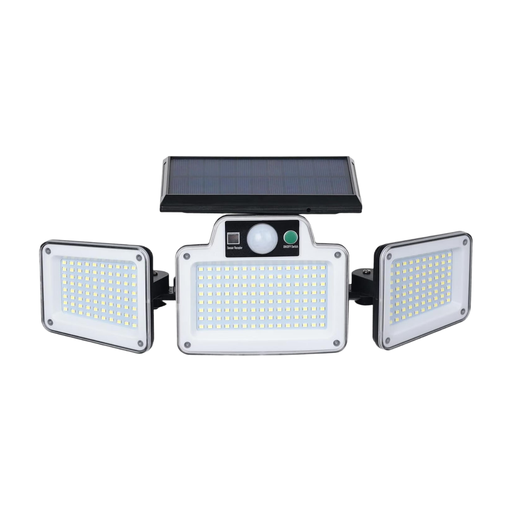
Why This Fits Their Persona: Perfect for illuminating driveways, garages, or dark corners of the property. The focus is clearly on security and functionality.
This spotlight bypasses the brightness trap with 280 LEDs and the weatherproofing myth with an IP65 certification. The separate solar panel with a long cable solves the problem of the light needing to be in a shady location.
Three adjustable light heads for wide coverage. Three operating modes, controllable via remote, including a motion-only mode for maximum efficiency.
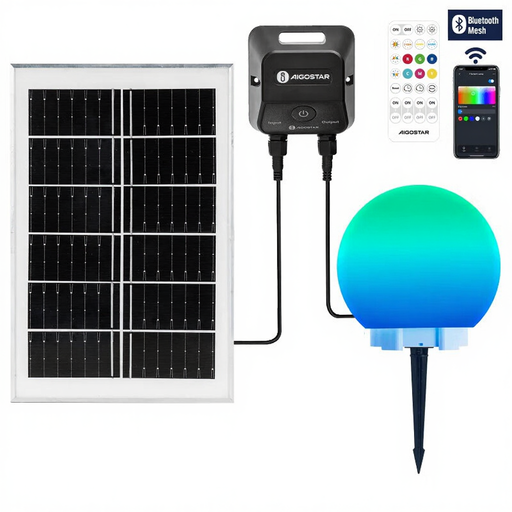
Why This Fits Their Persona: For users who want more than just light: full control over colours, brightness, and schedules. Ideal for creating a custom ambiance for parties or relaxing evenings.
This light goes far beyond basic models. Instead of a fixed light, it offers full RGB+CCT control (colours and white tones from 2700K-6500K). The Bluetooth Mesh technology allows for stable control of multiple lights.
Complete control via the AigoSmart app. Ability to group lights and create scenes. These are true smart solar lights for a connected home.
We have compiled a complete, up-to-date list of products that fully meet these strict selection criteria and safety standards.
Yes, but with limitations. The fewer hours of sunlight and lower intensity of solar radiation in winter mean that the batteries may not fully charge. The runtime per night is therefore significantly shorter than in summer. Models with high-efficiency solar panels and large batteries have an advantage here.
The lifespan depends on the quality of the components. The LED bulbs themselves often have a lifespan of 15,000 hours or more. The limiting factor is usually the battery. High-quality lithium-ion batteries can last 2-4 years before their capacity noticeably decreases. On many models, the battery can be replaced, which extends the overall life of the light.