
Lieferung heute & morgen

Qualitätsgarantie

Willkommens-Angebote freischalten: KOSTENLOSE Lieferung | Bis zu 80 % RABATT | Kostenlose 30-Tage-JoyPlus-Testphase
App herunterladen
Solar lights promise a simple and energy-efficient way to illuminate your garden. However, the market is flooded with products whose marketing claims often fall short in practice. Inaccurate brightness specifications or inadequate weather resistance can quickly lead to disappointment and wasted money.
As your Joybuy Product Recommendation Officer, I'm here to help you identify these pitfalls. This guide focuses on the crucial technical features that define durable and functional solar garden lighting, enabling you to make an informed decision.
Many outdoor solar lights fail within just a few months. The reasons are often the same and can be identified before purchase by checking the product specifications.
To avoid a bad purchase, you should focus on three verifiable technical specifications. These are the primary determinants of the performance and longevity of your solar garden lights.
The IP (Ingress Protection) rating indicates how well an electrical device is protected against the intrusion of foreign objects and water. For outdoor use, this is the most critical factor.
solar floodlights with motion sensors or solar torches that are directly exposed to the elements. A light with IP65 waterproof certification is designed for the typical weather conditions found in Northern Europe.The battery is the heart of every solar lamp. Pay attention to the type and capacity, indicated in milliampere-hours (mAh).
The solar panel converts sunlight into electrical energy. Monocrystalline solar panels are generally more efficient than polycrystalline ones, especially in low or diffuse light—a common scenario in many parts of Europe. A high-quality panel ensures the battery gets an adequate charge even on less sunny days.
Instead of a one-size-fits-all recommendation, we have selected products for specific needs and user profiles.

Why this product is a great fit: Ideal for users looking to create an ambient atmosphere on patios, in pergolas, or for garden parties. As a form of `garden decor`, the 10-metre string light offers flexibility and warm white light for a cosy setting.
The product features an explicit IP65 certification, protecting it against rain and adverse weather. The built-in 1200mAh lithium battery is clearly specified and provides a solid foundation for a runtime of up to 12 hours, according to the manufacturer.
The combination of decorative G50 globe bulbs and 8 different lighting modes allows for versatile and customisable `outdoor solar LED string lighting` for various occasions.
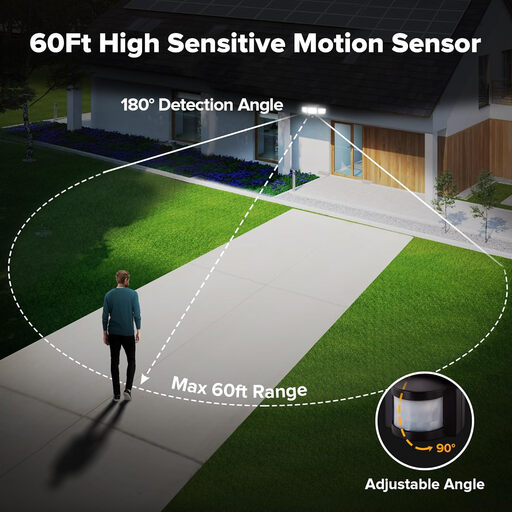
Why this product is a great fit: Designed for illuminating driveways, garages, and dark corners of the garden. The focus is on high brightness and reliable motion detection for deterrence and safe passage.
The 3000-lumen brightness is realistic for a security floodlight. The IP65 rating and the 1800mAh lithium-ion battery are clearly declared and meet the requirements for reliable outdoor use.
Three individually adjustable light heads provide a wide 270° illumination angle. According to the manufacturer, the motion sensor has a range of up to 18 metres, enabling wide-area coverage.
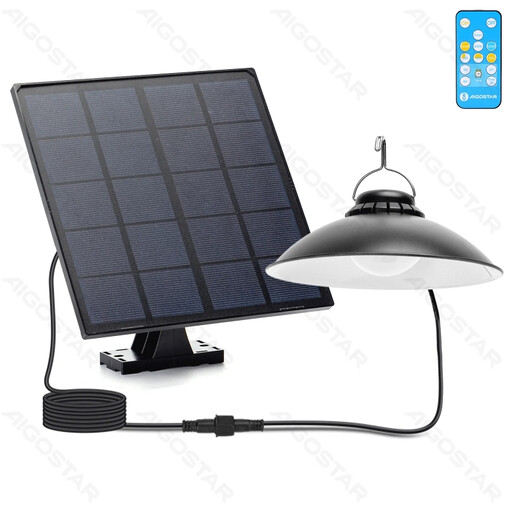
Why this product is a great fit: Perfect for lighting areas without a direct power source, such as garden sheds, covered patios, or gazebos. The separate solar panel offers maximum installation flexibility.
This model uses a high-quality 5000mAh LiFePO4 battery, known for its longevity and safety. The IP65 rating applies to both the light and the panel. The "50W" specification is transparently explained as an equivalence value.
The 3-metre cable between the panel and the light allows the lamp to be mounted indoors or in a sheltered outdoor area, while the panel is positioned for optimal sun exposure. Additionally, the colour temperature is adjustable (3000K/4000K/6500K).
We have compiled a complete, up-to-date list of products that fully meet these strict selection criteria and safety standards.
The lifespan depends on three components: the LED bulb (often 30,000 hours or more), the solar panel, and the battery. The battery is typically the component with the shortest lifespan. High-quality lithium-ion batteries generally last 2-4 years before their capacity noticeably degrades, while LiFePO4 batteries can have an even longer service life.
Yes, but with reduced performance. Solar panels still charge in diffuse light, but much more slowly than in direct sunlight. In winter, the days are shorter and the sun is lower in the sky, further reducing charging time. A high-quality light with an efficient panel and a high-capacity battery will still work in winter, but potentially with a shorter runtime each night.
The ideal location for the solar panel is a spot with the longest possible duration of direct sunlight, ideally south-facing. Avoid shadows from trees, buildings, or overhangs. Furthermore, ensure the solar light is not illuminated by other artificial light sources (e.g., streetlights), as this may prevent the dusk-to-dawn sensor from activating and turning the light on.