
Lieferung heute & morgen

Qualitätsgarantie

Willkommens-Angebote freischalten: KOSTENLOSE Lieferung | Bis zu 80 % RABATT | Kostenlose 30-Tage-JoyPlus-Testphase
App herunterladen
By the Joybuy Product Recommendation Officer
Solar garden lights promise a simple and cost-effective way to beautify your outdoor space. With no wiring required and no additional electricity costs, they transform gardens, patios, and balconies into atmospheric oases. However, the market is flooded with products whose promises don't hold up in practice. Many buyers are left disappointed when the lights fail after a short time, provide barely any light, or don't survive the first autumn storm.
This guide reveals the three most common pitfalls when buying solar garden lights and explains which technical features you should look for to find durable and functional solar garden lighting.
Before you make a decision, it's crucial to distinguish between typical marketing promises and actual product features. These three points most often lead to disappointment:
Waterproof outdoor lighting is essential in the UK and similar climates. Often, however, only a low protection rating like IP44 is specified. This only protects against splashing water and is unsuitable for unprotected locations exposed to rain and snow. Penetrating moisture quickly leads to corrosion and a total failure of the electronics.To avoid a bad purchase, focus on verifiable technical data. These three criteria are crucial for the performance and longevity of your outdoor solar lights.
The brightness of a light is measured in lumens (lm). The higher the value, the brighter the light.
LED solar string lights outdoor): 10–50 lumens per light is often sufficient.solar spotlights): Models with 300–800 lumens provide powerful illumination.The battery capacity, specified in milliampere-hours (mAh), determines how long the light can stay on after a full charge. A higher mAh value generally allows for a longer illumination time.
The IP (Ingress Protection) rating indicates how well a device is protected against the ingress of foreign objects and water.
balcony solar lights under an overhang.outdoor solar lights that are directly exposed to the weather, such as solar in-ground lights.Modern solar lights offer more than just automatic on/off functionality.
colour-changing solar spotlight (often referred to as RGB or RGBCCT) allows you to adjust the light colour via remote control or an app.Smart solar lights can be connected to a smartphone app via Bluetooth or Wi-Fi. This enables the creation of schedules, the synchronisation of multiple lights, and the seamless adjustment of brightness and colour.Here are some recommendations tailored to specific use cases that meet the quality criteria mentioned above.
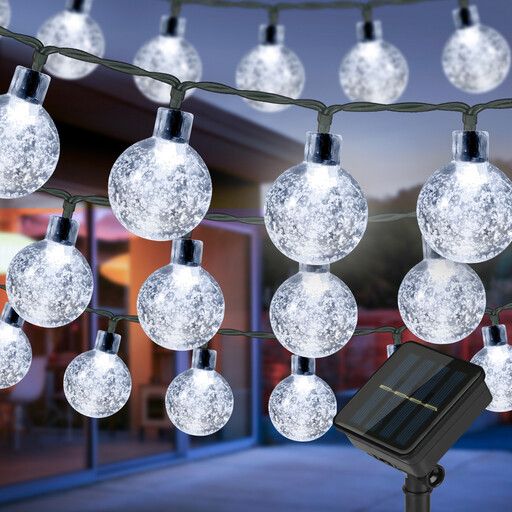
Why This Fits Their Persona: Ideal for users seeking hassle-free, decorative lighting for parties, holidays, or everyday use on balconies and patios. The string lights instantly create an inviting atmosphere.
With an IP65 protection rating, this string light is explicitly protected against heavy rain, thus avoiding the trap of inadequate weather resistance.
Offers 8 different lighting modes for varied effects and a generous length of 11 metres for flexible decoration possibilities.
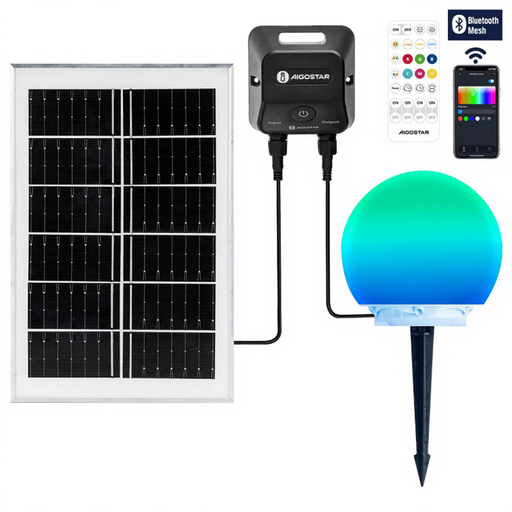
Why This Fits Their Persona: Perfect for tech enthusiasts who want to fully control their garden lighting and integrate it into a smart system. Ideal for staging synchronised lighting scenes throughout the entire garden.
This model avoids the short runtime trap with a separate, high-efficiency 5W monocrystalline solar panel and a powerful 4000mAh battery.
Bluetooth Mesh technology allows for the networking and control of over 200 lights. Full RGBCCT colour control (colours and white tones from 2700K-6500K) via app.
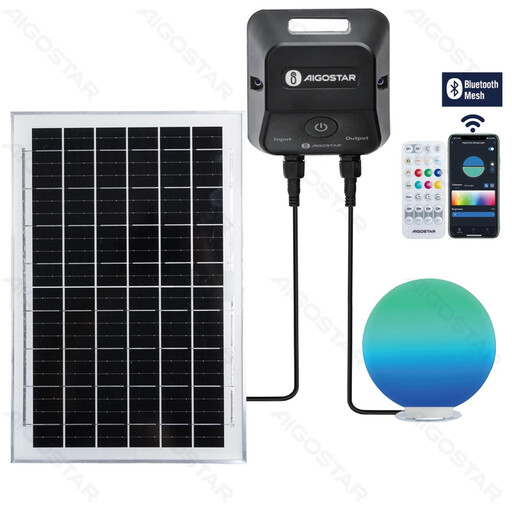
Why This Fits Their Persona: Designed for users who need powerful and flexible lighting to specifically illuminate trees, facades, or larger garden areas. A true solar spotlight for demanding tasks.
This model escapes the brightness trap with a clear luminosity specification of 350 lumens. The robust IP65 rating ensures longevity in all weather conditions.
Very high battery capacity of 8000mAh for an illumination time of up to 24 hours. The 10W monocrystalline panel ensures efficient charging.
We have compiled a complete, up-to-date list of products that fully meet these strict selection criteria and UK safety regulations.
The lifespan of a solar light depends on two main components: the LED and the battery. The LEDs themselves often have a very long life of 30,000 hours or more. The battery is usually the component that loses performance first. Depending on the battery type and frequency of use, it typically lasts one to three years. On some higher-quality models, the battery can be replaced, which significantly extends the product's lifespan.
Yes, modern solar lights also work in diffuse light, albeit with reduced performance. Monocrystalline solar panels, which are installed in many newer models, have a higher efficiency in low light than older polycrystalline panels. On cloudy days or in winter, the charging time is longer and the illumination time per night is correspondingly shorter. Optimal, south-facing placement of the panel without any shading is crucial.
The IP rating classifies the protection of an enclosure against the ingress of foreign objects (first digit) and water (second digit). For outdoor solar lights, two levels are particularly relevant: IP44 provides protection against splashing water from all sides and is sufficient for covered, sheltered areas. IP65 provides protection against water jets from any angle and is the recommended choice for lights that are exposed to rain without protection.