
Lieferung heute & morgen

Qualitätsgarantie

Willkommens-Angebote freischalten: KOSTENLOSE Lieferung | Bis zu 80 % RABATT | Kostenlose 30-Tage-JoyPlus-Testphase
App herunterladen
As a Joybuy Product Recommendation Officer, I see every day how simple and cost-effective atmospheric garden lighting can be. Solar garden lights promise a world with no wires, no electricity bills, and automatic illumination at dusk. But the reality is often different: many buyers are disappointed by products that fail after one summer or never achieve their promised brightness.
Before you invest, it's crucial to understand the most common pitfalls, which are often hidden in marketing descriptions.
To avoid these problems, don't rely on marketing promises. Instead, focus on understanding a few crucial technical parameters.
To make an informed decision, you should check three technical specifications. These will determine whether a solar light will be a long-term, satisfying solution or a short-lived disappointment.
The heart of any solar light is the combination of its battery and solar panel.
A good combination of panel and battery is crucial for reliable LED solar lights that can stay lit all night.
The IP (Ingress Protection) rating indicates how well an electrical device is protected against the entry of foreign objects and water. For waterproof solar lights used outdoors, this is an essential quality mark.
Solar path lights or spotlights that are fully exposed to the elements should have at least this rating.The light colour, measured in Kelvin (K), has a major impact on the atmosphere a light creates.
solar garden decor and illuminating seating areas on a balcony or patio.An outdoor solar string light with warm white light creates a festive mood, while a solar path light with cool white light ensures clear visibility.
Based on these objective criteria, we have identified some products suited for specific user profiles and their needs.
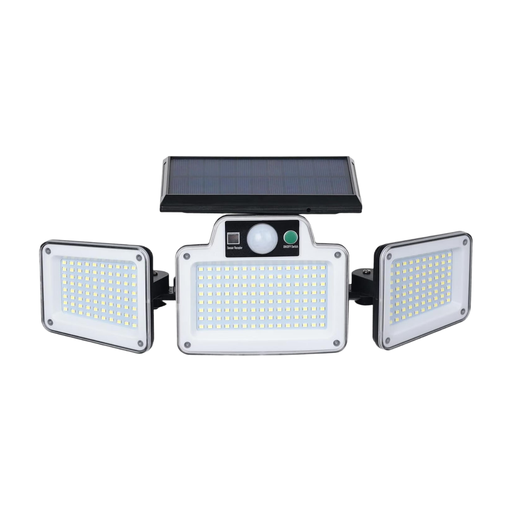
Why This Fits Their Persona: Ideal for homeowners who want to reliably illuminate driveways, garages, or dark corners of the garden. The focus here is clearly on functionality and security.
The IP65 certification ensures protection against heavy rain and dust, avoiding the trap of poor weather resistance. The motion sensor provides bright light only when needed, efficiently using the energy from the 2400-mAh battery.
Three adjustable light heads for wide-area illumination; remote control for easy adjustment of the three light modes; separate solar panel with a long cable for flexible placement in the sun.
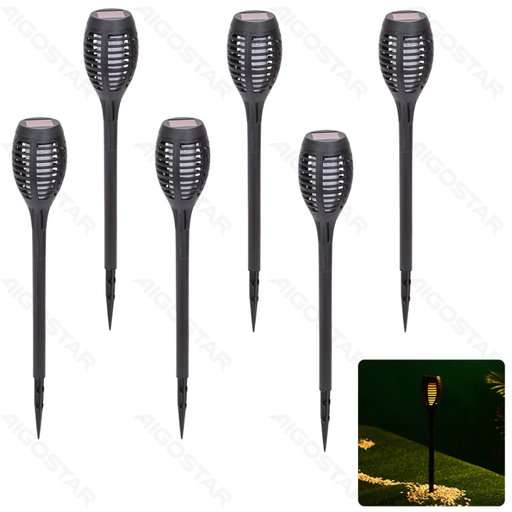
Why This Fits Their Persona: Perfect for garden and balcony owners looking for decorative and atmospheric lighting. Ideal for adding a special flair to flowerbeds, paths, or lounge areas.
These lights avoid the disappointing light quality trap. The realistic flame effect and warm white light colour of 2700K create a high-quality atmosphere instead of just a weak glow. The IP44 rating provides sufficient protection for use in flowerbeds.
Unique flame effect for a special ambience; comes in a practical 6-pack for uniform decoration; simple, tool-free installation with ground stakes.
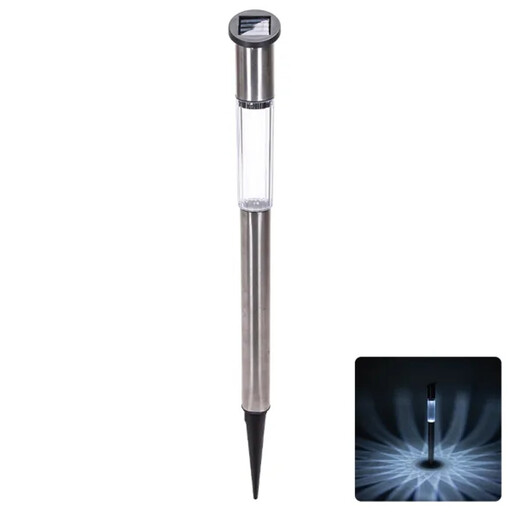
Why This Fits Their Persona: For users seeking a straightforward, functional, and durable solution for marking garden paths or lawn edges, without prioritising elaborate designs.
The stainless steel housing is more robust than plain plastic and more resistant to weathering and physical stress. The IP44 rating provides solid basic protection. The cool white light (6500K) ensures clear visibility on paths.
Durable stainless steel design; clear, functional light for path marking; straightforward handling and installation via ground stake.
We have compiled a complete, real-time updated list of products that fully meet these strict selection criteria and relevant safety standards.
The lifespan depends on two main components: the LED and the battery. The LEDs themselves are very durable, with many manufacturers stating a lifespan of 15,000 hours or more. The battery is the component most likely to wear out. Most models use NiMH batteries, whose capacity can decline after 1–3 years. On some higher-quality lights, the battery can be easily replaced, which significantly extends the product's lifespan.
Yes, but with reduced performance. Modern solar panels can generate energy even from diffuse light, but significantly less than from direct sunlight. In winter, the days are shorter and the sun is weaker, which reduces charging time. Therefore, you should expect a shorter runtime. Models with high-efficiency panels and large batteries are better suited for year-round use.
Maintenance is minimal but important for consistent performance. The surface of the solar panel should be cleaned regularly with a soft, damp cloth to remove dust, pollen, or dirt. A clean surface ensures the panel can absorb the maximum amount of sunlight. Also, occasionally check that the lights are still firmly anchored in the ground and are not being overgrown by plants.