
Lieferung heute & morgen

Qualitätsgarantie

Willkommens-Angebote freischalten: KOSTENLOSE Lieferung | Bis zu 80 % RABATT | Kostenlose 30-Tage-JoyPlus-Testphase
App herunterladen
Solar lights promise a simple and cost-effective way to showcase your garden, balcony, or patio. With no wiring or electricity costs, they provide both atmosphere and security. However, the selection is vast, and not every product lives up to its advertising promises. Many buyers are quickly disappointed when the lights only emit a dim glow or fail after the first rain.
This guide shows you which technical details truly matter and how to avoid the common pitfalls when buying solar garden lights. This will help you find a solution that works reliably and suits your needs.
The 3 Most Common Disappointments with Solar Lights:
To avoid a bad purchase, it's crucial to examine product descriptions carefully. Three features are particularly important: the IP rating, the battery capacity in conjunction with the solar panel, and the material and light colour used.
The IP (Ingress Protection) rating indicates how well an electrical device is protected against the entry of foreign objects and water. For solar garden lighting, two ratings are especially relevant:
The performance of a solar light depends directly on the quality of its battery and solar panel. A long runtime, even on less sunny days, requires a well-balanced combination:
A good LED solar light should have a charging time of 4–8 hours in direct sunlight for a runtime of 8–12 hours. Specifications that deviate significantly from this should be viewed with scepticism.
The material affects not only the appearance but also the durability. Stainless steel is corrosion-resistant and has a modern look, while high-quality plastic allows for versatile designs and can also be very weather-resistant.
The light colour determines the effect of the lighting:
Different models are suitable depending on the intended use and personal preferences. Here are some recommendations tailored to specific user profiles.

Why it's a good fit: Ideal for anyone looking for straightforward and functional lighting for paths or flowerbeds. It provides orientation without requiring a large budget and is ready to use right out of the box thanks to the ground stake.
The product clearly states an IP44 rating, which is sufficient for its intended purpose. The 8–12 hour runtime is realistic for the polycrystalline panel, and the stainless steel housing is more durable than simple plastic models.
Easy installation with a ground stake and a robust stainless steel housing that promises a longer lifespan than many all-plastic products.
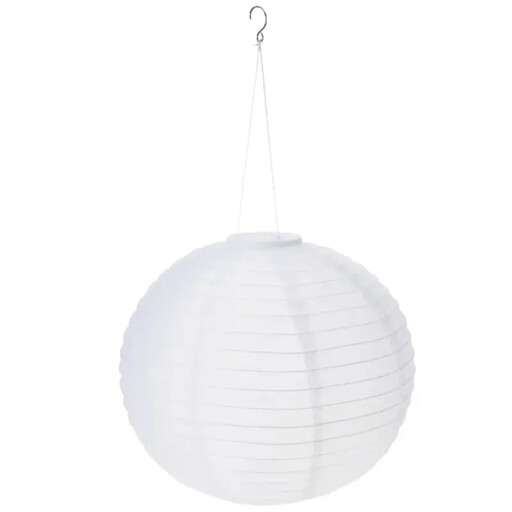
Why it's a good fit: Perfect for those who want atmospheric and decorative lighting. The solar ball light can be hung or placed on a surface, creating an elegant atmosphere on patios or in trees with its diffuse, warm white light.
This isn't about maximum brightness, but ambience. The product is designed as a decorative object. The weatherproof nylon material is explicitly made for outdoor use and dries quickly, which increases its longevity.
The rice paper lantern design provides a particularly soft, diffuse light. The integrated dusk sensor ensures fully automatic operation.
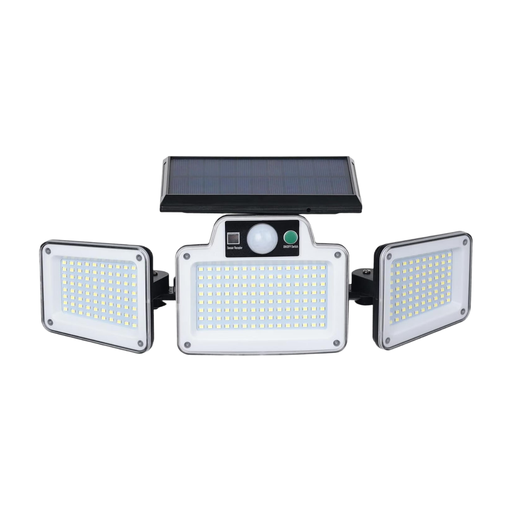
Why it's a good fit: This solar floodlight with motion sensor is designed for functionality and security. It brightly illuminates driveways, garages, or dark corners of the property as soon as motion is detected, deterring unwanted visitors.
The high IP65 rating ensures its weather resistance. The separate solar panel with a long cable solves the problem of insufficient sunlight, as it can be optimally positioned towards the sun while the light is mounted in the shade.
Three adjustable light heads and 280 LEDs provide wide and bright illumination. The different modes (adjustable via remote control) allow for customisation to individual security needs.
We have compiled a complete, up-to-date list of products that fully meet these strict selection criteria and safety regulations.
Yes, but with some limitations. The runtime is shorter in winter because the days have fewer hours of sunlight and the sun is lower in the sky. Models with high-efficiency solar panels and large batteries are better suited for winter operation. To maximise performance, the solar panel should be kept free of snow and debris and ideally be south-facing.
The lifespan of a solar light is determined by two components. The LEDs themselves are very durable, often with an operating life of 15,000 hours or more. The limiting factor is usually the battery. A rechargeable battery in a solar light has a typical lifespan of about 1 to 3 years, depending on its quality and the number of charge cycles. In many models, the battery can be easily replaced.
The IP rating indicates how well a light is protected against the ingress of solids (first digit) and water (second digit). For garden use, IP44 (protection against splashing water) and IP65 (protection against water jets) are the most common standards. While IP44 is sufficient for most applications, IP65 offers a higher level of protection for lights exposed to heavy rain or irrigation systems.