
Lieferung heute & morgen

Qualitätsgarantie

Willkommens-Angebote freischalten: KOSTENLOSE Lieferung | Bis zu 80 % RABATT | Kostenlose 30-Tage-JoyPlus-Testphase
App herunterladen
By Joybuy Product Recommendation Officer, July 29, 2026
Solar garden lights promise a simple and energy-efficient way to illuminate your outdoor space. However, the market is flooded with products whose performance often fails to live up to their promises. Many buyers quickly discover that their new lighting fails after the first rain, only stays on for an hour, or produces little more than a faint glow.
This guide will help you identify the crucial features to make an informed purchasing decision. We focus on the three most common pitfalls and explain which technical specifications truly matter.
solar LED garden lighting.To avoid the problems mentioned above, you should check three core technical features. These will give you an objective basis for comparing different models.
The IP (Ingress Protection) rating is an international standard that indicates how well an electrical device is protected against the entry of foreign objects (first digit) and water (second digit). For waterproof outdoor lighting, the following values are relevant:
solar balcony lighting and patio lighting installed in sheltered locations, such as under a roof overhang.solar path lights and solar spotlights placed in exposed areas of the garden.The runtime depends directly on the battery's capacity and the solar panel's efficiency.
The atmosphere of your garden lighting is largely determined by its light colour and brightness.
warm white string light with about 2700–3300 K creates a cosy, yellowish light. Neutral white (approx. 4000 K) is suitable for functional areas, while cool white (over 5000 K) produces a modern, bluish light. A multi-coloured string light or RGB(CCT) models offer colourful and adjustable options.garden decor lights often have under 50 lm, while functional solar spotlights for illuminating paths or plants can reach 100 lm to over 500 lm.Here are some product recommendations tailored to specific needs and the quality criteria mentioned above.
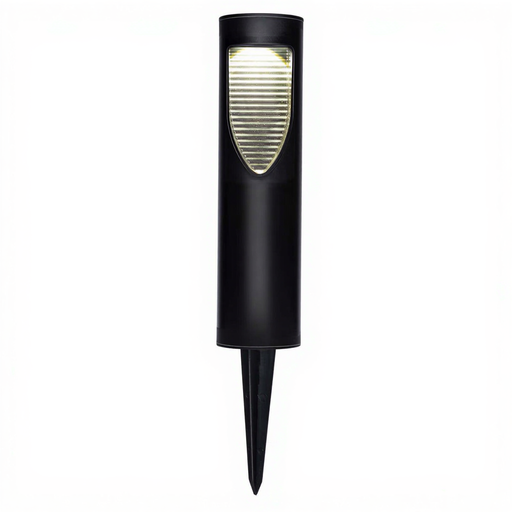
Why This Fits Their Persona: Ideal for users seeking straightforward and reliable basic lighting for paths or flowerbeds without a large investment. The light offers a simple solution with an automatic function.
Avoids the insufficient battery trap with a specified 600 mAh Ni-MH battery, ensuring a reliable runtime at dusk. The SMD LED technology is also energy-efficient.
Simple installation via ground stake and an automatic dusk sensor. The warm white light creates a pleasant atmosphere along garden paths.

Why This Fits Their Persona: Perfect for anyone wanting to create an atmospheric ambience for parties, patios, or as year-round `garden decor lights`. The eight different lighting modes offer creative freedom.
Tackles the problem of poor weather resistance with a clear IP65 certification. This ensures this `outdoor solar string light` is protected against water jets and suitable for year-round use.
A powerful 1200 mAh lithium battery provides a runtime of up to 12 hours. The 10-meter string with 160 LEDs offers extensive and atmospheric illumination.
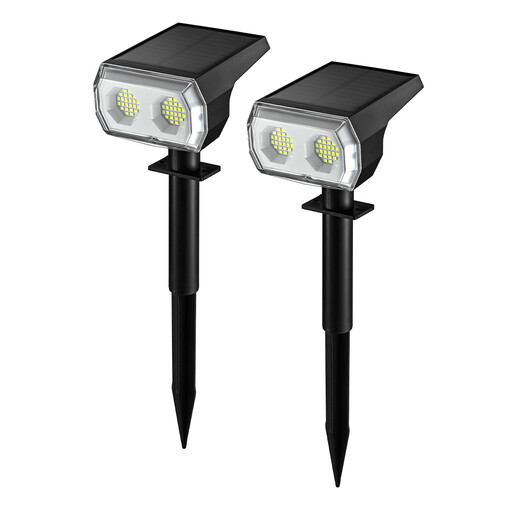
Why This Fits Their Persona: For homeowners who want to specifically highlight trees, shrubs, facades, or art objects in their garden. These spotlights provide focused and powerful illumination.
Solves the problem of disappointing brightness. With 48 LEDs per spotlight, they achieve significantly higher luminosity than simple decorative lights, enabling true accenting.
Flexible 2-in-1 installation (ground stake or wall mount) and two adjustable light modes to optimise battery life. The IP65 rating ensures durability in all weather conditions.
We have compiled a complete, up-to-date list of products that fully meet these strict selection criteria and safety regulations.
The lifespan of solar lights depends on two main components: the battery and the LEDs. The LEDs themselves have a very long life, often exceeding 15,000 hours. The battery is typically the component that loses performance first. With high-quality models using lithium-ion or LiFePO4 batteries, you can expect a lifespan of two to four years before the capacity noticeably degrades. For cheaper models with Ni-MH batteries, a replacement may be necessary sooner.
Yes, but with reduced performance. Solar lights also charge in diffuse light, but much more slowly than in direct sunlight. In winter, the days are shorter and the sun is lower in the sky, which further reduces charging time. Therefore, the runtime will be shorter in the winter months than in the summer. Models with high-efficiency monocrystalline solar panels and large batteries are better suited for year-round use.
An outdoor solar string light uses a solar panel to charge an internal battery during the day and automatically turns on at dusk. It is energy self-sufficient and requires no external power source. A battery-operated string light is powered by standard batteries (e.g., AA). It is ideal for places that receive no sunlight at all (e.g., covered balconies, indoors, or for temporary decorations like outdoor Christmas lights), but it must be turned on and off manually (unless it has a timer) and the batteries need to be replaced regularly.