
Lieferung heute & morgen

Qualitätsgarantie

Willkommens-Angebote freischalten: KOSTENLOSE Lieferung | Bis zu 80 % RABATT | Kostenlose 30-Tage-JoyPlus-Testphase
App herunterladen
Solar garden lights promise an easy and eco-friendly way to illuminate paths, create accents, or transform your balcony into an atmospheric oasis. With no wiring and no additional electricity costs, they are an attractive solution. But the reality is often different: lights that fail after a rain shower, a runtime that barely lasts for a short evening, or a glow that is more like a faint glimmer.
As your Joybuy Product Recommendation Officer, I'm here to help you navigate the common pitfalls. Instead of falling for marketing promises, you should focus on verifiable technical specifications. We'll shine a light on the three most common mistakes when buying solar garden lights and show you what really matters.
Many manufacturers advertise their products as "waterproof," but this term is often misleading without a specific rating. A light that can only withstand a light drizzle is unsuitable for unpredictable weather.
The most common disappointment is a solar light that goes out after just a few hours. The cause is usually a combination of an underpowered solar panel and a low-capacity battery.
A harsh, cool-white light can ruin a cosy seating area, while a warm-white ambient light is insufficient for illuminating a dark path.
Instead of making a blanket recommendation, we have selected products tailored to specific use cases that meet the criteria mentioned above.
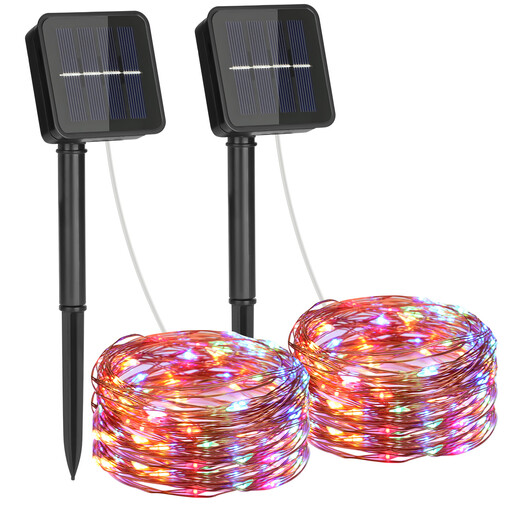
Why This Fits Their Persona: Ideal for anyone wanting to transform their solar-lit balcony, patio, or trees into a colourful sea of lights. The flexible copper wire is easy to shape, and the eight different lighting modes offer variety for any mood or occasion.
With an IP65 rating, these outdoor solar string lights are reliably protected against rain. The improved solar panel ensures a runtime of 8 to 14 hours, thus avoiding the problem of short illumination times.
Two string lights, each 12 metres long with 120 LEDs for large-scale decoration. The memory function remembers the last selected mode.
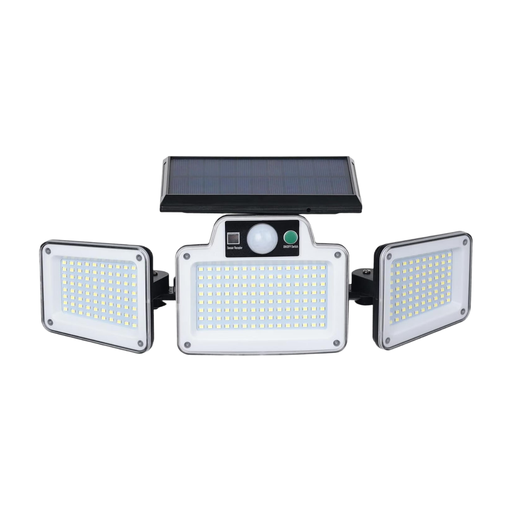
Why This Fits Their Persona: Anyone who wants to reliably illuminate driveways, garages, or dark corners of their property needs a functional solution. This spotlight provides bright, on-demand lighting for deterrence and better orientation in the dark.
The IP65 certification ensures operation in all weather conditions. The integrated motion sensor activates full brightness only when needed, which conserves the 2400mAh battery and ensures long, reliable performance.
Three flexibly adjustable light heads with 280 LEDs for wide-area illumination. The separate solar panel with a long cable allows for optimal placement in the sun, regardless of where the light is mounted.

Why This Fits Their Persona: For the simple and effective marking of garden paths, driveways, or flower bed borders. These solar path lights are designed for functionality and durability, without complicated settings.
This light avoids the 'dim light' trap with a clear, cool white light of 6500K, which ensures good visibility. The polycrystalline solar panel and a solid base construction promise reliable operation throughout the night.
The stainless steel housing is robust and weather-resistant. Installation is incredibly simple: just stake it into the ground. The light provides clear, functional illumination without superfluous features.
We've compiled a complete, up-to-date list of products that fully meet these strict selection criteria and rigorous safety standards.
Yes, but with reduced performance. The shorter days and lower angle of the sun in winter reduce the charging time and intensity. However, modern LED solar lights with efficient panels (monocrystalline or polycrystalline) and good batteries can still provide light for several hours in winter, especially on clear days. Regularly cleaning the panel of snow and dirt is particularly important here.
The lifespan depends on two main components: the LED and the battery. The LEDs themselves are very durable, often with a stated lifespan of 15,000 hours or more. The limiting factor is usually the battery. NiMH batteries, used in many models, have a lifespan of about 1-3 years before their capacity noticeably decreases. On some higher-quality models, the battery can be replaced, which extends the life of the entire light.
The most important factor is the placement of the solar panel. It should be positioned to receive as much direct sunlight as possible throughout the day, ideally facing south and free from shadows cast by trees, walls, or overhangs. Ensure that the dusk-to-dawn sensor is not disturbed by other artificial light sources (e.g., streetlights), as this may prevent the light from turning on automatically.