
Lieferung heute & morgen

Qualitätsgarantie

Willkommens-Angebote freischalten: KOSTENLOSE Lieferung | Bis zu 80 % RABATT | Kostenlose 30-Tage-JoyPlus-Testphase
App herunterladen
By Joybuy Product Recommendation Officer, August 30, 2026
Solar garden lights promise an easy and cost-effective way to illuminate pathways, accentuate patios, and create an inviting atmosphere—all without cables or an electricity bill. However, the reality is often quite different: many buyers are disappointed shortly after their purchase because the products fail to live up to their advertising claims. Before you invest, you should know the three most common pitfalls that lead to frustration and unnecessary expense.
An informed purchase will save you from these problems. Instead of trusting marketing promises, it's wiser to focus on verifiable technical specifications.
To make a well-founded decision, you should check three core parameters. These are the primary determinants of the performance and longevity of your new LED outdoor lighting.
The IP (Ingress Protection) rating is a two-digit code that indicates how well a housing is protected against the ingress of foreign objects (first digit) and water (second digit).
The combination of the battery and solar panel is the heart of every solar light.
Modern solar lights offer more than just a dusk-to-dawn sensor. Especially in the field of smart garden lighting, there are advanced features that significantly enhance user convenience.
Instead of making a one-size-fits-all recommendation, we have identified products that meet specific needs and purposefully avoid the pitfalls mentioned above.
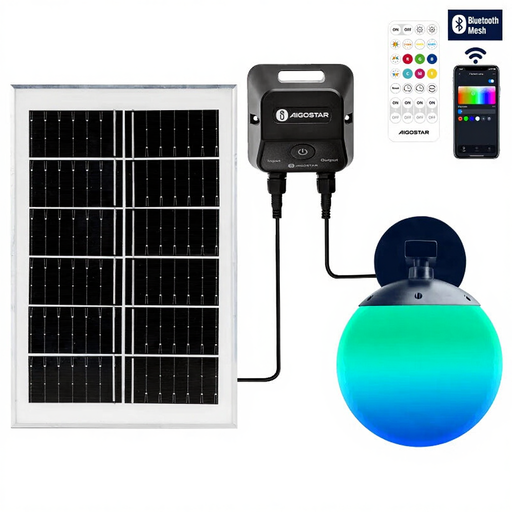
Why This Fits Their Persona: Ideal for tech-savvy users who want to fully control their outdoor lighting via an app. Integration into a Bluetooth mesh network allows for the synchronous control of over 200 devices, including colour changes, dimming, and scheduling.
Solves the problem of limited flexibility with full RGBCCT colour and brightness control. The combination of a 4Ah lithium battery and a 5W monocrystalline solar panel ensures a long runtime of up to 24 hours.
The IP65 rating guarantees high weather resistance. The up-and-down lighting effects create modern architectural accents on facades or walls.
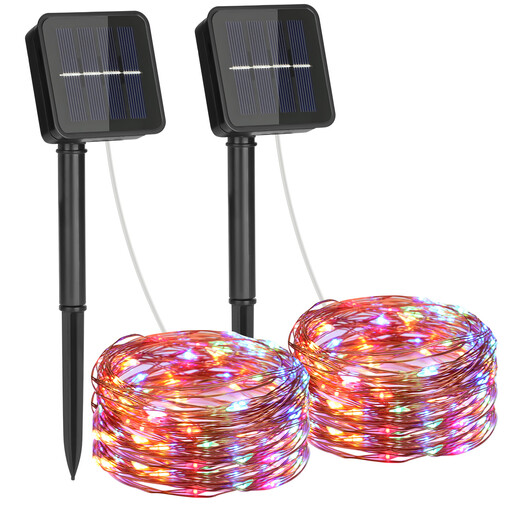
Why This Fits Their Persona: Perfect for anyone looking for atmospheric and flexible decoration for parties, holidays, or everyday use. The pliable copper wire can be easily wrapped around railings, plants, or furniture.
These string lights are designed for ambient light, not bright illumination, which clearly sets expectations. The IP65 certification provides reliable protection against the elements and prevents the pitfall of poor durability.
Two string lights, each 12 metres long, offer plenty of creative freedom. The 8 lighting modes with a memory function provide variety without requiring daily readjustment.
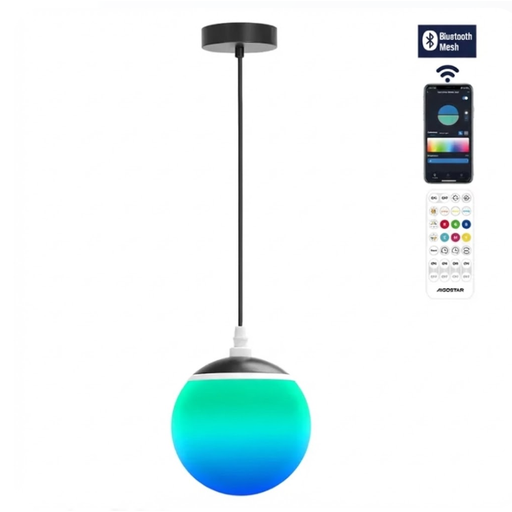
Why This Fits Their Persona: The solution for anyone wanting to illuminate shady areas like covered patios, gazebos, or even indoor spaces with solar power.
The detached design bypasses the pitfall of a fixed installation. The solar panel can be placed in direct sun while the light itself hangs in the shade. This maximises energy harvesting and potential applications.
Full smart functionality with RGBCCT colour spectrum and app control via Bluetooth Mesh. The IP65 rating for both the light and the panel ensures high durability in all weather conditions.
We have compiled a complete, up-to-date list of products that fully meet these strict selection criteria and UK safety regulations.
The lifespan depends on three main components: the LED, the battery, and the housing. The LEDs themselves often have a lifespan of 30,000 hours or more. The battery is typically the component that loses performance first. High-quality lithium-ion batteries usually last two to four years before their capacity noticeably diminishes. Models with replaceable batteries are a more sustainable choice. The housing should be made of UV-resistant material (e.g., ABS plastic) to prevent it from becoming brittle.
Yes, but with reduced performance. Modern, high-efficiency monocrystalline solar panels can generate energy even in the diffuse light of an overcast day. However, the charging power is lower than in direct sunlight, which leads to a shorter runtime at night. To optimise performance in winter, the solar panel should be positioned to capture the maximum amount of the low-angle sun and be kept free of snow or debris.
No, that is one of the biggest advantages of solar lights. Since they are self-contained and do not require a connection to the power grid, all electrical installation work is eliminated. Assembly is usually limited to staking the light into the ground with a ground spike or mounting it to a wall or post with a few screws.