
Lieferung heute & morgen

Qualitätsgarantie

Willkommens-Angebote freischalten: KOSTENLOSE Lieferung | Bis zu 80 % RABATT | Kostenlose 30-Tage-JoyPlus-Testphase
App herunterladen
Solar garden lights promise a simple and cost-effective way to illuminate paths, accentuate patios, and create an inviting atmosphere—all without any wiring or electricity bills. However, the market is flooded with products whose real-world performance often fails to match the promises on the packaging. As your Joybuy Product Recommendation Officer, I'll help you identify the common pitfalls and make an informed choice.
Many buyers are disappointed shortly after their purchase. The lights quickly lose their brightness, don't survive the first winter, or the light colour creates an uncomfortable atmosphere. These issues can often be traced back to three common weaknesses:
To avoid these bad buys, it's crucial to look beyond the design and focus on the core technical specifications.
A smart purchasing decision is based on understanding a few critical technical features. These determine whether a solar light will perform its function reliably and over the long term.
The IP (Ingress Protection) rating indicates how well an electrical device is protected against the entry of foreign objects (first digit) and water (second digit). For Solar Garden Lights, two classes are particularly relevant:
The combination of the battery and solar panel is the heart of every solar light.
The colour of the light has a significant impact on the atmosphere. It is measured in Kelvin (K).
Based on these criteria, we have curated products for different needs and user profiles.
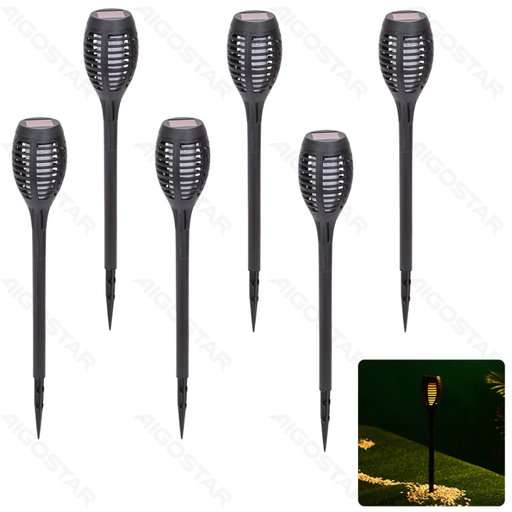
Why This Fits Their Persona: Ideal for users who want to create a particularly atmospheric ambience. The realistic flame effect and warm white light colour (2700 K) are perfect for social evenings on the patio or for accentuating flowerbeds. The solar light set allows for a uniform design.
The colour temperature of 2700 K is clearly specified and delivers the expected cosy, warm light, rather than an undesirable cold hue. The focus here is clearly on ambience.
The convincing solar lights with a flame effect create a unique atmosphere. The 6-pack offers great value for money for widespread decoration.
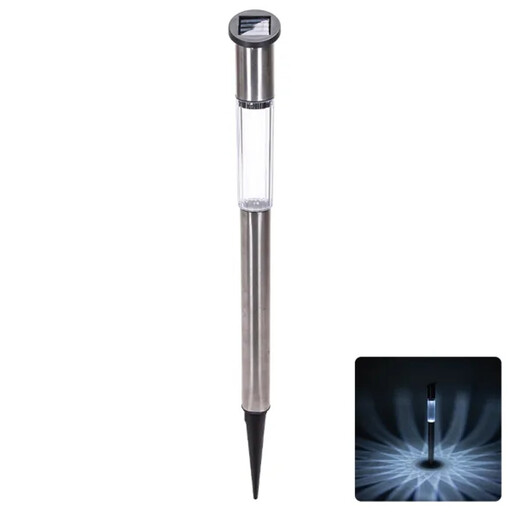
Why This Fits Their Persona: Perfect for users who prioritise safety and orientation. These solar path lights are ideal for clearly marking garden paths, driveways, or steps to prevent tripping hazards. The bright light ensures good visibility.
The stainless steel housing is more resistant to weather and mechanical stress than simple plastic models. The IP44 certification provides sufficient protection for its intended purpose.
The light colour of 6500 K (Cool White) provides bright, clear illumination that maximises visibility. The polycrystalline solar panel ensures efficient charging in direct sunlight.
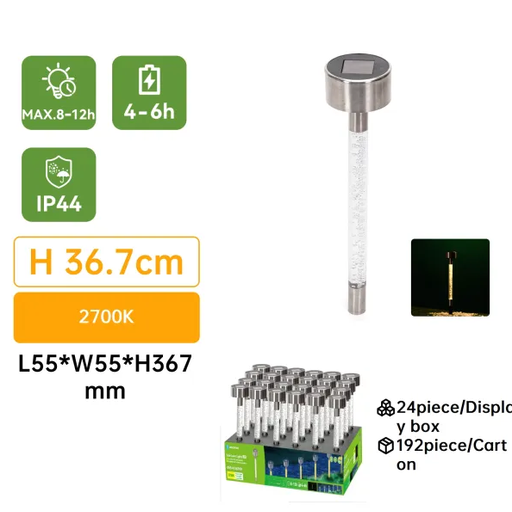
Why This Fits Their Persona: A cost-effective option for anyone wanting to get their first experience with decorative solar lights. Ideal for using a solar ground stake to add individual accents in flowerbeds, planters, or along a balcony railing.
This product sets expectations correctly: it's an ambience light with a low battery capacity (40 mAh) for decorative purposes, not for bright, all-night illumination. The runtime is sufficient for this purpose.
Very simple installation with the ground stake. The decorative bubble effect and the warm white light (2700 K) create an appealing visual accent at a very low price.
We have compiled a complete, up-to-date list of products that fully meet these strict selection criteria and German safety regulations.
1. How long do solar garden lights really last? The lifespan of an LED solar garden light depends on three components: the LED itself (often 15,000 hours or more), the battery, and the housing. The battery (usually a NiMH type) is often the first component to lose performance; it can last 1-3 years depending on quality and charging cycles. On many models, it can be replaced. The durability of the housing is determined by the material and weather exposure. Stainless steel and high-quality plastic have an advantage here.
2. Do solar lights also work in winter or on cloudy days? Yes, but with limited performance. The charging time is significantly longer on cloudy days, and the runtime at night is noticeably shorter. Models with amorphous solar panels have a slight advantage here, as they can generate energy even in diffuse light. In the middle of winter, with short days and little sun, the performance of all solar lights is greatly reduced.
3. Is there anything I need to consider when installing solar lights? The most important factor is placement. The solar panel should receive as much direct sunlight as possible during the day, ideally with a south-facing orientation and free from shadows cast by trees, walls, or eaves. Before first use, it is recommended to let the light fully charge in the sun for an entire day. Also, regularly clean the solar panel of dust and dirt with a soft, damp cloth to maintain charging efficiency.