
Lieferung heute & morgen

Qualitätsgarantie

Willkommens-Angebote freischalten: KOSTENLOSE Lieferung | Bis zu 80 % RABATT | Kostenlose 30-Tage-JoyPlus-Testphase
App herunterladen
Solar lights promise a simple, cost-effective, and eco-friendly way to illuminate gardens, pathways, and balconies. But the reality is often different: lights that fail after the first downpour, a brightness that's barely more than a glimmer, or materials that turn brittle after just one summer. To help you make the right choice and avoid a bad investment, we've analysed the crucial features and most common pitfalls.
Many products on the market don't live up to their descriptions. Pay close attention to these three points to avoid disappointment.
To find the right solar lights for your garden or balcony, you should carefully examine three technical features. These determine the light's longevity, functionality, and the atmosphere it creates.
The IP rating indicates how well an electrical device is protected against the ingress of foreign objects (first digit) and water (second digit). For waterproof outdoor lights, the following ratings are relevant:
The combination of the battery and solar panel is the heart of every solar light.
LED garden lighting offers a wide range of options that should be used purposefully.
Here are some recommendations tailored to specific needs and use cases.
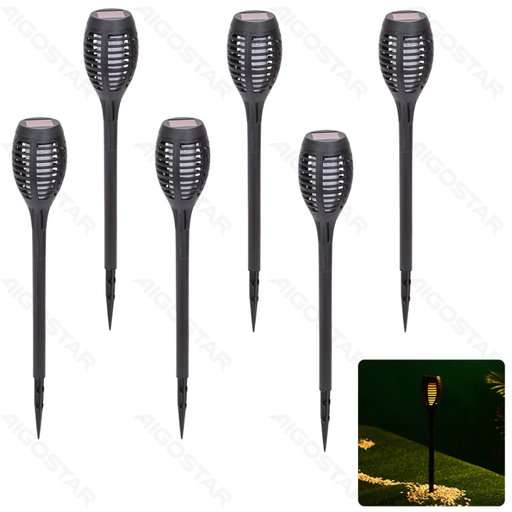
Why This Fits Their Persona: Ideal for users who want to create a warm and inviting atmosphere. The realistic flame effect of the solar torches is perfect for decorating paths, flowerbeds, or patios without the risk of real fire. The 6-pack allows for a uniform design.
The IP44 certification provides clearly defined protection against splashing water, which is a reliable indicator of weather resistance. The light colour of 2700K (Warm White) is specified and ensures the desired cosy mood, rather than just a dim glow.
Atmospheric flame effect; practical 6-pack for cohesive garden design; automatic function with 8–12 hours of light after a full charge.
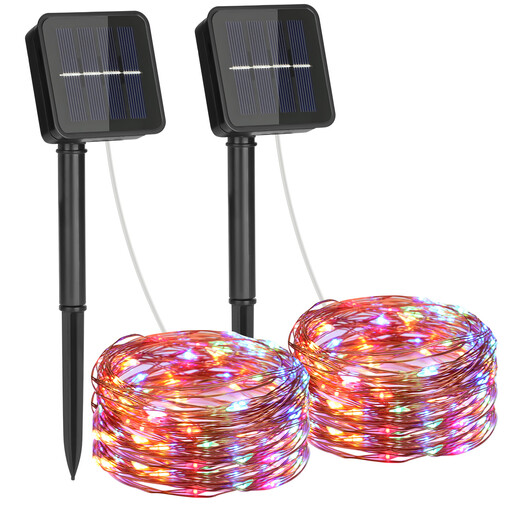
Why This Fits Their Persona: Perfect for renters with balconies or for creative decoration projects. The flexible copper wire can be easily wrapped around railings, plants, or objects. With 8 lighting modes and colourful LEDs, this solar string light is ideal for parties, holidays, or simply creating a vibrant atmosphere.
With an IP65 rating, the string light is robust against water jets and dust, making it significantly more durable than many competing products. The memory function for the last lighting mode avoids the frustration of having to reset it daily.
High flexibility thanks to malleable copper wire; 8 different lighting modes for varied effects; high weather resistance (IP65).
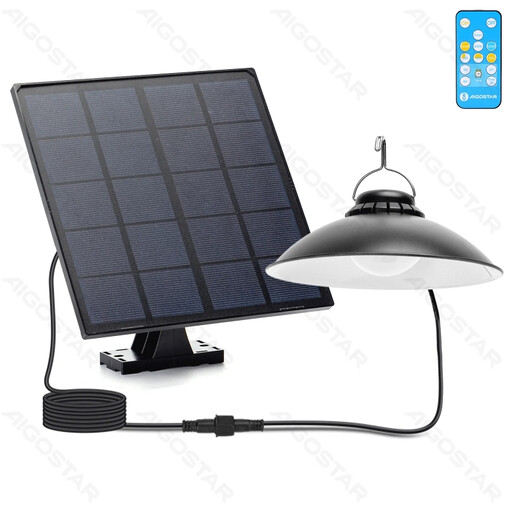
Why This Fits Their Persona: For users who need a reliable and bright light source for covered areas like garden sheds, gazebos, or balconies where no power outlet is available. The separate solar panel allows for flexible installation: the panel can be placed in full sun while the light hangs in the shade.
This model bypasses the dim light trap with a high brightness of 500 lumens and a powerful 5000mAh LiFePO4 battery, which stands for long life and safety. The IP65 rating and 3-meter cable provide a robust and practical solution.
Separate solar panel for optimal charging; adjustable colour temperature (3000K/4000K/6500K); durable and safe LiFePO4 battery.
We have compiled a complete, up-to-date list of products that fully meet these strict selection criteria and safety regulations.
1. Do solar lights work in winter or on cloudy days? Yes, solar lights do work with diffuse light, but with reduced efficiency. On cloudy days or in winter, when there is less sunlight, the batteries charge more slowly and incompletely. This results in a shorter illumination time at night. Models with high-quality, larger solar panels and high battery capacity perform better in these conditions.
2. What is the lifespan of an average solar garden light? The lifespan depends on two main components: the LED and the battery. The LEDs themselves have a very long lifespan, often 15,000 hours or more. The limiting factor is usually the battery. Ni-MH batteries have a lifespan of about 1–3 years (approx. 500–1000 charge cycles), after which their capacity diminishes. On many models, the battery can be easily replaced.
3. Do I need to prepare the solar lights before first use? Yes, a little preparation is recommended. After unpacking, turn the light on and place the solar panel in direct sunlight for at least 8 hours. This will fully charge the battery, optimising its performance and lifespan. Ensure the panel is clean and not shaded by plants or other objects.