
Lieferung heute & morgen

Qualitätsgarantie

Willkommens-Angebote freischalten: KOSTENLOSE Lieferung | Bis zu 80 % RABATT | Kostenlose 30-Tage-JoyPlus-Testphase
App herunterladen
Solar garden lights promise a simple, cost-effective, and eco-friendly way to illuminate paths, patios, and flowerbeds. Installation is straightforward as no cables need to be laid. However, the market is flooded with products whose real-world performance often fails to match the promises on the packaging. Before you make a decision, it's crucial to understand the most common pitfalls to avoid disappointment and unnecessary expense.
This guide focuses on the objective criteria that distinguish a reliable solar light from an inadequate one. We will highlight three typical problems:
To make an informed decision, you should not be swayed by marketing buzzwords but focus on verifiable technical specifications. Three parameters are of central importance here.
The brightness of an LED solar light is measured in lumens (lm), not in watts. Watts only indicate energy consumption. For guidance:
The light colour is specified in Kelvin (K). Values around 2700 K produce a warm white, cosy light. Cool white light (approx. 6500 K) appears brighter and more functional. Models with solar light with colour change (RGB) offer additional creative freedom.
An outdoor solar light must be weatherproof. The IP rating indicates how well the housing is protected against the ingress of foreign objects and water.
Also, pay attention to the material. Housings made of stainless steel or robust ABS plastic are more durable than those made of simple plastic.
The performance of the battery and the solar panel determines how long the light will shine after a sunny day and how well it charges on cloudy days.
Based on these objective criteria, we have identified some products that are suitable for specific user profiles and requirements.

Why This Fits Their Persona: This solar light set is ideal for anyone looking to equip their garden with solar lighting for the first time. It offers a cost-effective way to add atmospheric light to a larger area without committing to a single style.
It bypasses the trap of purely decorative lighting by offering a choice between warm white functional light and colourful ambient light (RGB). The specified illumination time of 6-8 hours is realistic for an entry-level model.
Complete set with 5 lights for an immediate, wide-area effect. Switchable light colour for flexible design options.
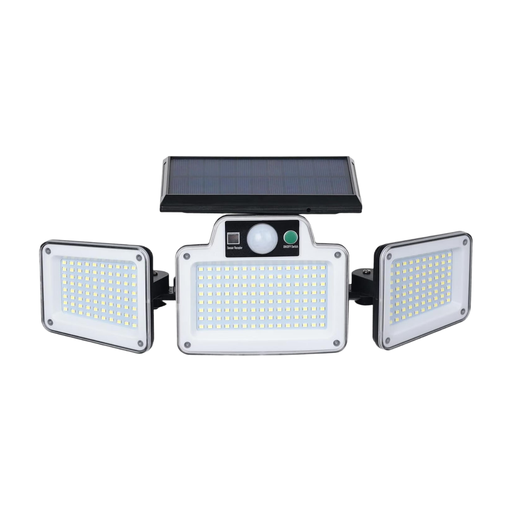
Why This Fits Their Persona: For homeowners whose priority is security and bright illumination of driveways, garages, or dark corners. This model is designed as a functional floodlight.
It solves the problem of dim lights with 280 LEDs and a clear focus on brightness upon motion detection. The IP65 certification ensures it can withstand adverse weather conditions and won't fail after a short time.
High-performance solar light with a motion sensor and three flexibly adjustable light heads for wide coverage. The remote control allows for easy adjustment of the different modes.
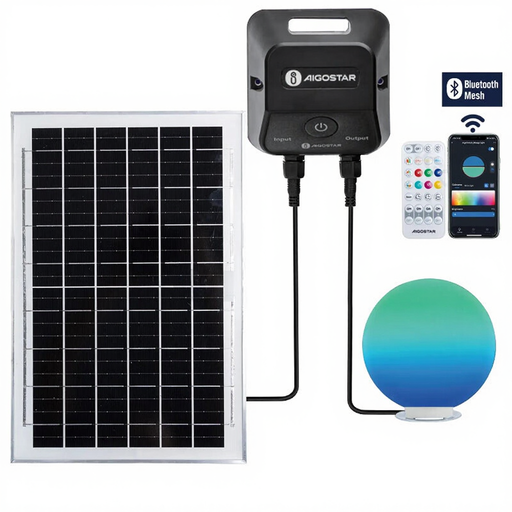
Why This Fits Their Persona: For users who want full control over their garden lighting and value modern design and smart features. Ideal for creating complex lighting scenes and integrating into a connected home.
This model avoids the typical performance pitfalls with high-quality components: a monocrystalline solar panel, a high-capacity lithium battery (8000mAh), and an impressive brightness of 350 lumens.
Control over 200 devices via Bluetooth Mesh. Full control over light colour and temperature (RGBCCT). High brightness and long battery life for reliable performance.

Why This Fits Their Persona: Perfect for garden owners seeking a reliable and visually appealing solution for illuminating paths or bed borders. The classic stainless steel design blends discreetly into any garden layout.
This model avoids the durability trap by using stainless steel and an IP44 certification. The clear specifications for light colour (6500 K) and lifespan (15,000 hours) create transparency.
Robust and corrosion-resistant stainless steel housing. Clear, cool white light that makes paths safe and clearly visible. Easy installation with a ground stake.
We have compiled a complete, up-to-date list of products that fully meet these strict selection criteria and UK safety regulations.
The lifespan of a solar light depends on the quality of its components. The LED bulbs themselves are very durable, lasting 15,000 to 30,000 hours. The limiting factor is usually the battery, whose performance can decline after 1 to 3 years. Models with replaceable batteries are advantageous here. The quality of the housing and the IP rating also significantly influence durability.
Yes, solar garden lights also charge on cloudy days, but with lower efficiency. This results in a shorter illumination time at night. For reliable operation in the UK winter, models with high-efficiency monocrystalline solar panels and large-capacity batteries are recommended.
Maintenance is minimal. The most important step is to regularly clean the solar panel with a soft, damp cloth. Dust, leaves, or snow can significantly reduce charging performance. It may be wise to store the lights indoors during the coldest winter months to protect the battery from extreme cold.