
Lieferung heute & morgen

Qualitätsgarantie

Willkommens-Angebote freischalten: KOSTENLOSE Lieferung | Bis zu 80 % RABATT | Kostenlose 30-Tage-JoyPlus-Testphase
App herunterladen
Solar garden lights illuminate paths, flower beds, lawns and patios without the need for fixed wiring. The choice ranges from simple solar lights for the garden and decorative solar garden lamps to smart solar lights controlled via an app. However, differences in light output, battery, installation and IP rating determine whether a light is actually suitable for its intended use in everyday life.
Claims such as “8 to 12 hours” generally refer to suitable charging conditions. In shaded areas, with limited sunlight or during winter, the battery may store less energy. Ideally, position your solar light away from buildings, trees and tall shrubs. The solar panel should face upwards and be cleaned regularly to remove dust and dirt.
An IP44 solar light is protected against solid objects larger than 1 millimetre and splashes of water from different directions. It’s suitable for many sheltered outdoor areas, but shouldn’t be left standing in water or exposed to heavy rain for long periods.
An IP65 solar light offers greater protection against dust and jets of water. It isn’t designed to be submerged either. The IP rating also doesn’t replace safe installation: plugs, cable connections and the solar panel must be installed in line with the manufacturer’s instructions.
A slim solar stake light can add a decorative touch to a flower bed, but it won’t necessarily provide enough light for an entire path. Beam angle, positioning and spacing between lights are key to helping you find your way safely. An RGB solar light is generally better suited to decorative garden lighting than to evenly lighting a path.
A warm white solar light at around 2700 Kelvin gives off a soft, yellowish glow. It’s well suited to seating areas, patios, flower beds and decorative displays. Cool white light at around 6500 Kelvin looks noticeably whiter and can create clearer definition along paths or driveways.
An RGB solar light cycles through different colours. With these models, check whether the colours change automatically or can be set to a particular option. For practical path lighting, details such as lumens, beam angle and installation height are more important than the number of colours available.
Check the battery type, capacity and stated charging time. Several of the models featured here use Ni-MH batteries. Other products use lithium or lithium iron phosphate batteries. Actual operating time depends on sunlight, temperature, light setting and battery age.
For outdoor solar lights, keep the charging area clear. In autumn and winter, the lower angle of the sun can reduce charging performance. A model with a replaceable battery may be more practical in the long run, provided the manufacturer offers a compatible replacement.
A solar ground light or solar stake light can be pushed into soft soil or a lawn. For hard surfaces, a model with a base or a different type of installation may be more suitable. Before buying, check the dimensions of the stake and the overall height.
Read descriptions such as “stainless steel effect” carefully. According to the product information, some models have a plastic housing with a silver or stainless steel-look finish. This is not the same as a housing made entirely from stainless steel.
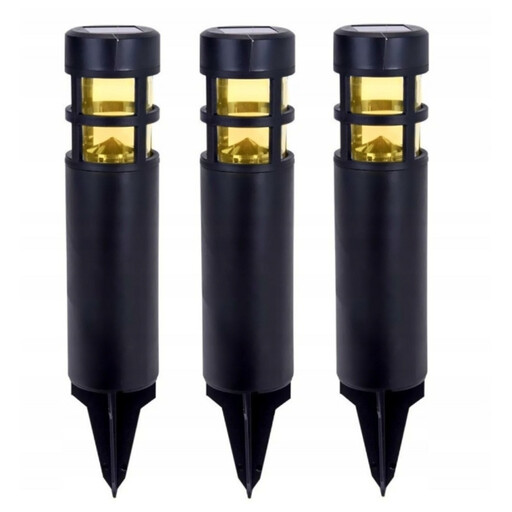
Why this product suits this buyer: This set of three lights is ideal if you want to give several areas, such as a flower bed, path or lawn edge, a coordinated look.
The product description specifies the number of lights and says they switch on automatically at dusk. This makes it easier to work out how many you need before buying.
Three lights for different spots; solar-powered charging and automatic operation at dusk, according to the product information.
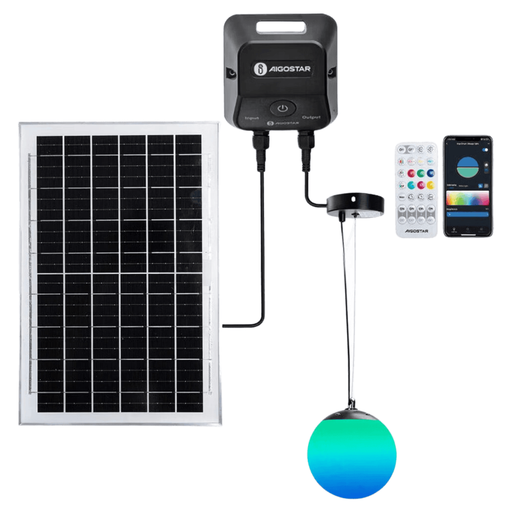
Why this product suits this buyer: This light is designed for anyone who wants to manage colour, brightness and schedules via a Bluetooth Mesh app.
The IP65 rating, 10 W solar panel and 8 Ah battery are all clearly specified. However, the light must not be submerged.
350 lm according to the product information; RGB+CCT from 2700 to 6500 K; app controls for scheduling, brightness and switching on and off.
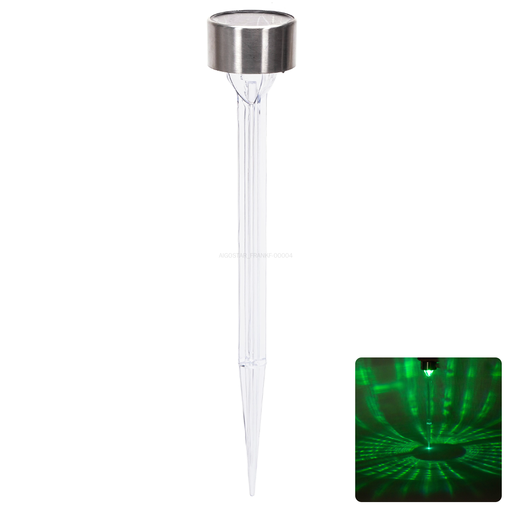
Why this product suits this buyer: This RGB solar light is a good choice for paths, flower bed borders and seasonal displays where colour-changing effects matter more than purely functional illumination.
The product details list the charging time, operating time, IP44 rating and stake installation. This gives you a clearer idea of where it’s suitable than design claims alone.
RGB lighting; stated charging time of 4 to 6 hours; stated illumination time of 8 to 12 hours in suitable conditions.
We’ve put together a complete, regularly updated list of products that meet these strict selection criteria and fully comply with the safety regulations in force in the EU.
Lifespan depends on the LED, housing, solar panel, battery, weather conditions and maintenance. Some models are stated to last up to 15,000 hours. This figure refers to the light source or its technical design, not necessarily the entire light. The battery may lose capacity sooner.
In general, they can be used outdoors in winter as long as the stated temperature range is observed. However, shorter days, a lower sun and more frequent cloud cover often mean less charging. A sunny position and a clean solar panel are especially important at this time of year.
They don’t need to be connected to the mains while in use. Instead, they store energy in the built-in battery during the day. You may incur ongoing costs if the battery needs replacing later. Depending on the model, smart solar lights may also require an app, Bluetooth or a hub.