
Lieferung heute & morgen

Qualitätsgarantie

Willkommens-Angebote freischalten: KOSTENLOSE Lieferung | Bis zu 80 % RABATT | Kostenlose 30-Tage-JoyPlus-Testphase
App herunterladen
Solar garden lights provide decorative garden lighting without a mains connection. They are usually simply pushed into the ground or placed in position, charge via a solar panel during the day and switch on automatically when it gets dark. However, attractive product images and sweeping advertising claims do not always help you make the right choice.
Before you buy, bear these three common pitfalls in mind:
Solar ground lights and solar stake lights need a spot with as much direct sunlight as possible. Before installing them, check whether branches, walls or canopies will shade the panel during the day. The models featured here have a stated charging time of 4 to 6 hours, depending on the product. Actual performance can vary in cloudy weather, in winter or if the panel gets dirty.
An automatic dusk sensor is useful, as you won’t need to switch the light on manually every day. Before using it for the first time, activate the switch if there is one and make sure the battery is sufficiently charged.
The IP rating is an important point of comparison when choosing weather-resistant garden lighting. IP44 is generally suitable for outdoor use where the light may be exposed to splashing water, but it should be placed somewhere that is not regularly flooded. The solar panel and light housing should not sit in a dip where rainwater collects.
A higher IP rating can offer extra protection for solar string lights. The VIVREAL string lights, for example, have an IP65 rating. Even so, position connectors, switches and the solar panel in accordance with the manufacturer’s instructions.
Warm white solar lights at around 2700 K create a subtle effect and are ideal for seating areas, flower beds or a cosy patio. Cool white light at around 6500 K has a more functional feel and can be used to mark out paths. Colour-changing solar lights offer RGB lighting and suit decorative displays, but they are not a substitute for compliant safety lighting.
Also consider the design:
Manufacturer claims such as “8–12 hours of lighting” should be treated as a guide under suitable charging conditions, not as a guaranteed daily operating time.
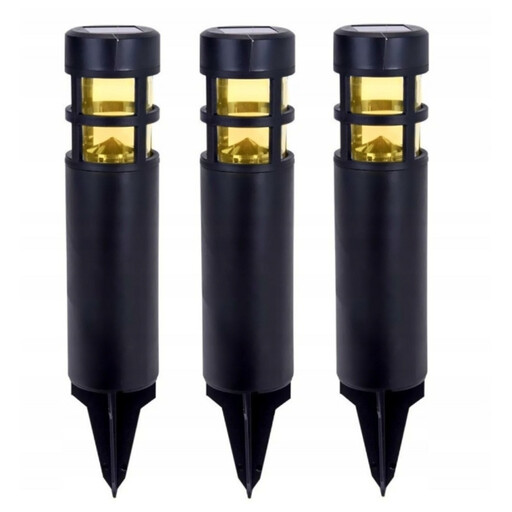
Why this product suits this profile: This set of three lights is ideal if you want a simple way to mark out several areas, such as flower bed edges, a lawn or a short garden path.
The number of lights is clearly stated, making it easy to plan the area you want to cover without accidentally buying just one accent light.
Three lights, solar-powered and with automatic dusk activation – an easy way to get started.
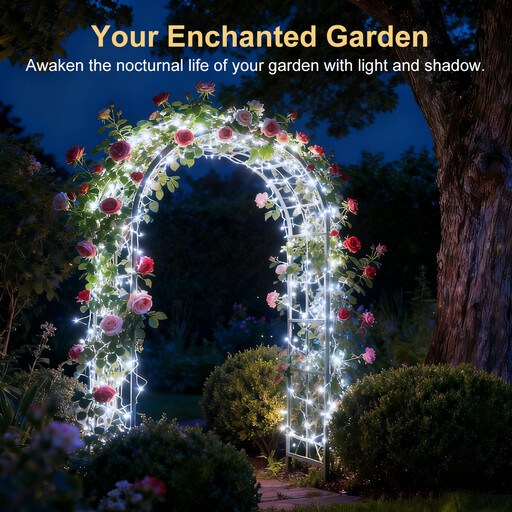
Why this product suits this profile: The two 8-metre string lights offer plenty of flexibility for decorating a balcony, patio, fence or tree canopy.
The stated length, LED count and IP65 rating make it easier to plan your display and avoid uncertainty about outdoor use.
Eight lighting modes, a memory function, 160 LEDs per set and 8 metres of lights per string.
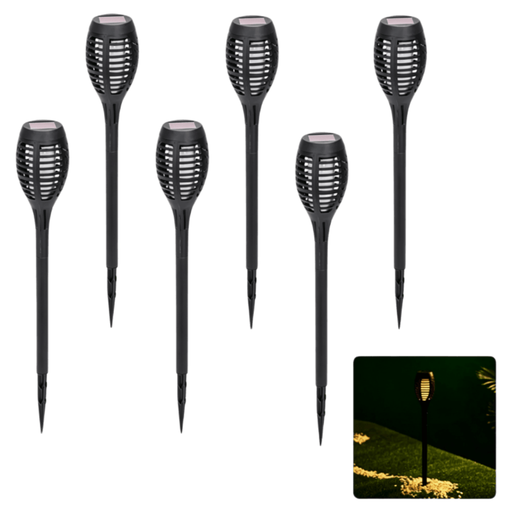
Why this product suits this profile: This set is designed for garden owners who need a larger number of decorative solar stake lights for paths, lawns or flower beds.
The specifications state the charging time, lighting time and IP44 rating. This makes it clear that the lights are decorative rather than intended to illuminate a large area brightly.
Six lights, warm white light at 2700 K, a flame effect and automatic illumination after charging.
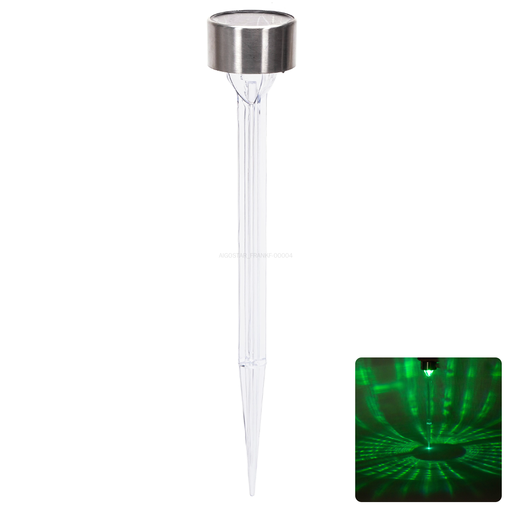
Why this product suits this profile: RGB lighting is ideal if you want to add changing splashes of colour to flower beds, lawns or patios.
RGB is clearly described as a decorative feature. The IP44 rating also makes it clear that the light should not be mistaken for a completely waterproof product.
RGB lighting, stainless-steel look, compact stake mounting, a stated charging time of 4–6 hours and a lighting time of 8–12 hours.
We’ve put together a complete, regularly updated list of products that meet these strict selection criteria and fully comply with the safety regulations applicable in the EU.
Only push solar stake lights into soft, suitable soil. If the ground is very compacted, pre-drilling a hole can help prevent damage to the ground stake or housing. The solar panel should face upwards and should not be covered by leaves for long periods.
A few simple steps are usually all you need:
A spot that gets several hours of direct sunlight is ideal. Shade, short winter days and heavy cloud can reduce charging performance and, in turn, lighting time. It is therefore not possible to give one operating time that applies to every location.
IP44 indicates protection against splashing water and solid objects within the relevant protection class. Even so, the light should not be left standing in water, regularly flooded or installed beneath a drain. Always follow the manufacturer’s instructions for your specific use.
No. Solar lights charge their integrated battery via the solar panel and do not need a mains connection during normal use. You won’t have ongoing mains electricity costs, but the battery is a wear part and may lose capacity over time, depending on its design and how it is used.