
Lieferung heute & morgen

Qualitätsgarantie

Willkommens-Angebote freischalten: KOSTENLOSE Lieferung | Bis zu 80 % RABATT | Kostenlose 30-Tage-JoyPlus-Testphase
App herunterladen
Solar garden lights provide illumination without the need for a permanently installed power cable. The solar panel charges the battery during the day, and the light switches on automatically when it gets dark, depending on the model. This makes them a practical option for garden owners, homeowners and renters with a balcony or patio, whether you want to light paths, lawns, flower beds or seating areas.
Before you buy, though, it’s worth checking the technical specifications carefully. A decorative solar light may look attractive, but if it’s placed in the wrong spot, it may only shine for a few hours. Terms such as ‘waterproof’, ‘bright’ or ‘long-lasting’ don’t tell you much without specific figures.
A solar panel needs direct sunlight or at least plenty of daylight. Under dense trees, against a north-facing wall or in a spot that’s always in the shade, the battery will charge more slowly. In autumn and winter, shorter days, cloudy weather and dirt can further reduce how long the light stays on.
A practical tip: Check the intended spot at different times of day. The solar panel should be as exposed as possible and not covered by leaves, buildings or plants.
Always check the specific IP rating of a light advertised as ‘waterproof’. IP44 offers protection against splashing water from various directions, among other things, but it isn’t suitable for immersion. IP65 provides greater protection against dust and water jets, but it still doesn’t mean the light can be used underwater.
For solar lights with ground spikes, it’s also important that the casing sits firmly in the ground and the solar panel isn’t left standing in a puddle.
An RGB solar light can change colour and create a decorative atmosphere. That doesn’t automatically mean it will light a path sufficiently. For guidance lighting, you should also check the light output in lumens, the beam angle and the position of the light.
Colour temperature is measured in kelvins:
An LED solar garden light with two LEDs may be enough to guide you along a path. For larger areas, light output matters more than the number of LEDs alone.
Check the battery type and capacity, as well as the conditions under which the stated lighting duration applies. A model with a 4 to 6-hour charging time and 8 to 12-hour lighting duration will achieve these figures in suitable charging conditions. Partial shade or limited sunlight can shorten the actual lighting time.
The automatic controls should also be clearly described. Many solar-powered outdoor lights switch on when it gets dark and off again in daylight. Smart models may also offer timers and adjustable brightness.
A ground spike is suitable for lawns, loose soil and flower beds. Don’t force the light into very hard or stony ground, as this could damage the spike. Hanging or freestanding models are often more suitable for balconies and patios.
When checking the material, distinguish between genuine metal and plastic with a metallic finish. Both can be practical, but they differ in weight and appearance. The weight affects how easily a light can shift in the ground.
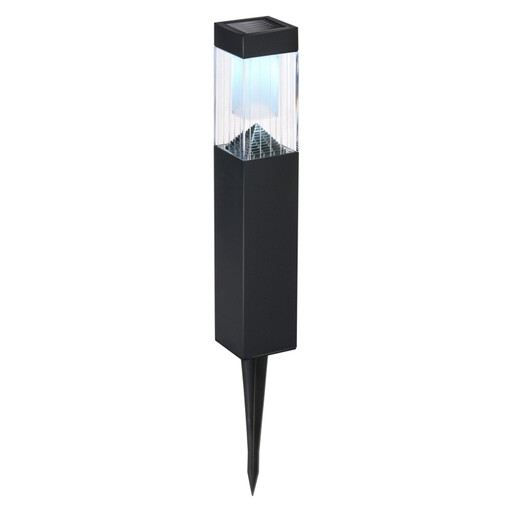
Why this product suits this profile: This compact solar light is designed to provide basic guidance lighting along garden paths, driveways and lawns. The ground spike makes it easy to install without cables or electrical work.
The product details specify two LEDs, integrated solar charging and an AAA battery. This makes the key functional information clear.
Measures 6.5 × 34 cm, with a black finish and a weight of 402 g. It’s installed using the supplied ground spike.
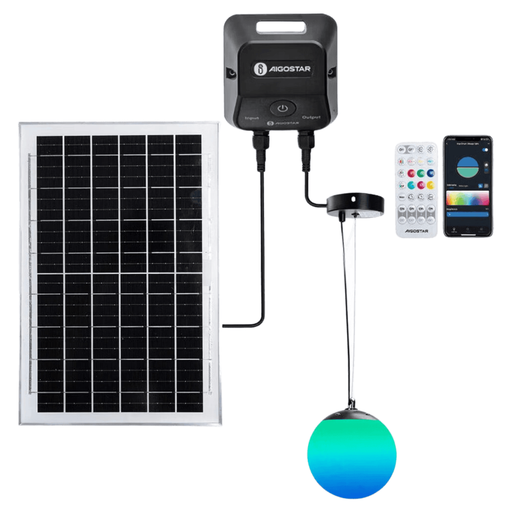
Why this product suits this profile: With Bluetooth Mesh control and a range of settings, this model is designed for larger patios, gardens or areas where you want to plan different lighting scenes.
The product description gives specific details including IP65, 350 lm, a 10 W solar panel and a LiFePO4 battery. This makes it easier to assess its performance than relying on vague claims about brightness.
Bluetooth Mesh can connect more than 200 devices, according to the product details. It also has a 120° beam angle and app controls for timers and brightness adjustment.
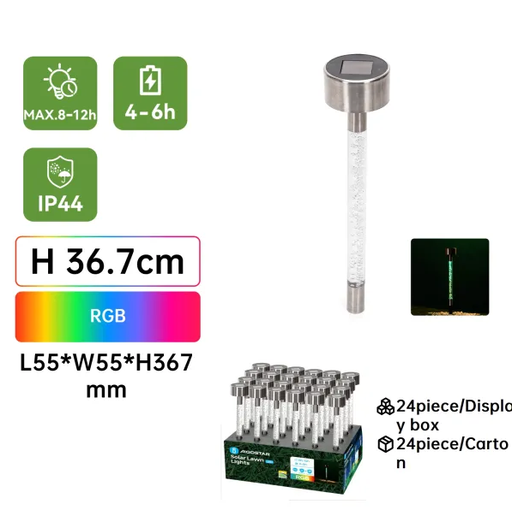
Why this product suits this profile: The RGB feature is ideal for flower beds, paths and lawns when coloured accents matter more than illuminating a large area.
The specifications distinguish decorative RGB lighting from the technical details: IP44, a 4–6-hour charging time and 8–12 hours of lighting under suitable conditions.
Stands 36.7 cm tall and has a built-in 40 mAh Ni-MH battery. It weighs just 80 g. The silver-coloured plastic gives it a stainless-steel look.
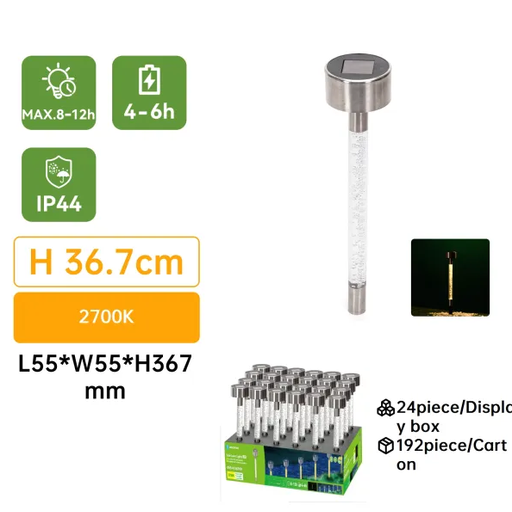
Why this product suits this profile: This warm white solar light at 2700 K is designed to add decorative accents to patios, flower beds and garden paths.
The 2700 K colour temperature and Ra≥70 colour rendering index are clearly specified. The details also include IP44 and a recommended temperature range of -10 °C to 50 °C.
Warm white light, a height of 36.7 cm, a 4–6-hour charging time and 8–12 hours of lighting in suitable charging conditions.
We’ve put together a complete, regularly updated list of products that meet these strict selection criteria and fully comply with the safety regulations in force in the EU.
Start by placing solar garden lights somewhere that gets as much direct sunlight as possible. For models with ground spikes, the soil should be soft enough to avoid bending the spike. Before first use, it may be worth fully charging the light as directed by the manufacturer.
Clean the solar panel regularly with a soft, damp cloth. Remove leaves, dust and bird droppings without scratching the surface. During prolonged frosts or periods with very little sunlight, check the light and consider storing it somewhere sheltered. At the end of their useful life, batteries and electronic components should be taken to the appropriate collection points.
Lighting time depends on battery capacity, charge level, sunlight and the lighting programme. The Aigostar models mentioned here are specified to provide 8 to 12 hours in suitable charging conditions. Cloudy weather, shade and dirt can reduce the actual lighting time.
Open spots that get several hours of daylight are ideal. Avoid areas under trees, right next to tall walls or anywhere plants might cover the solar panel. For paths, arrange the lights evenly; decorative models can be positioned to highlight flower beds or patio areas.
They don’t need to be connected to the mains during normal use. The solar panel charges the built-in battery during the day. This means they don’t need to draw comparable amounts of electricity from the mains, although the initial purchase, possible battery replacements and maintenance should still be taken into account.