
Lieferung heute & morgen

Qualitätsgarantie

Willkommens-Angebote freischalten: KOSTENLOSE Lieferung | Bis zu 80 % RABATT | Kostenlose 30-Tage-JoyPlus-Testphase
App herunterladen
Solar garden lights promise an easy and cost-saving way to illuminate paths, patios, and flowerbeds. Without any power cables or additional energy costs, they transform sunlight into ambient evening illumination. But the reality is often different: many models disappoint after just a short time with weak light, short runtimes, or complete failure after the first heavy rain.
To help you make the right choice, we'll highlight the most common pitfalls and explain which technical features really matter.
Many buyers are guided by attractive product images or low prices, but overlook crucial technical shortcomings. These three mistakes most often lead to disappointment:
To avoid a bad buy, you should focus on objective, technical data. These three parameters are crucial for the performance and longevity of your off-grid garden lighting.
The battery is the energy store for your solar light. Its capacity is specified in milliampere-hours (mAh). A higher mAh number means more energy can be stored, leading to a longer runtime—especially important for the darker months. Look for models with at least 600 mAh for small decorative lights and 1200 mAh or more for brighter spotlights.
The solar panel converts sunlight into electricity. Monocrystalline panels have a higher efficiency than polycrystalline ones and charge the battery more effectively, even on cloudy days.
The IP (Ingress Protection) rating indicates how well a device is protected against the ingress of foreign objects and water. For outdoor use, this is a critical feature.
These two values objectively define the light's effect.
Based on these criteria, we have selected a few models for different user profiles.

Why This Fits Their Persona: Ideal for users who want to add initial accents to their balcony or flowerbeds with a practical solar light set. The simple stake installation and straightforward operation make it perfect for getting started.
The stated runtime of 6-8 hours is realistic for accent lighting. The weatherproof design is built for normal garden use, and the Grundig brand represents reliable baseline quality.
Offers both warm white light and a colour-changing (RGB) mode. The 5-piece set allows for flexible and cost-effective design.
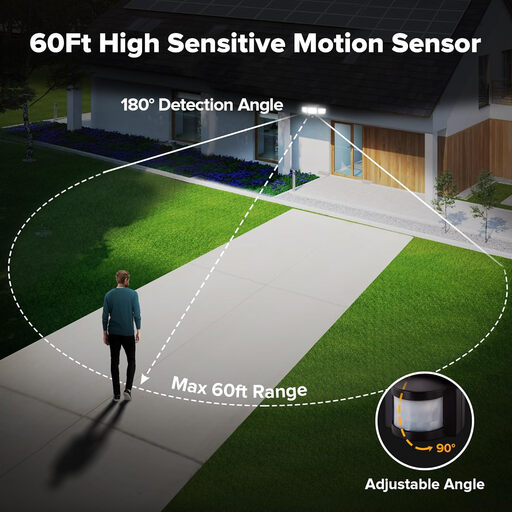
Why This Fits Their Persona: Perfect for homeowners who want to reliably illuminate driveways, garages, or dark corners of their property. The focus here is clearly on functionality and security.
The IP65 certification ensures the spotlight is waterproof even in heavy rain. The clear specification of 3000 lumens avoids subjective brightness claims. The motion sensor mode conserves the battery and provides light when it's needed.
Very high brightness for maximum security. The motion sensor has a wide detection angle (180°), and the three light heads are flexibly adjustable (270°).
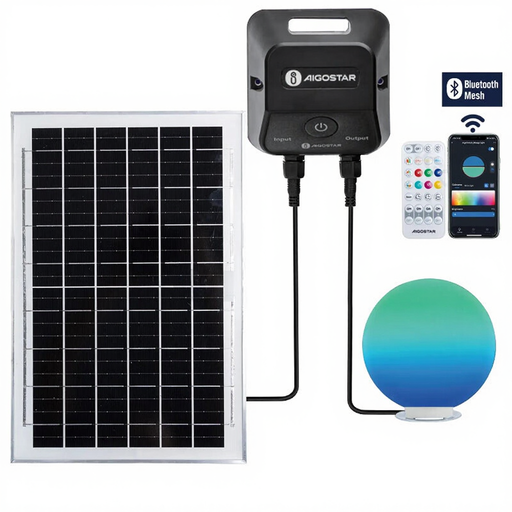
Why This Fits Their Persona: For users who want more than just light. This smart light offers full control over lighting scenes, colours, and schedules via an app and is suitable for networking multiple lights in the garden.
With a powerful 12W monocrystalline solar panel and a large 8000mAh battery, it addresses the problem of short runtimes. The IP65 rating ensures durability in all weather.
Control over 200 devices via Bluetooth Mesh. Full customisation of light colour (RGB) and colour temperature (2700K-6500K) via the app.
We have compiled a comprehensive, up-to-date list of products that fully meet these strict selection criteria and safety regulations. From decorative outdoor solar string lights to functional solar path lights.
The lifespan of a solar light depends on two main components: the battery and the LED. The battery is usually the first component to lose performance. Depending on quality and usage intensity, a battery can last 2 to 4 years. The LEDs themselves have a very long lifespan, often over 15,000 hours, and usually far outlast the battery.
Yes, solar lights do charge on cloudy days, but much more slowly and less efficiently than in direct sunlight. In winter, when the days are shorter and often overcast, the illumination time will be noticeably shorter. Models with high-quality monocrystalline panels and large batteries have a clear advantage here.
That depends on the IP rating. Models with IP65 or higher are generally robust enough to stay outside even in snow and frost. However, it may be advisable to bring the lights inside during heavy snowfall or icing to protect the materials, especially the battery, and extend its lifespan. Regularly clean snow off the solar panel so it can charge on sunny winter days.