
Lieferung heute & morgen

Qualitätsgarantie

Willkommens-Angebote freischalten: KOSTENLOSE Lieferung | Bis zu 80 % RABATT | Kostenlose 30-Tage-JoyPlus-Testphase
App herunterladen
Solar garden lights can be installed without a mains connection, and many models switch on automatically when it gets dark. This makes them a great option for garden paths, flower beds, patios, lawns and driveways. However, unclear product information and unsuitable installation locations can often lead to disappointment.
With LED lights, a low wattage alone tells you little about how bright the light will actually appear. A low power rating may be enough for decorative solar ground lights or small solar spike lights. A solar floodlight for a driveway, on the other hand, needs a very different level of light output and must be positioned appropriately.
So check the luminous flux in lumens, the colour temperature and the beam angle. A warm white light of around 2700 K tends to look more subtle in a flower bed, while 6500 K produces a cooler, whiter light.
Manufacturer claims such as ‘8–12 hours’ usually refer to suitable charging conditions. In winter, cloudy weather, shade or a dirty solar panel can all reduce the amount of energy stored. Trees, house walls and garden furniture can also affect charging performance.
Where possible, position solar lights so the panel receives several hours of direct daylight. Automatic activation is no substitute for choosing the right location.
‘Weatherproof’ is not a standardised technical protection rating. The IP rating describes protection against solid objects and water:
The rating needs to be suitable for the installation location. Even an IP-rated light should not be opened, modified or exposed to extreme conditions for long periods.
Warm white light is often a subtle choice for seating areas, patios and flower beds. Solar outdoor lighting at 2700 K can add a decorative accent to plants and paths. Cool white light at 6500 K is more suitable when you want outlines and surfaces to be clearly visible.
RGB solar lights cycle through different colours and suit decorative settings. They are not necessarily a better choice than a fixed white colour temperature for providing even guidance along a path.
Check the stated battery type, capacity and running time. Some products, for example, come with a Ni-MH battery and claim a charging time of 4–6 hours and a lighting time of 8–12 hours in suitable conditions. Treat these figures as a guide, not a guarantee of daily performance.
Keep the solar panel on your garden lights clear of leaves, dust and dirt. Regularly wiping it with a soft cloth helps maintain its charging performance.
Solar path lights and solar spike lights are usually easy to push into soft ground. They are only suitable for hard ground, paving or concrete if the product is designed for that type of installation. Check the dimensions, too: a light around 32–37 cm high can mark out flower beds and paths, but it will not illuminate an area as widely as a floodlight.
For larger outdoor areas, useful features include a separate solar panel, a longer connecting cable and a higher battery capacity. For a solar garden string light, also check the cable length, fixing points and spacing between the LEDs.
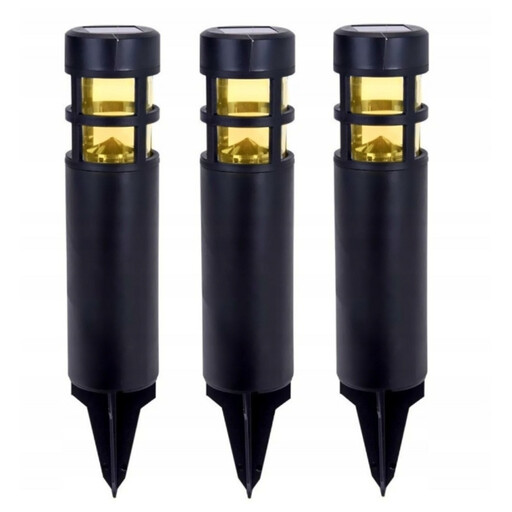
Why this product suits this profile: Three lights provide simple basic illumination for a path, flower bed or boundary, without the need to coordinate several separate purchases.
The product description explicitly states that the lights switch on automatically at dusk and need to be placed in direct sunlight.
Set of 3; designed for paths, gardens and flower bed borders; cordless installation.
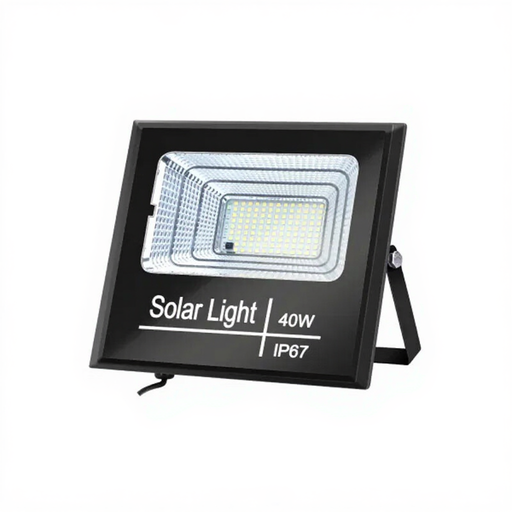
Why this product suits this profile: The separate panel makes it easier to position the light for larger outdoor areas, while the housing is described as being made from aluminium and glass.
The stated IP65 rating and separate solar panel address a common misconception: weather resistance does not necessarily mean the light is in a good position to charge.
40 W version according to the product details; 10,000-mAh battery; separate solar panel; up to 12 hours of lighting according to the description.
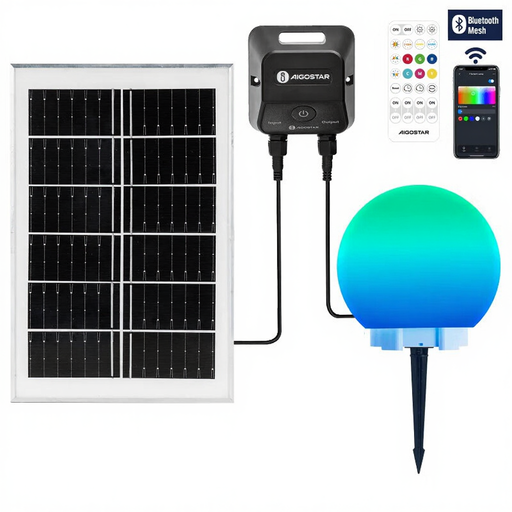
Why this product suits this profile: For anyone who wants to group several lights, control them via an app and switch between RGB colours and shades of white.
The product description specifically mentions app control, scheduling and grouping, rather than presenting RGB as colour-changing with no clear way to control it.
Bluetooth Mesh; RGB+CCT from 2700 K to 6500 K; AigoSmart app; solar and lithium battery according to the product details.
We’ve put together a complete, regularly updated list of products that meet these strict selection criteria and fully comply with the safety regulations in force in the EU.
Where possible, avoid placing solar lights under dense foliage or directly next to outdoor lights that stay on all the time. A bright motion sensor light or street lamp can affect the dusk sensor. Solar spike lights should be placed in firm, but not stony, ground. For rented properties, removable or portable options are especially practical.
Before using the light for the first time, charge the battery as instructed. Clean the panel regularly and check the housing, cables and ground stake for damage. Batteries and electronic components should be taken to the designated collection points when replaced or at the end of their useful life.
Lifespan depends on the LED, battery, materials, charging conditions and weather. Some product details, for example, state an LED lifespan of up to 15,000 hours. The battery is a separate component that wears out, and its capacity may decrease over time depending on use.
Many LED solar lights can generally be used outdoors in winter. However, shorter days, a lower sun, snow and cloudy weather can all reduce charging performance. Also check the stated temperature range and carefully clear any snow or dirt from the solar panel.
Solar lights do not need to be connected to the mains. The solar panel charges the built-in battery during the day, and the stored energy powers the LEDs when it gets dark. Running time and brightness depend on the charge level, location and product specifications.