
Lieferung heute & morgen

Qualitätsgarantie

Willkommens-Angebote freischalten: KOSTENLOSE Lieferung | Bis zu 80 % RABATT | Kostenlose 30-Tage-JoyPlus-Testphase
App herunterladen
Solar garden lights can be set up without power cables and used to add decorative lighting to paths, lawns, borders and seating areas. However, not every model will suit every garden. Vague claims about how long lights stay on, poor positioning or an IP rating that is too low can all lead to disappointment.
This buying guide explains which specifications matter when choosing solar lights for the garden and which models may suit different needs.
Claims such as ‘up to 8–12 hours’ assume suitable charging conditions. In shade, cloudy weather or winter, less energy may be available. A solar panel needs as many hours of direct sunlight as possible. Trees, walls and balcony railings can significantly reduce charging performance.
IP44 protects against splashing water from different directions and solid objects above a certain size. However, the light should not be left standing in water or submerged for long periods. For weather-resistant garden lighting, it’s also important that the housing is stable and the electronics remain protected from moisture.
RGB solar lights create colourful accents in flower beds, on lawns or on patios. For a more relaxing effect around seating areas or along a path, warm white solar lights at around 2700 K may be a better choice. Coloured lighting isn’t automatically a substitute for practical lighting on steps or in well-used walkways.
Solar garden lights should be placed somewhere that gets as much direct sunlight as possible. Many models operate automatically: the light comes on at dusk and switches off at dawn. You may need to allow around 4 to 6 hours for the first charge before using it.
Small sets of 3 solar lights can be spaced evenly along a flower bed or path. Make sure each panel gets enough light and isn’t shaded by nearby plants.
How long a light stays on depends on its charge level, the amount of sunlight, battery capacity and ambient temperature. Product specifications may list Ni-MH batteries with capacities of 40 mAh, 200 mAh or 600 mAh, for example. These figures are only useful when considered alongside the panel size and light output.
A stated lifespan of 15,000 hours for the Aigostar models mentioned refers to the LED or the product specification. The battery is a consumable part and may not last as long as the LED.
Solar ground lights and solar garden stake lights are usually pushed directly into soft soil or a lawn. This type of installation is less suitable for hard, compacted ground. Don’t force the ground stake into place, as this could damage the housing or connecting parts.
If you’re looking at a stainless steel finish, it’s worth checking the materials description too. Some models are made from plastic with a silver-coloured finish, rather than solid stainless steel. This affects the weight, appearance and handling.
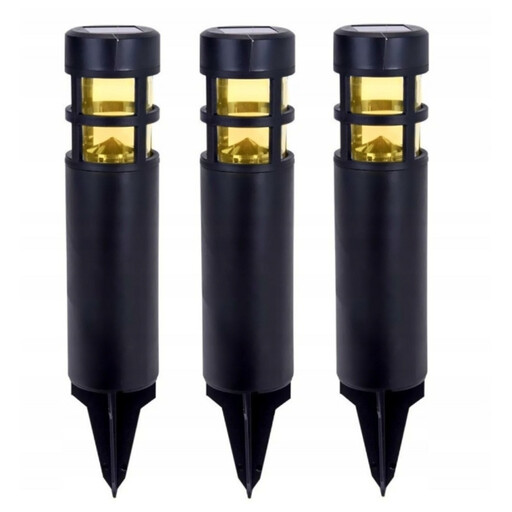
Why this product suits this need: This set includes three lights, making it a good choice if you’d like to spread several small pools of light along a path, flower bed or border.
Automatic on/off operation means less effort to use. However, you’ll still need a sunny spot to ensure the lights charge effectively.
Three lights in one set; no mains connection needed.

Why this product suits this need: The stated colour temperature of 6500 K produces a crisp, cool light, which can be useful for clearly defined pools of light along paths or property boundaries.
The IP44 rating makes its limits clear: it’s suitable for outdoor use, but must not be submerged in water.
Charging time: 4–6 hours; stated run time: 8–12 hours; IP44.
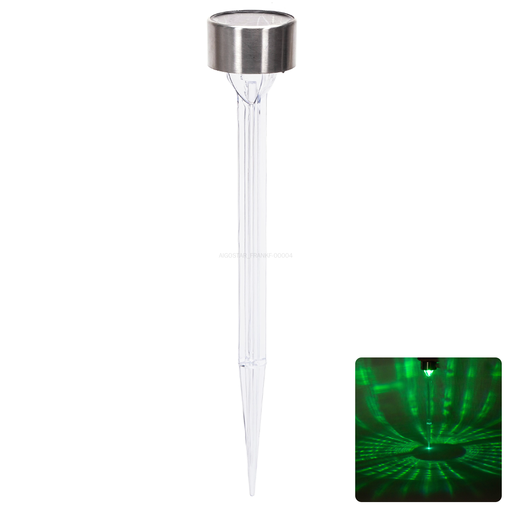
Why this product suits this need: The RGB function is for anyone who wants to add changing colour accents to paths, lawns or flower beds.
The specifications clearly state the charging time, run time and IP rating, so you can check whether the light suits the conditions where you plan to use it.
RGB lighting; 200 mAh Ni-MH battery; stated run time: 8–12 hours; ground stake installation.
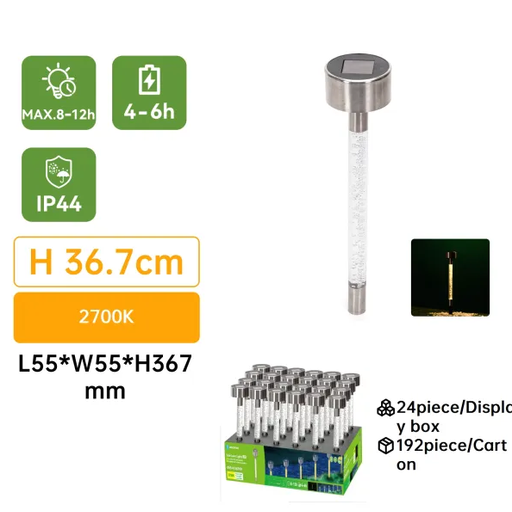
Why this product suits this need: Its 2700 K colour temperature is described as warm white, making it suitable for decorative pools of light on a patio, lawn or flower bed.
The stated colour temperature makes ‘warm white’ a specific claim rather than a vague marketing term. IP44 also makes clear the light’s limits when it comes to water.
2700 K; stated charging time: 4–6 hours; stated run time: 8–12 hours; 36.7 cm tall.
We’ve put together a complete, regularly updated list of products that meet these strict selection criteria and fully comply with the safety regulations in force in the EU.
Choose a spot that gets as much direct sunlight as possible. The solar panel should face upwards and remain clear of shade from plants, buildings or other lights. Ground stakes should be pushed into soft, stable soil. After installation, leave the light to charge for several hours before using it for the first time.
Product specifications may give an LED lifespan of, for example, 15,000 hours. Actual service life also depends on the battery, weather, charging cycles and care. Clean solar panels regularly with a soft cloth. Don’t open or modify batteries yourself.
The lights run on energy from sunlight, so they don’t need a mains connection. However, you may need to pay for the initial purchase, replacement batteries or a replacement light if one is damaged. Light output will still depend on local charging conditions.