
Lieferung heute & morgen

Qualitätsgarantie

Willkommens-Angebote freischalten: KOSTENLOSE Lieferung | Bis zu 80 % RABATT | Kostenlose 30-Tage-JoyPlus-Testphase
App herunterladen
Solar garden lights don’t need a mains connection and can usually be placed in a flowerbed, on the lawn, along a path or on a balcony without any tools. However, not every solar light is right for every location. Vague claims about run time, misjudging the IP rating or choosing the wrong colour temperature can all lead to disappointing purchases.
This buying guide explains which technical details really matter when choosing solar lights for the garden, and which models suit different needs.
Claims such as “8–12 hours” usually assume the light has had enough time to charge in direct sunlight. In shade, cloudy weather or winter, it may store less energy. If you’re placing solar path lights on a north-facing side or beneath dense tree cover, expect them to run for less time.
The IP44 rating means protection against solid objects 1 mm or larger, as well as splashing water. That’s suitable for many sheltered outdoor areas, but it doesn’t mean the light can be left standing in water. IP65 offers greater protection against dust and water jets, but these lights aren’t designed to be submerged either.
Warm white solar lights around 2700 K give off a soft, yellow-toned glow, making them well suited to patios, seating areas and decorative garden spaces. Light at around 6500 K appears much cooler and whiter. RGB solar lights change colour, depending on the model, and are mainly for decoration rather than evenly lighting a path.
Solar garden lights should be placed somewhere that gets at least several hours of direct sunlight. Depending on the design, they may use amorphous or polycrystalline solar panels. Many models list a charging time of 4–6 hours and a run time of 8–12 hours in suitable conditions. String lights may differ: the VIVREAL model featured here lists a 6–8-hour charging time and 8–14 hours of illumination, depending on the weather.
Before using the light for the first time, switch it on using the on/off switch, if there is one. Keep the solar panel clear of leaves and dust, and make sure it isn’t left in constant shade.
For outdoor LED solar lights, the IP rating is an important point of comparison. With IP44, it’s best to choose a position where water won’t collect. Models with plastic housings are usually lightweight and easy to move. A stainless-steel look can be decorative, but it doesn’t necessarily mean the light is made entirely from stainless steel. Always check the material details carefully.
For walkways, placing lights at regular intervals is more important than choosing one particularly eye-catching light. On a patio or balcony, the overall lighting effect can take centre stage.
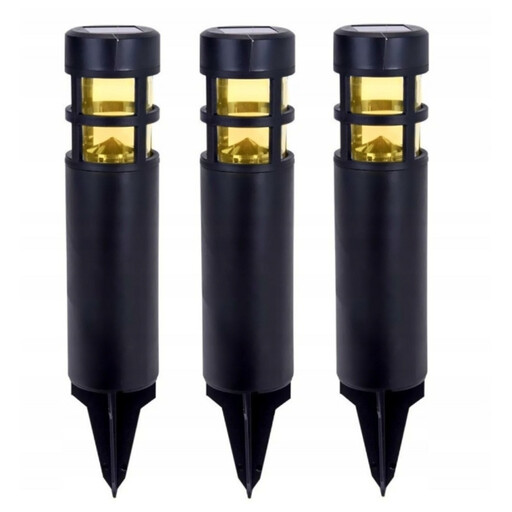
Why this product suits this profile: This set of three makes it easy to light paths, flowerbeds or lawn edges with several lights, without having to choose each one individually.
The number of lights is clearly stated. This makes it easier to plan the area you want to cover before buying, rather than having to order extra lights later.
Three lights per set; automatic activation at dusk according to the product description.
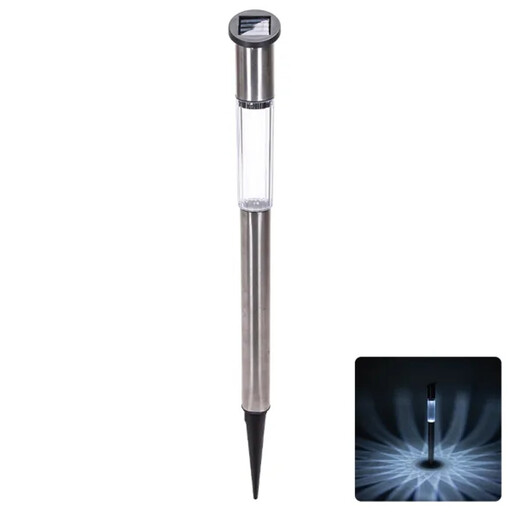
Why this product suits this profile: This light combines a crisp, cool colour temperature with a stainless-steel look, making it a good fit for neatly laid-out paths or flowerbed borders.
The product details specify the charging time, run time, IP44 rating and recommended temperature range. This gives you key information to compare with other models.
6500 K colour temperature; stated charging time of 4–6 hours and run time of 8–12 hours in suitable conditions.
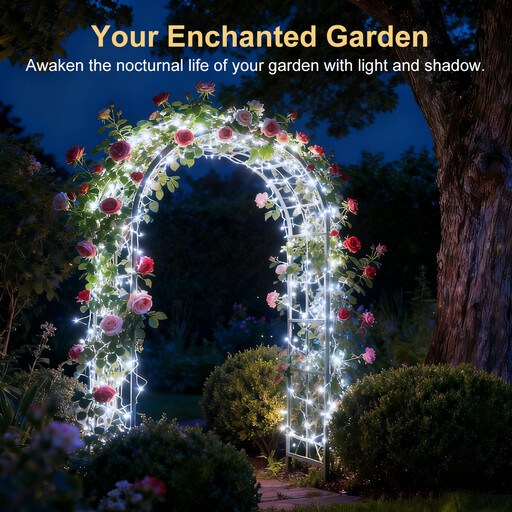
Why this product suits this profile: Each of the two 8-metre string lights is designed for balconies, fences, trees, pergolas or decorative events.
The IP65 rating is clearly stated. The product details also list eight lighting modes and a memory function, rather than making only a vague claim about versatile lighting.
Two 8-metre string lights; 80 LEDs per string; eight lighting modes plus a memory function.
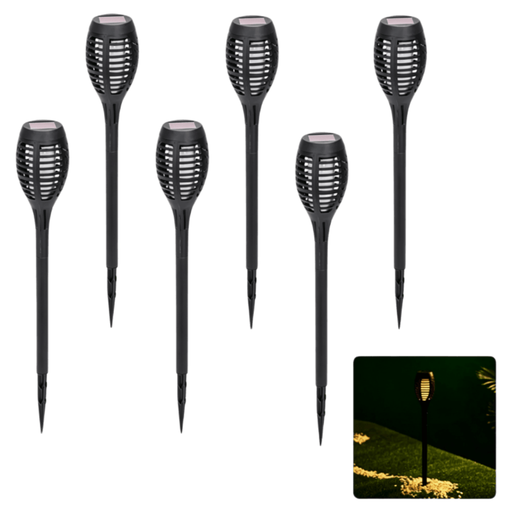
Why this product suits this profile: This set is for buyers who want to create a warm glow and flame effect in several areas of the garden.
The colour temperature is clearly stated as 2700 K. This helps you see that the light is warm white, rather than cool in tone.
Set of six; warm white 2700 K lighting; stated run time of 8–12 hours in suitable conditions.
We’ve put together a complete, regularly updated list of products that meet these strict selection criteria and fully comply with the safety regulations in force in the EU.
The solar panel should receive as much direct sunlight as possible and shouldn’t be shaded by walls, trees or roof overhangs. Insert the light into soft soil or place it on a flat surface. If the ground is hard, don’t force the stake into it.
Their lifespan depends on the battery, LED, housing, weather conditions and maintenance. Some product details state that the LED can last for up to 15,000 hours. This doesn’t necessarily mean the battery or the entire light will last just as long. Clean the solar panel regularly with a soft, damp cloth.
Solar lights draw their power from the integrated solar panel while in use, so they don’t need mains electricity. However, you may incur costs for replacement batteries, damaged components or disposal. For lights with NiMH batteries, follow the battery disposal instructions and local regulations for electrical waste.