
Lieferung heute & morgen

Qualitätsgarantie

Willkommens-Angebote freischalten: KOSTENLOSE Lieferung | Bis zu 80 % RABATT | Kostenlose 30-Tage-JoyPlus-Testphase
App herunterladen
Solar lights promise simple and atmospheric garden lighting without wires or electricity costs. But the reality is often different: many products disappoint after just a short time with dim light, short runtimes, or complete failure after the first rain. Before you invest, it's important to know the typical pitfalls that often lurk behind appealing product images.
As a Joybuy Product Recommendation Officer, I'm here to help you separate the wheat from the chaff. This guide will show you what to look for to find durable and functional outdoor solar lights that will reliably showcase your garden.
The 2 Most Common Mistakes When Buying Solar Lights
To avoid a bad buy, you should be guided not by pretty pictures, but by verifiable technical data. Two metrics are crucial for the performance and longevity of your solar garden lighting.
The IP (Ingress Protection) rating indicates how well an electrical device is protected against the entry of foreign objects and water. For solar lights in the garden, the following values are relevant:
Always look for an explicit IP rating. If it's missing, the product is likely not suitable for permanent outdoor use.
The performance of a solar light depends on the interplay of three components:
Based on these objective criteria, we have selected a few products suitable for different needs and garden styles.
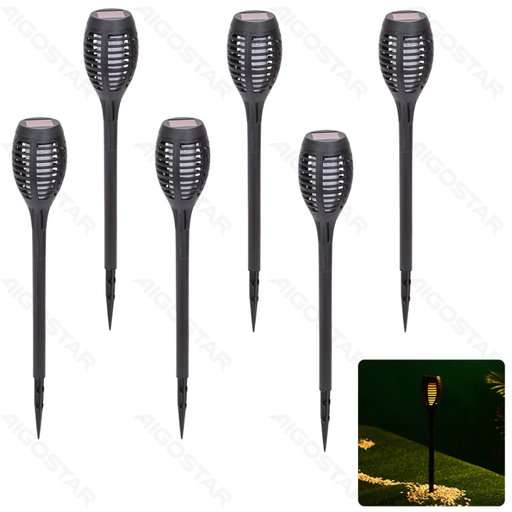
Why it's a match: Ideal for users who want to create a warm and inviting atmosphere for paths, patios, or flowerbeds. The realistic flame effect provides a cozy ambiance with no fire hazard.
The lights have a clear IP44 certification, making them protected against splashing water. The stated runtime of 8–12 hours is based on a charging time of 4–6 hours via the integrated amorphous silicon panel, which sets a transparent performance expectation.
The 6-pack allows for uniform and widespread decoration. The warm white light color (2700 K) creates an authentic torch effect.
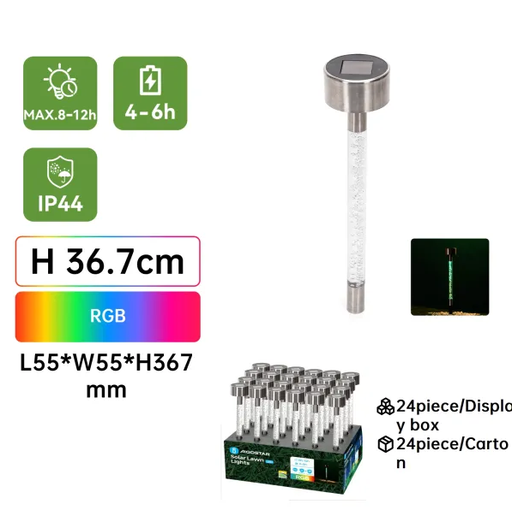
Why it's a match: Perfect for anyone who wants to add playful accents with colored light. The bubble design and RGB color-changing feature make these solar stakes an eye-catcher in flowerbeds or for garden parties.
This model is also rated IP44, making it ready for outdoor use. The technical specifications, including the 40mAh Ni-MH battery, are clearly stated, creating a realistic expectation for the performance of a decorative light object.
The automatic RGB color-changing provides dynamic and varied lighting without manual adjustment. The stainless steel finish gives the lightweight plastic housing a premium appearance.
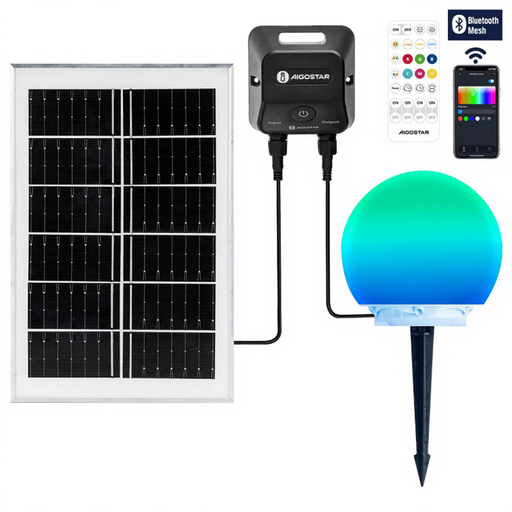
Why it's a match: For users who want full control, high performance, and smart integration. Ideal for illuminating larger areas where brightness, color, and color temperature can be controlled via an app.
This model far exceeds the minimum requirements: its IP65 rating makes it extremely robust against the elements. The powerful 5W monocrystalline solar panel and 4000mAh lithium battery ensure reliable charging and a very long runtime of up to 24 hours.
Full control via Bluetooth Mesh: RGBCCT allows you to choose from millions of colors and adjust the white tones (2700K-6500K). The separate panel allows for flexible placement for optimal sun exposure.
For more demanding lighting concepts or larger gardens, a hardwired solution might be the better choice. Explore our range of professional systems.
The lifespan of a solar light depends on several factors. The runtime per night is determined by the daily sun exposure, the solar panel's efficiency, and the battery's capacity (mAh). The overall product lifespan is often limited by the battery, which, depending on its quality, will lose capacity after 1-3 years. However, it can be replaced in many models. The LEDs themselves often have a manufacturer-stated lifespan of 15,000 hours or more. Crucial for a long outdoor life is a high IP rating (at least IP44) to protect the electronics from moisture.
Yes, but with reduced performance. Solar panels generate electricity even in diffuse light, but significantly less than in direct sunlight. In winter, the days are shorter and the sun is lower in the sky, which further reduces charging time. Therefore, expect a noticeably shorter runtime during the darker months. Models with high-efficiency monocrystalline panels and large batteries are better suited for year-round use than simple decorative lights.
Installation is straightforward. Choose a location where the solar panel will receive at least 4 to 6 hours of direct sunlight per day. Avoid shadows from buildings, trees, or shrubs. The ground should be soft enough to push the stake in without force. Occasionally clean the solar panel with a soft cloth to remove dust and dirt to maintain charging efficiency.