
Lieferung heute & morgen

Qualitätsgarantie

Willkommens-Angebote freischalten: KOSTENLOSE Lieferung | Bis zu 80 % RABATT | Kostenlose 30-Tage-JoyPlus-Testphase
App herunterladen
Solar garden lights let you light your garden without a mains connection and can usually be set up without complicated electrical installation. However, not every solar light is right for every outdoor space. If you focus only on decorative design or the long operating time stated in the product description, you may overlook important technical details.
An IP44 rating means protection against solid objects larger than 1 millimetre and splashing water. It does not mean you can leave a light submerged in water or place it in a dip where rainwater collects. Solar outdoor lights with an IP44 rating are therefore suitable for sheltered paths, lawns, flower beds and patio areas. They are not designed for places that are regularly flooded.
Claims such as ‘8–12 hours’ assume suitable charging conditions. Actual operating time may be shorter in shaded areas, during short winter days, in cloudy weather or when solar panels are dirty. You should also allow the light to charge sufficiently before using it for the first time. If you’re placing solar garden lights between tall hedges, under trees or close to a house wall, check the amount of sunlight they’ll receive particularly carefully.
Warm white solar lights at around 2,700 Kelvin produce a soft, yellowish glow and are often a good choice for seating areas, entrances and decorative flower beds. Cool white light at 6,500 Kelvin looks much more neutral and can make the edges of paths stand out more clearly. Colour-changing solar lights are mainly suited to decorative accents. They won’t necessarily provide even lighting along a path.
The IP rating should suit the location. IP44-rated lights are designed to cope with splashing water and normal outdoor conditions, but not with being cleaned using a pressure washer or submerged in water. A stainless-steel look may be achieved with either genuine stainless steel or plastic with a suitable finish. Checking the material details helps you avoid misconceptions about the weight and surface finish.
The fixing method also matters for solar ground lights and solar path lights. Ground stakes should be pushed into soft but firm soil. Very hard or frozen ground can damage the plastic. For patios, freestanding models with a suitable base are more practical.
An integrated solar panel charges the battery during the day. Product details often state a 4–6-hour charging time and an operating time of 8–12 hours in suitable conditions. These are manufacturer figures and depend on light intensity, positioning, temperature and battery age.
Ni-MH batteries are built into many LED solar lights. They should not be opened or replaced with just any battery. If performance drops, follow the manufacturer’s instructions for the specific model. Clean the solar panel regularly with a soft cloth, as dust and pollen can reduce how much light it absorbs.
Check whether the light stays on, creates a flame effect or changes colour. Low power consumption is common for decorative solar lights, but it doesn’t tell you how bright they’ll look. When lighting a path, consider the position, spacing and number of lights together rather than focusing on a single power figure.
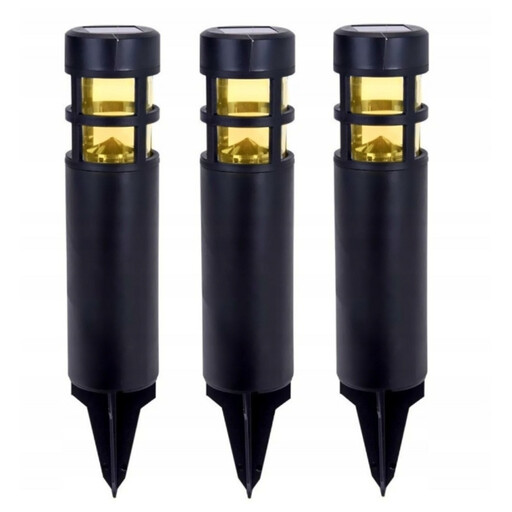
Why this product suits this profile: This three-piece set is ideal if you want to light a small area, such as the edge of a flower bed, a short stretch of path or part of a balcony, without much planning. The lights charge in daylight and switch on automatically at dusk.
The product description clearly states the number of lights and that they switch on automatically. However, direct sunlight is still essential when choosing where to place them.
Three-piece set, cordless placement and automatic activation at dusk.
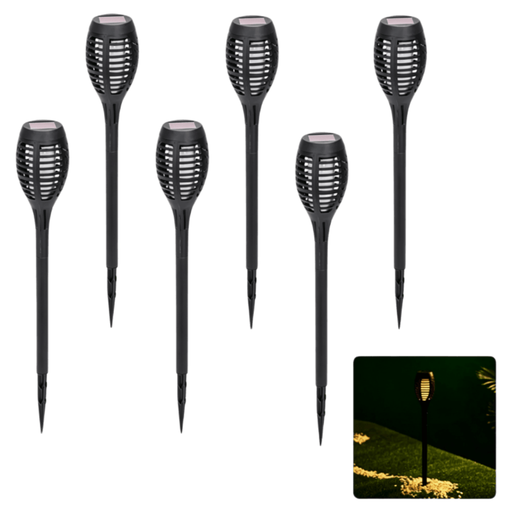
Why this product suits this profile: This set combines a cylindrical flame effect with warm white light at 2,700 Kelvin. It’s well suited to patios, lawn edges and paths when a decorative glow matters more than powerful illumination.
The product details specify an IP44 rating, a 4–6-hour charging time and 8–12 hours of light in suitable conditions. This makes it easier to assess the level of protection and the operating time claim.
Six-piece set, Ni-MH battery, integrated amorphous silicon solar panel and warm white light at 2,700 Kelvin.
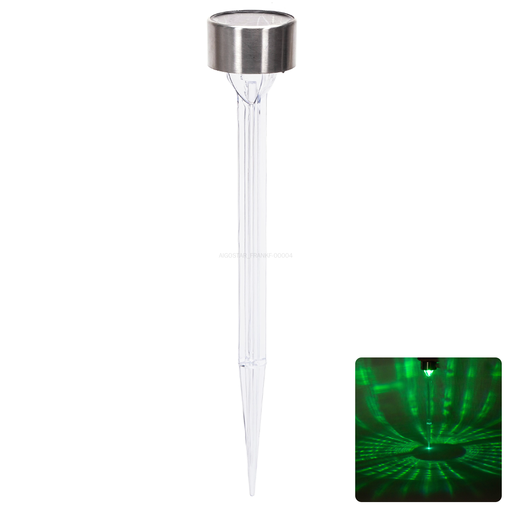
Why this product suits this profile: The RGB function is designed for adding colourful accents to flower beds, lawns or a patio. The ground stake lets you position the lights flexibly in soft soil or grass.
The RGB function is best treated as a decorative feature, not a replacement for even security lighting. An IP44 rating indicates protection against splashing water, not complete waterproofing.
RGB lighting, ground stake fitting, a 4–6-hour charging time and a stated operating time of 8–12 hours in suitable conditions.
We’ve put together a complete, regularly updated list of products that meet these strict selection criteria and fully comply with the safety regulations in force in the EU.
Choose a spot that gets as much direct sunlight as possible. The solar panel shouldn’t be in constant shade from trees, walls or garden furniture. Push ground stakes into soft, firm soil and angle the panel upwards. Before using the lights for the first time, it’s best to give them a full charge as recommended by the manufacturer.
Their lifespan depends on the LED, battery, casing, weather and how well they’re cared for. Some models state a rated LED lifespan of up to 15,000 hours. This figure refers to the light source and doesn’t automatically reflect the lifespan of the entire solar light. The battery may lose capacity sooner.
While switched on, solar lights draw their energy from the battery charged during the day, so they don’t need a mains connection. This makes them suitable for garden areas without an outdoor socket. However, actual operating time depends on sunlight, charge level, temperature and battery capacity.