
Lieferung heute & morgen

Qualitätsgarantie

Willkommens-Angebote freischalten: KOSTENLOSE Lieferung | Bis zu 80 % RABATT | Kostenlose 30-Tage-JoyPlus-Testphase
App herunterladen
By Joybuy Product Recommendation Officer, August 28, 2026
Solar lights promise simple, atmospheric garden lighting with no electricity costs or cable installation. But the reality is often different: lights that fail after a rain shower, a runtime that barely lasts for a short evening, or a light that is more of a faint glow. Before you invest, it's important to know the most common pitfalls that often lurk behind tempting product descriptions.
This guide will help you correctly interpret technical specifications and make an informed decision for your garden, balcony, or patio.
Many disappointments with solar garden lighting can be traced back to three overlooked product details. If you know what they are, you can rule out unsuitable models from the start.
To find a durable and functional LED solar light, you should carefully check three technical features. These are the primary determinants of performance and reliability.
The IP (Ingress Protection) rating indicates how well a device is protected against the entry of foreign objects and water. For outdoor use, two ratings are relevant:
The combination of the battery and solar panel is the heart of every solar light.
The lighting mood is largely determined by the colour temperature (in Kelvin, K) and the available functions.
Here are some models tailored to specific user profiles that meet the quality criteria mentioned above.
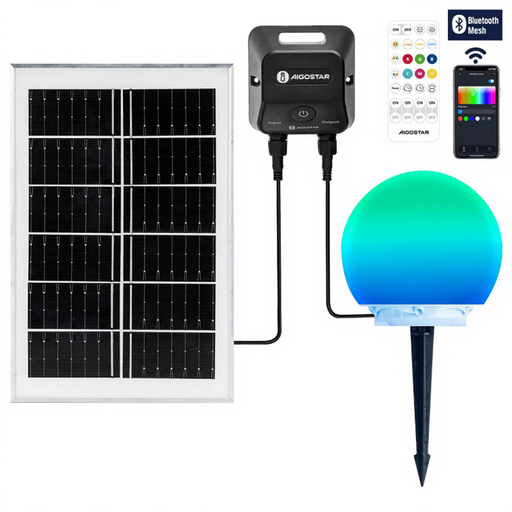
Why This Fits Their Persona: Ideal for users who want full control over their garden lighting. A smartphone app can control over 200 lights simultaneously, adjust the light colour from warm to cool white, or select from the full RGB spectrum.
With a large 4000mAh battery, a separate, high-efficiency 5W monocrystalline solar panel, and an IP65 rating, this model bypasses the typical weaknesses in performance and durability.
Bluetooth-Mesh connectivity for stable control over large areas. Full flexibility in lighting design (RGBCCT). Long runtime of up to 24 hours according to the manufacturer.
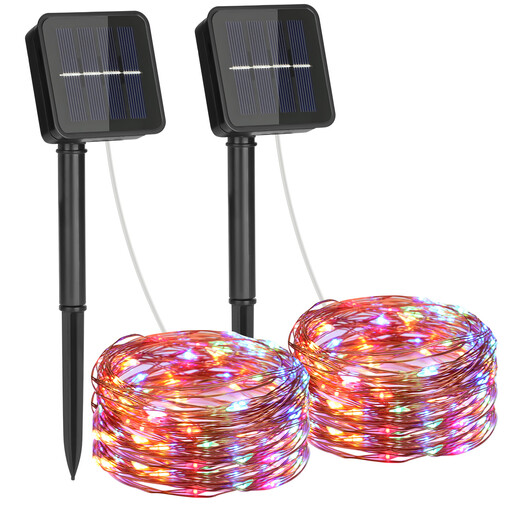
Why This Fits Their Persona: Perfect for flexibly decorating balcony railings, fences, trees, or for festive occasions. The pliable copper wire is easy to shape, and the colourful lights create a vibrant atmosphere.
This outdoor solar string light is equipped with an IP65 rating, making it significantly more robust against rain and moisture than many other decorative string lights on the market.
The set includes two 12-metre string lights, each with 120 LEDs. Eight different lighting modes with a memory function offer variety. The runtime is 8–14 hours, according to the manufacturer.
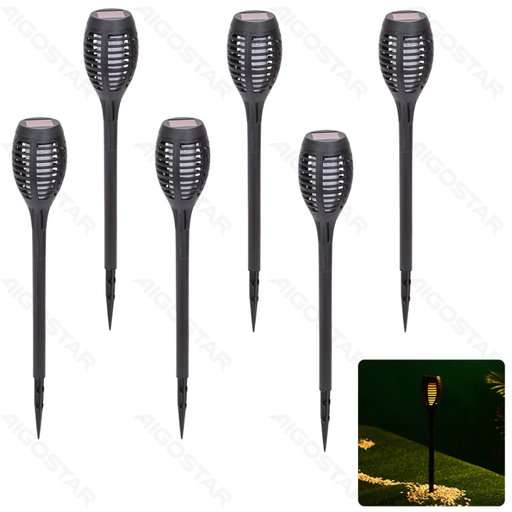
Why This Fits Their Persona: For anyone seeking atmospheric yet safe lighting for garden paths or flowerbeds. The realistic flame effect in warm white light (2700K) creates an inviting atmosphere without any fire hazard.
Although these lights have an IP44 rating, they are designed as a set for placement along paths where splash protection is often sufficient. The focus is on the decorative effect, not extreme weather resistance.
Easy installation with ground stakes in a practical 6-pack set. The flame effect is a visual highlight. The runtime of 8–12 hours (according to the manufacturer) is sufficient for nighttime ambient lighting.
We have compiled a complete, up-to-date list of products that fully meet these strict selection criteria and German safety regulations.
The lifespan of a solar light is determined by two components: the LED and the battery. The LEDs themselves are very durable, often with a manufacturer-stated lifespan of 15,000 hours or more. The battery is typically the first component to lose performance. Depending on quality and usage, a battery usually lasts 1 to 3 years. Models with replaceable standard batteries (e.g., AA or AAA type) are a more sustainable choice.
Yes, but with reduced performance. The runtime is shorter because there is less solar radiation. Models with high-efficiency monocrystalline or polycrystalline solar panels charge better in diffuse light than those with simple amorphous panels. For year-round use, choosing a model with a powerful panel and a high-capacity battery is crucial.
That depends on the IP rating. Lights with IP65 or higher are designed for year-round outdoor use and can withstand rain, snow, and frost. Models with a lower rating like IP44 should perhaps be brought inside during heavy frost or continuous rain to protect the electronics and prevent the plastic housing from becoming brittle.