
Lieferung heute & morgen

Qualitätsgarantie

Willkommens-Angebote freischalten: KOSTENLOSE Lieferung | Bis zu 80 % RABATT | Kostenlose 30-Tage-JoyPlus-Testphase
App herunterladen
Solar lights for the garden don’t need a fixed mains connection and can usually be set up without tools. However, solar garden lights vary considerably in how long they stay lit, their light colour, IP rating and controls. If you focus only on the design or a high wattage figure, you could end up with a product that won’t charge properly where you plan to put it, or isn’t suited to the British weather.
This guide explains which details matter before you buy and which solar garden lights are best suited to different needs.
Figures such as “up to 8–12 hours” assume suitable charging conditions. In the shade, on cloudy days or in winter, the actual run time may be shorter. A solar panel beneath a tree, beside a tall house wall or under a balcony canopy will receive much less direct sunlight.
An IP44 rating means protection against solid objects larger than 1 millimetre and water splashes. It doesn’t mean the casing is permanently waterproof or suitable for submersion. IP65 offers protection against dust and water jets, but still doesn’t protect against submersion. Solar lights should therefore not be installed in areas that stay wet or underwater.
RGB solar lights create colourful accents, but aren’t automatically suitable for safely lighting steps or paths. For visibility and a softer lighting effect, warm white solar lights or neutral white LEDs may be a better choice. So check whether you need decorative lighting or a directed light for practical use.
Look at the combination of charging time, stated run time and battery capacity. Basic models, for example, may quote a 4–6-hour charging time and 8–12 hours of lighting in suitable conditions. These are the manufacturer’s figures, not a guarantee for every season.
For reliable charging, the panel should:
With solar ground lights and solar lights with ground stakes, it’s also important that the ground is firm enough. Don’t force a ground stake into very hard or frozen soil.
Colour temperature is measured in kelvins. 2700 K produces warm white light and generally creates a subtle effect. 6500 K is a cooler white, which can make outlines stand out more. RGB lights switch between different colours, while RGBCCT models can also vary between warm and cool white light.
The lumen rating describes the light output. However, a higher figure doesn’t automatically mean a light is more suitable: decorative lighting may be enough for a flowerbed, while a path needs more even lighting directed in the right way.
For outdoor LED solar lights, check the IP rating, temperature range and installation instructions. Ni-MH batteries are common in many compact solar garden lights. Larger smart lights may use higher-capacity lithium batteries.
It’s also worth checking what the material description means in practice. A silver-coloured plastic light may have a stainless-steel effect without being made entirely from stainless steel. So check the manufacturer’s specific details about the casing, IP rating and intended use.
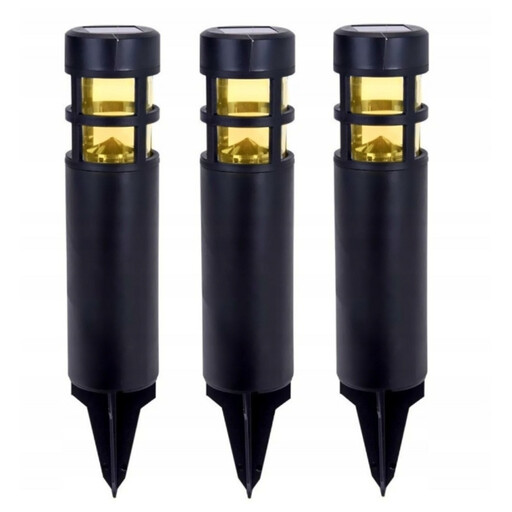
Why this product suits this need: This set of three solar lights is a good choice if you want to add several points of light to flowerbeds, paths or garden boundaries without planning an electrical installation.
The number of lights is clearly stated, so you won’t find out later that a single light isn’t enough for a longer stretch.
Three lights, solar charging and automatic activation at dusk, according to the product description.
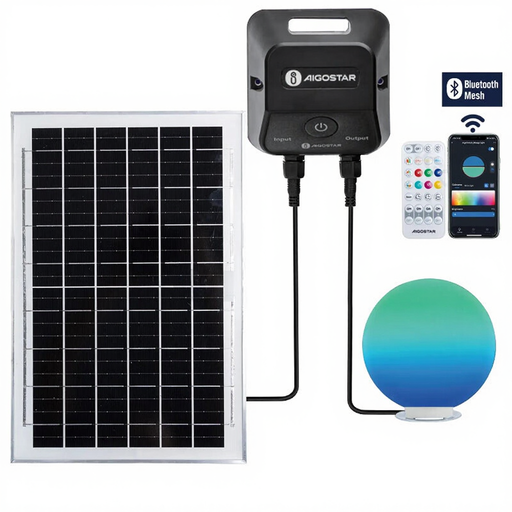
Why this product suits this need: This larger outdoor light combines RGB and adjustable white light with Bluetooth Mesh control. It’s a good fit for patios, larger garden areas or coordinated groups of lights.
The IP65 rating is clearly stated. The product also specifies a 4–6-hour charging time and an 8000 mAh lithium battery.
Bluetooth Mesh connectivity for more than 200 devices, according to the product description, plus RGB+2700–6500-K light.
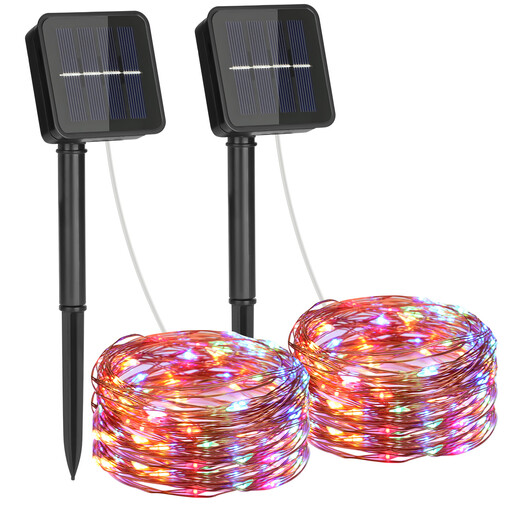
Why this product suits this need: These two 12-metre solar string lights are designed for balconies, patios, railings, pergolas or seasonal decorations.
The length, number of LEDs and IP65 rating are all stated. This makes planning easier, but you should still follow the instruction not to submerge the components.
Two string lights, each with 120 LEDs, eight lighting modes and a memory function, according to the product description.
We’ve put together a complete, regularly updated list of products that meet these strict selection criteria and fully comply with the safety regulations in force in the EU.
Place solar lights where the panel won’t be shaded, if possible. With ground stake models, make sure the stake is fully inserted and straight in the ground. On a balcony or patio, use a stable surface to prevent the light from tipping over. Check the on/off switch before first use, as some products need to be switched on manually.
Use a soft, dry or slightly damp cloth to remove dust from the panel. Don’t use abrasive cleaning products. At the end of their useful life, batteries and electronic components should be disposed of separately in accordance with local guidance.
Lifespan depends on the LED, battery, charging conditions, frost, moisture and care. Some products, for example, state an LED lifespan of 15,000 hours. This figure doesn’t automatically indicate how long the battery or the entire casing will last.
Yes, as long as the solar panel receives several hours of direct sunlight. A covered or north-facing balcony may limit the charging capacity. In this case, models with a separate panel or a shorter daily run time may be a more realistic choice.
While they’re in use, solar lights draw their energy from the charged battery and don’t need a mains connection. This means running costs are low during normal use. You’ll still need to factor in the initial purchase, possible battery replacements and spare parts.