
Lieferung heute & morgen

Qualitätsgarantie

Willkommens-Angebote freischalten: KOSTENLOSE Lieferung | Bis zu 80 % RABATT | Kostenlose 30-Tage-JoyPlus-Testphase
App herunterladen
Solar garden lights provide outdoor lighting without the need for permanent wiring. The integrated solar panel charges during the day, and the light switches on automatically when it gets dark, depending on the model. Solar lights are available in a range of shapes and light colours for garden paths, lawns, flower beds, balconies and patios.
Before you buy, it’s worth checking the technical specifications carefully. A decorative design alone doesn’t tell you whether a light is suitable for outdoor use in the UK. Many disappointing purchases come down to three common assumptions:
For outdoor use, it’s worth choosing weather-resistant solar lights with a clear IP rating. IP44 solar lights are protected against solid objects larger than 1 millimetre and against water splashes. They’re suitable for sheltered areas such as paths, flower beds and patios. For more exposed locations, a higher rating such as IP65 may be more suitable.
However, the IP rating doesn’t replace the need to choose a suitable location. Solar ground lights and solar stake lights should be positioned so that water doesn’t collect around the casing. The solar panel needs several hours of direct daylight wherever possible. Trees, walls, awnings and permanently shaded areas reduce charging performance.
Many solar garden lights have a stated charging time of around 4 to 6 hours in suitable conditions. How long they stay lit depends on factors including battery capacity, panel size, LED output and the ambient temperature.
A Ni-MH battery is built into many decorative solar lights. Claims such as “8 to 12 hours” should be treated as a guide, not a daily guarantee. Before using the light for the first time, it’s best to charge it fully according to the manufacturer’s instructions. If you use it in winter, shorter daylight hours may reduce its run time.
Solar lights with warm white light around 2700 Kelvin create a soft, yellowish glow. They’re often a good fit for seating areas, flower beds and decorative parts of the garden. Cool white light around 6500 Kelvin looks much more neutral to blue-toned and can make paths stand out more clearly.
RGB solar lights switch automatically or manually between several colours, depending on the model. They’re suited to decorative accents, but don’t automatically provide even lighting along a path. A solar string light offers a flexible option for railings, pergolas, shrubs and balconies. Cable length, number of LEDs, operating modes and IP rating are especially important here.
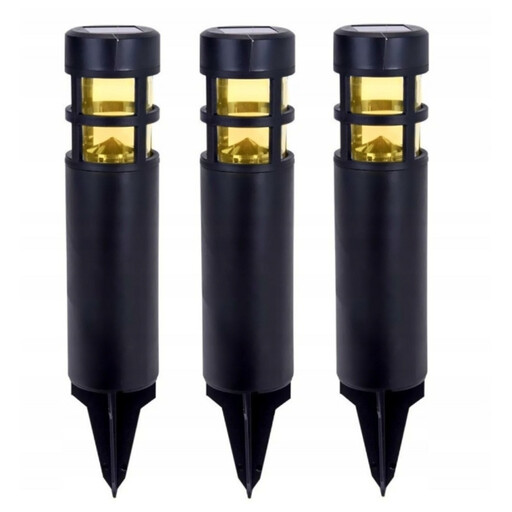
Why this product suits this profile: This set of three is a good choice if you want to start by adding decorative lighting to a small area, such as a flower bed, a section of path or a balcony.
The manageable number of lights reduces the risk of buying lots at once for a location that isn’t suitable. There’s no need for permanent wiring.
3 lights per set, automatic activation in the dark and easy installation outdoors.
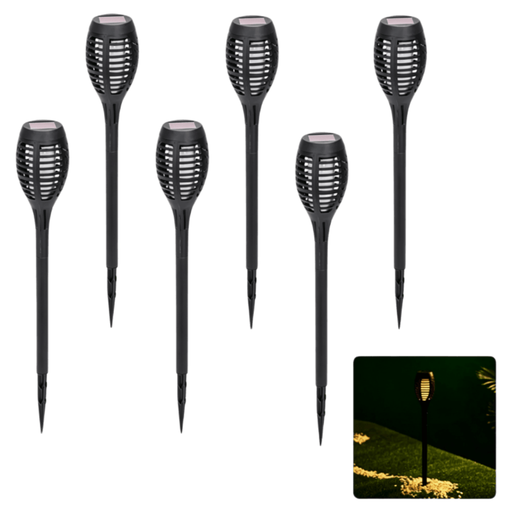
Why this product suits this profile: These six solar stake lights combine a coordinated look with warm white light at 2700 Kelvin and a flame effect.
The specifications clearly state the charging time, run time and IP44 rating. Under suitable conditions, the stated charging time is 4–6 hours, with 8–12 hours of light.
Set of 6, 2700 Kelvin, Ni-MH battery, automatic operation and a stated operating temperature of -10 °C to 50 °C.
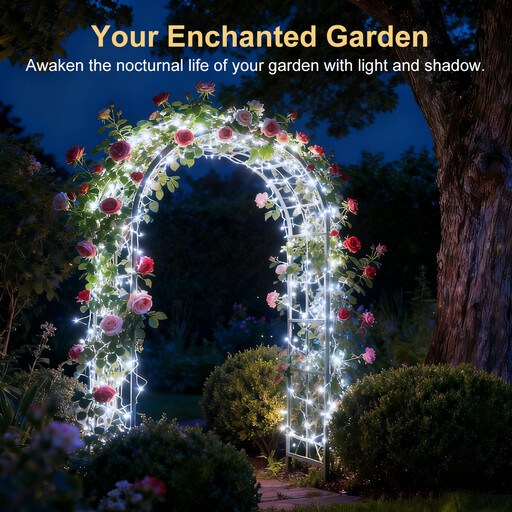
Why this product suits this profile: This solar string light is ideal for balconies, fences, pergolas, trees and patios when you want flexible decoration rather than individual ground lights.
The product details list 8 modes, a memory function and IP65 protection. This makes it easier to understand the controls and protection against water jets before you buy.
2 string lights, each 8 metres long, with 80 LEDs per string, a stated run time of 8–14 hours and IP65 protection.
We’ve put together a complete, regularly updated list of products that meet these strict selection criteria and fully comply with the safety regulations in force in the EU.
For reliable operation, install solar lights away from bright light sources such as outdoor lamps or illuminated windows. Otherwise, the dusk sensor may switch on late or not at all. Solar ground lights and solar path lights should also be placed on firm ground that doesn’t stay wet.
Clean the panel regularly with a soft, dry or slightly damp cloth. Harsh cleaning products and scouring pads can damage the surface. If you’re storing the light for an extended period, follow the manufacturer’s instructions for the on/off switch and battery. Faulty batteries and lights should be disposed of separately in line with local guidelines.
Many models need around 4 to 6 hours in suitable conditions. In winter, cloudy weather or a shady location can mean a longer charging time and a shorter run time.
It depends on the IP rating. IP44 protects against water splashes, while IP65 offers greater protection against water jets. Neither rating means the light can be left submerged in water.
They don’t need to be connected to the mains while in use. The solar panel charges the built-in battery during the day. This means there are no ongoing costs like those associated with mains-powered lights, although the battery may lose capacity over time and need replacing.