
Lieferung heute & morgen

Qualitätsgarantie

Willkommens-Angebote freischalten: KOSTENLOSE Lieferung | Bis zu 80 % RABATT | Kostenlose 30-Tage-JoyPlus-Testphase
App herunterladen
Solar garden lights are ideal for garden paths, lawns, flower beds, patios and driveways without a mains connection. They’re usually easy to install: push the light into the ground, position the solar panel and let the built-in battery charge. However, unclear product information and unsuitable locations can often lead to disappointment.
An IP44 rating protects against solid objects above a certain size and splashing water. It doesn’t provide complete protection against heavy rain, standing water or immersion. Solar ground lights with an IP44 rating should therefore not be placed in dips where rainwater collects.
For areas that are continually exposed to the elements, it’s worth checking that the IP rating is suitable for the location. Even products marketed as weatherproof garden lights should be checked regularly for damage to the housing, seals and solar panel.
Claims such as “8–12 hours” apply under the conditions specified by the manufacturer. A shady spot, limited sunlight, dirty panels or low temperatures can all reduce the available run time. Trees, walls and tall shrubs can affect charging more than you might expect.
Before buying, check whether your chosen location gets several hours of direct sunlight. The solar panel should be as unobstructed as possible and face upwards.
Terms such as “stainless steel look” don’t necessarily mean the housing is made of stainless steel. Some solar stake lights have a plastic housing with a silver-coloured finish. This can make them lighter, but the material, scratch resistance and care requirements differ from those of solid stainless steel.
Also consider whether you want a light for decorative guidance or brighter illumination. Small LED solar garden lights with low power consumption can mark paths and flower beds, but they won’t necessarily replace functional driveway lighting.
Colour temperature isn’t the same as brightness. For a more useful comparison, also look at figures such as lumens, beam angle and bulb type. These details aren’t always provided for decorative models.
The products listed come with an integrated NiMH battery. Charging time and run time should always be considered together. Under suitable conditions, the Aigostar models specify a charging time of around 4–6 hours and a run time of 8–12 hours.
Panel technology also plays a part: amorphous and polycrystalline silicon panels can differ in design and in how they perform in varying light conditions. A larger battery capacity alone doesn’t guarantee a longer run time if the panel can only recharge it with a small amount of energy.
Solar lights are usually available as ground or stake models. A ground spike can be pushed into soft soil or a lawn without tools. Don’t force the light into compacted ground, as this could damage the spike or housing.
Before buying, check:
The recommendations below match specific designs to different uses.
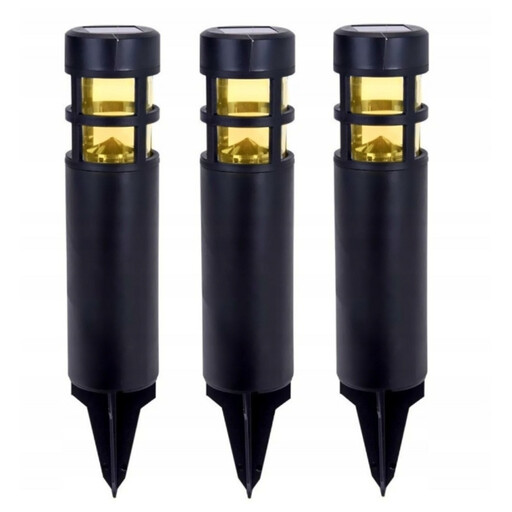
Why this product suits this type of buyer: This set of three is ideal if you want a simple way to mark several areas, such as the edge of a flower bed, a short garden path or a boundary.
The product description specifies automatic operation at dusk and simple placement in direct sunlight. Before choosing where to use them, buyers should still check the available information about the IP rating, panel and battery.
Three lights per set and installation requiring few tools; the product description also states that they switch on automatically at dusk.
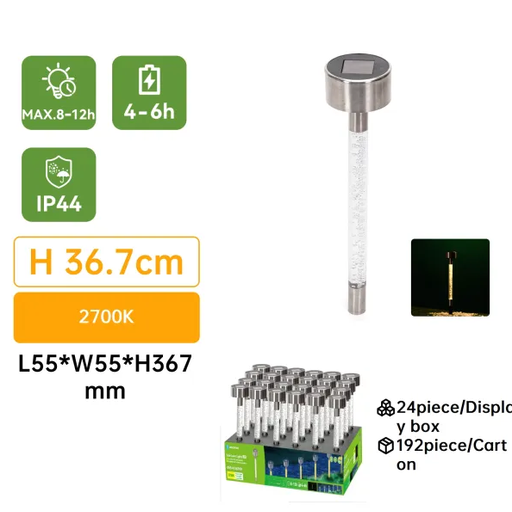
Why this product suits this type of buyer: The warm white colour temperature of 2700 K works well on patios, in seating areas and among decorative plants, where you want a subtle glow.
The description notes that the light is made of plastic with a silver-coloured finish. This helps set realistic expectations about the stainless steel look, without assuming it has a solid stainless steel housing.
2700 K warm white light, IP44 rating, 40 mAh NiMH battery, and a specified charging time of 4–6 hours and run time of 8–12 hours under suitable conditions.
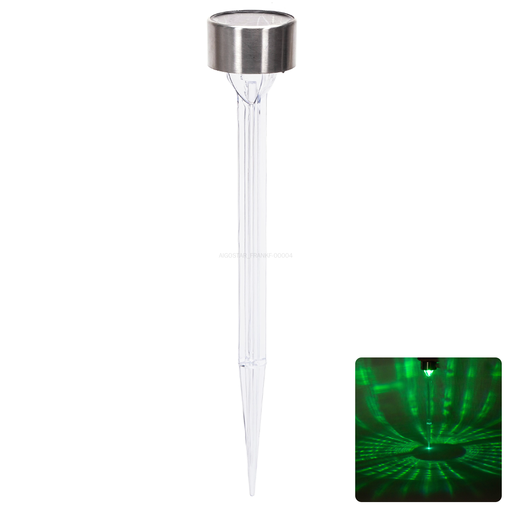
Why this product suits this type of buyer: RGB lighting is a good choice if you want to add colour to garden paths, lawns or flower beds and create decorative accents.
The technical information explicitly specifies an IP44 rating, a charging time of 4–6 hours and a run time of 8–12 hours under suitable conditions. This makes it easier to assess the product than relying on vague claims about weather resistance.
RGB lighting, polycrystalline solar panel, 200 mAh NiMH battery, 32 cm height, and automatic switching on and off according to the product description.
We’ve put together a comprehensive, regularly updated list of products that meet these strict selection criteria and fully comply with the safety regulations in force in the EU.
Choose a spot that gets several hours of direct sunlight wherever possible. Push the ground spike into soft, stable soil and position the panel facing upwards. Avoid locations that are permanently shaded by buildings, trees or canopies. Before first use, charge the battery in accordance with the product instructions.
Their actual lifespan depends on the battery, LED module, weather, maintenance and charging conditions. Some Aigostar models have a specified LED lifespan of up to 15,000 hours. This figure refers to the stated lifespan of the light source and doesn’t necessarily indicate the lifespan of the complete light.
Solar lights charge their built-in battery using sunlight and don’t need a mains connection. This means there are no ongoing electricity costs from a mains connection during normal use. However, reduced battery performance, damaged components or the need to replace the battery could result in costs later on.