
Lieferung heute & morgen

Qualitätsgarantie

Willkommens-Angebote freischalten: KOSTENLOSE Lieferung | Bis zu 80 % RABATT | Kostenlose 30-Tage-JoyPlus-Testphase
App herunterladen
Solar garden lights promise cable-free illumination without the need for a mains connection. In practice, however, how well they work depends largely on their location, battery capacity and IP rating. If you choose based only on design or the stated lighting time, you could end up with a product that barely charges in a shady garden or isn’t suitable for the spot you had in mind when it rains.
For garden, balcony and patio owners, three common buying misconceptions are particularly relevant:
The IP rating describes protection against solid objects and water. Many decorative solar lights in the range have an IP44 rating. This means they’re protected against splashing water from different directions, but not against being permanently submerged.
It’s therefore best to place solar garden lights somewhere that won’t collect water. Solar ground lights and models with ground stakes should be installed in stable ground. Soft soil or grass makes them easier to insert, while hard or stony ground can damage the stake.
The temperature range is also relevant. According to the product specifications, several Aigostar models are designed for temperatures between -10 °C and 50 °C. This shouldn’t be taken to mean they’re suitable for unrestricted use in all weather conditions.
A solar panel needs as much direct daylight as possible. Trees, house walls, balcony railings and poor positioning can all reduce its charging performance. The products featured here state charging times of around 4 to 6 hours under suitable conditions.
Many models use a built-in Ni-MH battery. The stated capacity, for example 40 mAh or 200 mAh, affects the potential running time in combination with the LED output and controls. Automatic switching on at dusk is convenient, but it depends on the battery having charged sufficiently during the day.
Usually, all you need to do to maintain the panel is clean it regularly with a soft cloth. Dust, pollen and bird droppings can affect how much light it absorbs. Before using the light for the first time, charge it according to the manufacturer’s instructions.
Warm-white solar lights at around 2700 K create a subtle effect and are well suited to seating areas, patios, flower beds and decorative borders. Cool-white light at around 6500 K looks much more neutral and can be more visible along paths or by entrances.
RGB solar lights change between several colours, depending on the model. They’re best suited to decorative outdoor lighting, rather than providing consistent visibility along paths. An outdoor solar string light is a good option if you want to decorate longer areas, railings or pergolas.
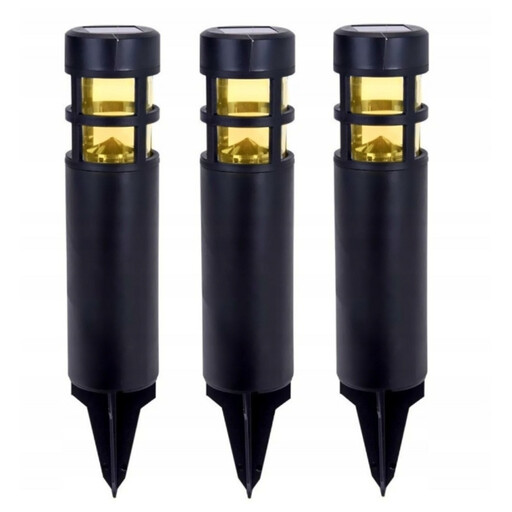
Why this product suits this type of user: This set of three lights is an easy way to get started with lighting small flower beds, lawn edges or short paths. They’re installed without a mains connection.
The number of lights in the set is clearly stated, making it easier to work out how many you’ll need for the area you want to illuminate before you buy.
Three lights, automatic switching on at dusk and simple installation in a spot with direct sunlight.

Why this product suits this type of user: The cool-white light at 6500 K and the ground stake make this a good choice if you prefer a clean, understated look along paths or property borders.
The product details specify the charging time, running time, IP44 rating and temperature range. These figures make it easier to check whether the light is right for your needs before installing it.
Polycrystalline solar panel, NiMH battery, 6500 K light colour and a stated LED lifespan of 15,000 hours.
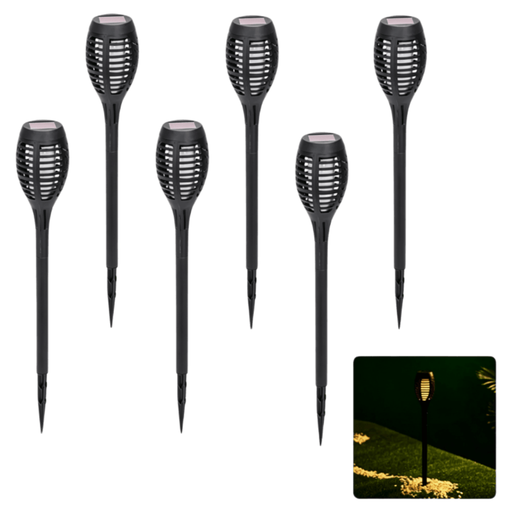
Why this product suits this type of user: This set of six solar lights is designed for larger flower beds, longer borders or several areas around the patio and lawn.
The product description states a lighting time of 8 to 12 hours under suitable conditions and specifically highlights the importance of direct sunlight.
Six flame-effect lights, warm-white light at 2700 K and automatic operation without cables or an external power supply.
We’ve put together a complete, regularly updated list of products that meet these strict selection criteria and fully comply with the safety regulations in force in the EU.
For the most consistent performance, follow these steps:
With solar ground lights, you should also make sure they won’t get in the way of lawnmowers, garden tools or frequently used paths.
The running time depends on sunlight, charge level, battery, temperature and LED output. For the Aigostar models mentioned, around 8 to 12 hours is stated under suitable conditions. This isn’t a fixed figure for every season or location.
IP44 means protection against splashing water. Solar lights with this rating can be used outdoors, but shouldn’t be left in puddles or submerged. Positioning is therefore important if you want reliable garden lighting in wet weather.
They don’t need to be connected to the mains while they’re in use. The solar panel charges the built-in battery in daylight, so their ongoing mains electricity use in normal operation isn’t comparable to that of wired lights. However, brightness and running time still depend on the charging conditions.