
Lieferung heute & morgen

Qualitätsgarantie

Willkommens-Angebote freischalten: KOSTENLOSE Lieferung | Bis zu 80 % RABATT | Kostenlose 30-Tage-JoyPlus-Testphase
App herunterladen
Solar garden lights are quick to set up, need no permanent power connection and can add decorative lighting to paths, lawns or seating areas. However, not every light is right for every location. Buyers often choose based only on design or a long advertised run time. This can lead to common mistakes: the light is placed in the shade, its IP rating is misunderstood or it is too dim for the area it is meant to illuminate.
This buying guide explains which details really matter when choosing solar ground lights, solar spike lights for the garden and outdoor LED solar lights.
Claims such as ‘up to 8–12 hours’ assume suitable charging conditions. In winter, under cloudy skies or beneath a tree, a small solar panel will collect considerably less energy. The panel’s orientation also affects how much it can charge each day.
So check these three details:
Several of the models featured here state a charging time of around 4–6 hours and a run time of 8–12 hours. These figures should be treated as manufacturer claims and may vary depending on sunlight, shade and battery condition.
An IP44 rating means protection against solid objects larger than 1 millimetre and splashing water from various directions. It is suitable for many sheltered outdoor areas, but it does not mean that a light can be left standing in water or fully submerged.
For weather-resistant garden lighting, you should also check:
Solar lights with warm white light of around 2700 Kelvin create a cosy, subtle glow for a patio, seating area or flower bed. Cool white light at 6500 Kelvin looks much crisper and can work well along path edges or wherever clear guidance is needed. RGB solar garden lights change colour and are mainly intended for decorative accents.
A common mistake is to use colour-changing RGB lights as practical path lighting. For consistent visibility along a path, several matching lights with the same light colour are usually easier to plan.
Check the light’s IP rating and make sure it is suitable for the actual location. An IP44 light, for example, is suitable for a lawn, flower bed or partially sheltered patio, but should not be placed in a dip that stays wet. The models in our selection are designed for outdoor use, and the Aigostar products mentioned have an IP44 rating.
Solar garden lights have a built-in rechargeable battery. Product specifications include Ni-MH batteries with capacities of 40 mAh or 200 mAh. However, capacity alone does not tell you how bright the light will be or how long it will run. LED output, panel size, light mode and ambient temperature all matter too.
An automatic dusk-to-dawn sensor is a useful feature: the light turns on when it gets dark and switches off again in daylight. Before using it for the first time, leave it in direct sunlight for several hours, following the instructions.
The installation location is key when choosing the right solar garden lights:
Check the dimensions, too. A model around 36 to 52 centimetres tall makes a noticeable feature, while compact lights around 19 centimetres tall have a subtler look.
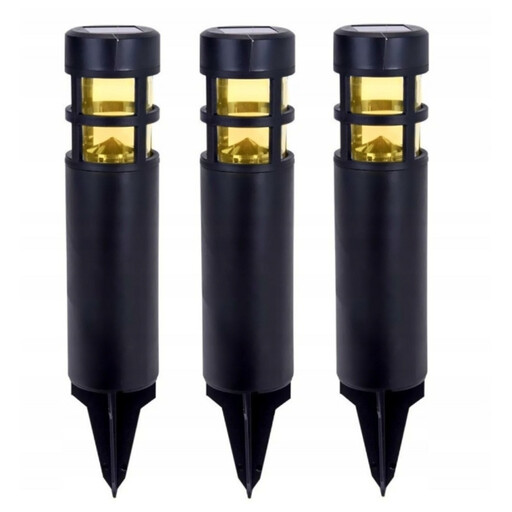
Why this product suits this profile: This set of three solar lights is an easy way to get started in a small flower bed, along a short path or on a balcony. There’s no need for permanent wiring.
Automatic switching at dusk is listed in the product details. With just three lights, you can first check whether the location gets enough sunlight.
Three lights, wireless installation and automatic dusk-to-dawn switching, according to the product description.
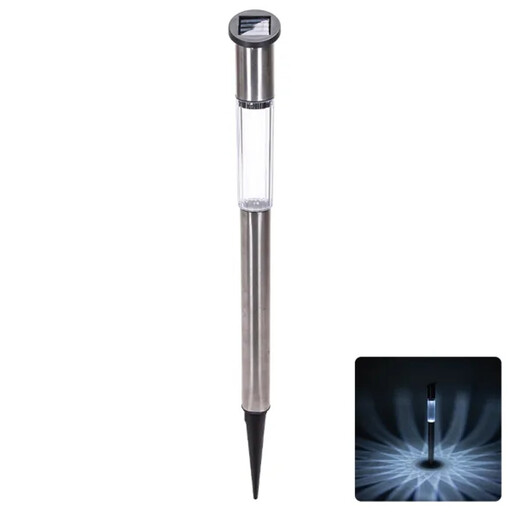
Why this product suits this profile: This solar path light with 6500K illumination is a good choice for buyers who prefer a crisp, neutral-looking light colour. The ground spike makes it easy to position where needed.
The product details specify the charging time, run time, temperature range of -10 to 50 °C and IP44 rating. This makes it easier to judge whether the light is suitable for your needs before buying.
6500K light, ground-spike installation, NiMH battery and a stated LED lifespan of 15,000 hours.
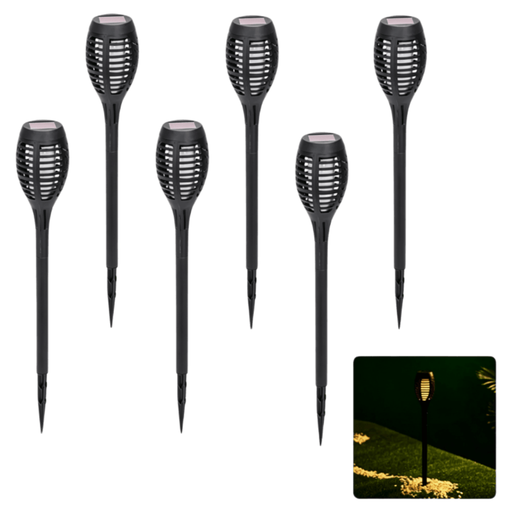
Why this product suits this profile: This set of six lights is suitable for longer paths, larger flower beds or several different areas. The flame effect and 2700 Kelvin colour temperature are ideal for anyone looking for decorative outdoor lighting with a warm white glow.
The product details explicitly state the IP44 rating, recommended temperature range and need for direct sunlight. This means you can assess the protection rating and charging conditions, rather than judging by design alone.
Six lights, warm white illumination at 2700 Kelvin, a stated run time of 8–12 hours and a flame effect.
We’ve put together a complete, regularly updated list of products that meet these strict selection criteria and fully comply with the safety regulations in force in the EU.
Choose a location that gets as much sunlight as possible. Make sure the panel is not shaded by walls, trees or tall plants. Only push solar ground lights into soil that is soft enough, and don’t press on the casing or solar panel.
For best results:
Run time depends on sunlight, the panel, battery, temperature and light mode. Several models state 8–12 hours under suitable conditions. In winter or on heavily overcast days, the actual run time may be shorter.
That depends on the stated temperature range and IP rating. According to their product details, some models are designed for temperatures from -10 to 50 °C. Snow, standing water and locations that stay in the shade can affect performance and battery charging.
During normal operation, solar lights do not need to be connected to the mains. The built-in panel charges the battery during the day. They use no electricity from the mains while running, but they do need enough daylight and may need maintenance or a battery replacement as the battery loses capacity.