
Lieferung heute & morgen

Qualitätsgarantie

Willkommens-Angebote freischalten: KOSTENLOSE Lieferung | Bis zu 80 % RABATT | Kostenlose 30-Tage-JoyPlus-Testphase
App herunterladen
Solar garden lights promise a simple and cost-effective way to enhance outdoor spaces. No wires, no electricity bill—the concept is compelling. But the reality is often quite different: lights that fail after the first downpour, a glow that's barely brighter than a candle, or batteries that die before midnight.
As a Joybuy Product Recommendation Officer, I see every day which features make a product durable and useful, and which are just empty marketing promises. This guide will help you navigate the common pitfalls and make an informed decision for your garden lighting.
Many people invest in solar lights only to be frustrated a short time later. This is often due to three common weaknesses that are overlooked during the selection process:
To avoid these problems, don't be swayed by promotional images; instead, focus on objective technical specifications. Three parameters are of central importance.
The IP (Ingress Protection) rating is an international standard that indicates how well a device is protected against the entry of foreign objects (first digit) and water (second digit). For solar garden lights, two levels are particularly relevant:
The runtime depends directly on the battery's capacity (measured in milliampere-hours, mAh) and the solar panel's efficiency. A large battery is of little use if the panel cannot fully charge it during the day. Look for a balanced ratio. Models with monocrystalline solar panels are often more efficient in low light than polycrystalline or amorphous panels, which can make a difference during the less sunny months. A solar spotlight with a motion sensor is also a smart solution, as it conserves energy by only delivering full power when needed.
Light colour is measured in Kelvin (K) and is a key factor in determining the ambiance.
Brightness is measured in lumens (lm). For a decorative outdoor solar string light, a low lumen value is sufficient, whereas a pathway spotlight or security light requires significantly more brightness.
Based on these objective criteria, we have identified some products that are well-suited for specific needs and locations in UK gardens and on balconies.
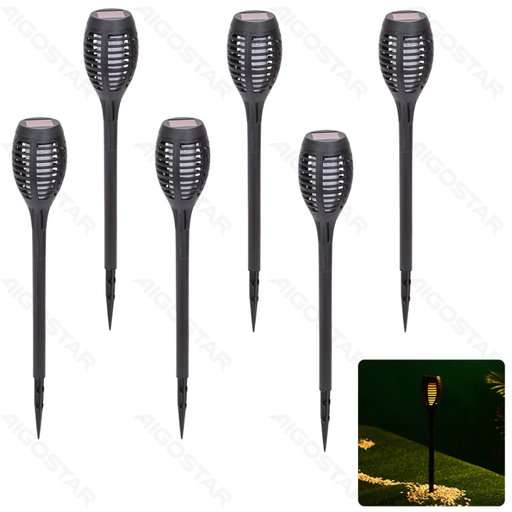
Why it's a great fit: Ideal for users who want to highlight paths, flowerbeds, or patio edges with a decorative, warm light. The flame effect creates an inviting atmosphere without being intrusive.
The light colour of 2700K (Warm White) is specifically designed for a cosy atmosphere, thus avoiding the pitfall of unsuitable, cold light. The IP44 rating is appropriate for its use as pathway lighting.
The 6-pack allows for a uniform design. According to the manufacturer, the runtime after a full charge is 8–12 hours, which is sufficient for most nights.
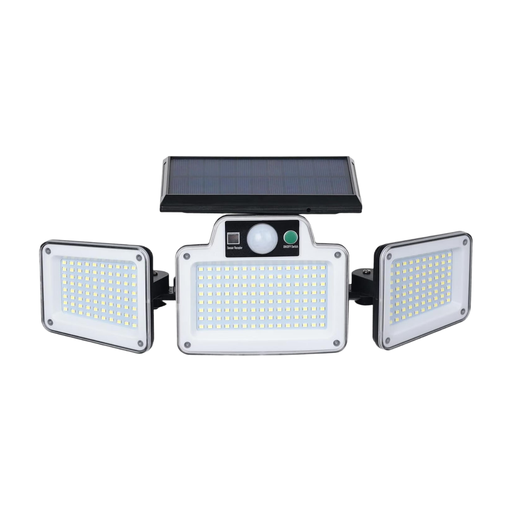
Why it's a great fit: Designed to illuminate driveways, garages, or dark corners of the garden. The focus is clearly on function and security, providing bright light upon motion detection.
With an IP65 rating, this spotlight is armed against heavy rain. The motion sensor ensures that the high brightness is only activated when needed, which conserves the 2400mAh battery and maximises runtime.
Three adjustable light heads with a total of 280 LEDs allow for wide and targeted illumination. The three modes can be controlled via a remote.
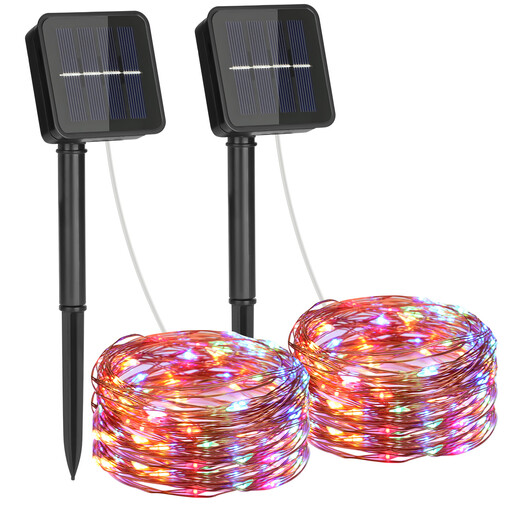
Why it's a great fit: Perfect for creative displays with solar lights on the balcony, on fences, or for garden parties. The flexible wire can be easily wrapped around railings, plants, or other objects.
The IP65 rating ensures high weather resistance. The manufacturer-stated runtime of 8–14 hours addresses the concern of short operation times. With 8 different lighting modes, the atmosphere can be individually adjusted.
The generous length of 12 metres with 120 LEDs per string offers plenty of creative freedom. The memory function remembers the last selected mode.
We have compiled a complete, up-to-date list of products that fully meet these strict selection criteria and local safety regulations.
The lifespan of a solar light is determined by two main components. The LEDs themselves are very durable, often with a manufacturer-rated lifespan of 15,000 hours or more. The limiting factor is usually the rechargeable battery. Depending on its quality and usage cycles, its capacity can diminish after 1 to 3 years. However, on many models, the battery can be easily replaced.
Yes, but with reduced performance. Charging time is significantly extended on overcast days and short winter days, leading to a shorter runtime at night. Models with high-efficiency (often monocrystalline) solar panels and large batteries are better suited for year-round use. Solar lights with motion sensors are particularly practical in winter as they save energy by only lighting up when needed.
The IP rating indicates how well a light is protected against the ingress of foreign objects and water. The second digit is crucial for outdoor use: