
Lieferung heute & morgen

Qualitätsgarantie

Willkommens-Angebote freischalten: KOSTENLOSE Lieferung | Bis zu 80 % RABATT | Kostenlose 30-Tage-JoyPlus-Testphase
App herunterladen
Solar lights promise an effortless and eco-friendly way to illuminate your garden, balcony, or patio. No cables, no electricity costs, and automatic lighting at dusk—the benefits are clear. Yet, the market is flooded with products whose promises fall short after the first heavy rain or a single season outdoors. Before you invest, it's crucial to understand the common pitfalls that often only become apparent after your purchase.
This guide, written by the Joybuy Product Recommendation Officer, reveals the three most common traps when buying solar lights and highlights the technical features you should look for to find durable and functional garden lighting.
Many buyers find that their new solar garden lights quickly lose brightness or fail completely. This is often due to exaggerated marketing claims that obscure important technical details.
To avoid a bad purchase, focus on verifiable technical specifications rather than marketing slogans. These three criteria are essential for reliable performance.
The IP (Ingress Protection) rating is an international standard that classifies the suitability of electrical devices for different environmental conditions. For solar lights in the garden, two ratings are particularly relevant:
The performance of an LED solar light is determined by the interplay of these three components:
Designing your solar garden lighting setup requires different types of lights:
Here are some product recommendations tailored to specific use cases and the quality criteria mentioned above.
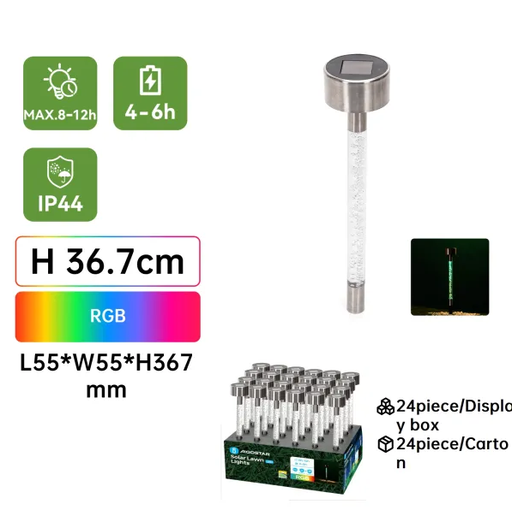
Why This Fits Their Persona: Ideal for users who want to add colourful accents to flowerbeds, along paths, or on the lawn with minimal effort. The ground spike installation is straightforward and requires no tools.
Although rated at IP44, its ground spike design is less susceptible to water damage as the electronics are positioned in an elevated housing. It's a cost-effective option for creating decorative effects without relying on it for critical illumination.
Offers an atmospheric RGB colour-changing effect and a decorative bubble design. Installation is incredibly simple.
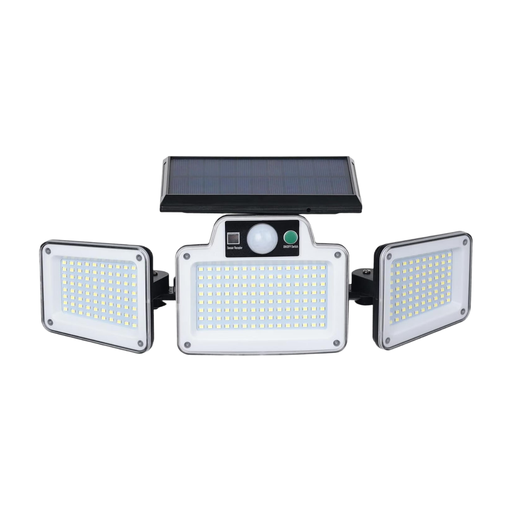
Why This Fits Their Persona: Perfect for illuminating driveways, garages, and dark corners of the property. The motion sensor enhances security, and the three adjustable heads allow for flexible and wide light distribution.
With an IP65 rating, this spotlight is explicitly designed for unprotected outdoor use and can withstand heavy rain. The 2400mAh battery is sufficiently sized to reliably power the 280 LEDs.
Features a separate solar panel for optimal sun exposure, three adjustable lighting modes, and a remote control for convenient operation.
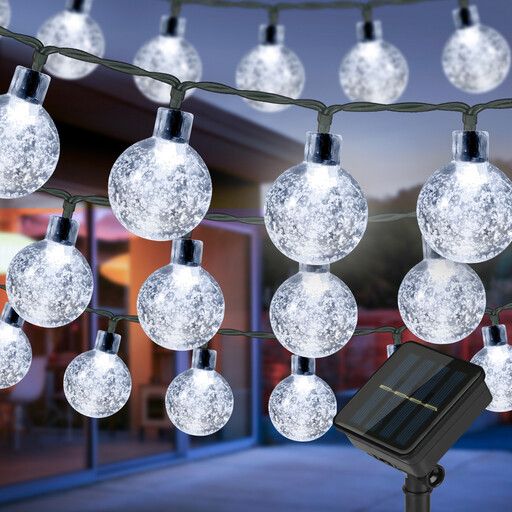
Why This Fits Their Persona: Creates a magical atmosphere on balconies, patios, or for garden parties. The long string of lights is versatile and transforms any outdoor space into a cosy retreat.
These outdoor solar string lights are rated IP65, making them suitable for permanent outdoor use. The description highlights an energy conversion efficiency of over 17%, which indicates a high-performance solar panel.
Generous 11-meter length with 60 LEDs. Offers 8 different lighting modes to adjust the atmosphere for any occasion.
We have compiled a complete, up-to-date list of products that fully meet these strict selection criteria and safety standards.
What is the lifespan of solar lights? The lifespan is primarily determined by two components: the LEDs and the battery. The LEDs themselves are extremely durable, often with a stated lifespan of 15,000 hours or more. The limiting factor is usually the rechargeable battery. Depending on its quality and the number of charge cycles, it may lose capacity after 1 to 3 years and need to be replaced, if the model allows for it.
Do solar lights work in winter or on cloudy days? Yes, but with reduced performance. On short, cloudy winter days, the solar panel cannot fully charge the battery. This results in a significantly shorter runtime at night. Models with high-quality monocrystalline or polycrystalline solar panels have an advantage here, as they achieve better charging performance even in diffuse light compared to simple amorphous panels.
Should I bring my solar lights indoors during winter? That depends on the IP rating and the materials used. Lights with a rating of IP65 or higher and a robust housing made of stainless steel, aluminium, or weather-resistant plastic can typically be left outside all year round. For models with a lower rating (e.g., IP44) or those made of simple plastic, it is advisable to protect them from heavy frost and moisture to extend their lifespan.