
Lieferung heute & morgen

Qualitätsgarantie

Willkommens-Angebote freischalten: KOSTENLOSE Lieferung | Bis zu 80 % RABATT | Kostenlose 30-Tage-JoyPlus-Testphase
App herunterladen
Outdoor solar lights offer a simple and eco-friendly way to illuminate your garden, patio, or pathways. With no wiring or extra electricity costs, they create ambiance and enhance security. However, the vast market selection also has its pitfalls. Many buyers are quickly disappointed when the lights fail to live up to their promises. As your Joybuy Product Recommendation Officer, I'm here to help you identify the common traps and make an informed decision.
Before you invest, you should know the three most common reasons why many solar garden lights fail to meet expectations.
solar lights with ground stakes.To avoid these problems, focus on three technical features. These will give you an objective basis for your purchasing decision.
The battery is the heart of any solar light. Its capacity, measured in milliampere-hours (mAh), is a key determinant of how long it will stay lit.
solar path lighting.The IP (Ingress Protection) rating indicates how well an electrical device is protected against the entry of foreign objects (first digit) and water (second digit).
solar garden lights. The first 4 signifies protection against solid objects >1 mm, and the second 4 signifies protection against water splashes from all directions. A light with weather-resistant IP44 certification can withstand normal rainfall.The material determines not only the look but also the lifespan of your outdoor LED solar light.
stainless steel solar lights are corrosion-resistant and robust. Check the material specification to ensure it's not just a thin coating.solar lights with ground stakes, atmospheric outdoor solar torches, or modern RGB solar lights, the construction should be sturdy and allow for secure anchoring in the ground.Here are some models that are well-suited for different needs and use cases, based on objective features.
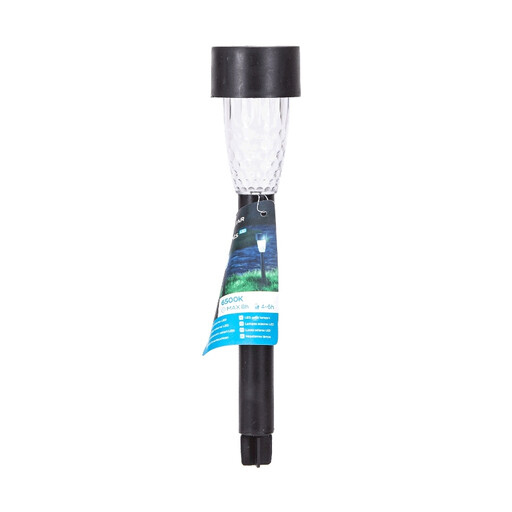
Why This Fits Their Persona: Ideal for garden owners looking for a functional and cost-effective solution for path lighting. The simple design blends unobtrusively into any environment.
With a clear IP44 rating, it bypasses the trap of poor weather resistance. The housing, made of robust Polypropylene (PP), prevents the material from quickly becoming brittle.
Reliable automatic operation (charges during the day, illuminates for up to 8 hours at night). Easy, tool-free installation with a ground stake.
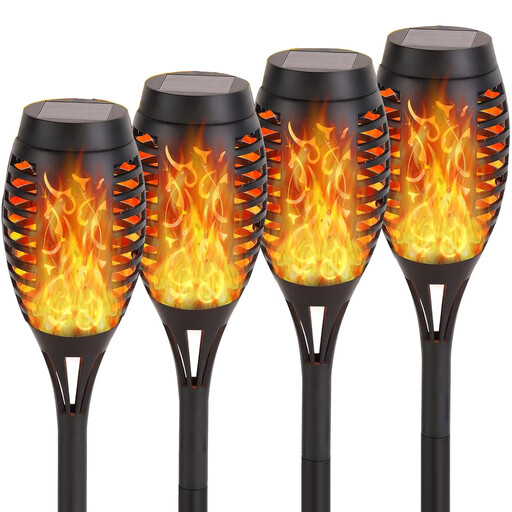
Why This Fits Their Persona: Perfect for anyone wanting to create a warm and dynamic atmosphere. The flickering effect of these outdoor solar torches mimics real torchlight and is excellent for parties, patios, or as an accent in a flowerbed.
This model goes beyond the minimum standard with its IP65 certification. It is dust-tight and protected against water jets, safely avoiding the weather-resistance trap even in adverse conditions.
The realistic flame effect creates a special ambiance. The higher IP65 rating ensures above-average durability.
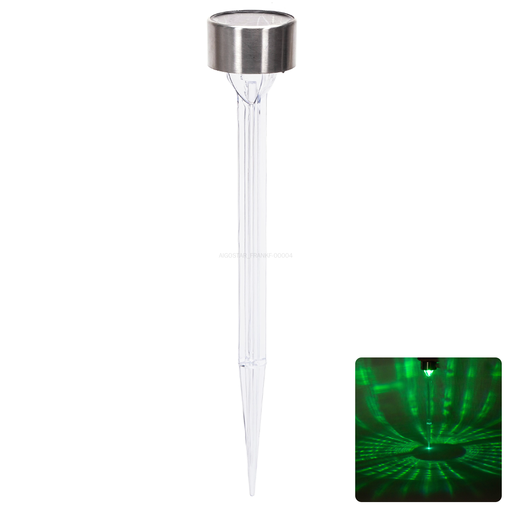
Why This Fits Their Persona: For users who want more than just white light. These RGB solar lights allow for colorful accents to highlight specific plants or areas in the garden and adjust the mood for any occasion.
The combination of stainless steel and plastic, along with the IP44 certification, addresses the material and weather-resistance traps. The 200mAh Ni-MH battery provides an 8-12 hour runtime.
Offers creative freedom with RGB color-changing capabilities. The sleek stainless steel look is modern and high-quality.
We have compiled a complete, up-to-date list of products that fully meet these strict selection criteria and safety standards.
Yes, modern solar garden lights can charge in diffuse light, although less efficiently than in direct sunlight. In winter or on heavily overcast days, this results in a shorter runtime at night. For reliable performance, it's crucial to place the lights in a location that receives as much direct, unshaded sunlight as possible.
The lifespan is determined by two main components: the LED and the battery. The LEDs themselves are very durable, with a lifespan of 15,000 to 20,000 hours. The battery is typically the first component to lose performance. A high-quality Ni-MH battery usually lasts 1-3 years (approx. 500-800 charge cycles) before its capacity noticeably decreases and it may need to be replaced.
Installation is incredibly simple. Choose a location with sufficient direct sunlight for the solar panel. The ground should be soft enough to insert the stake without using force, which could cause it to break. Keep the solar panel clean of dirt, leaves, or snow to ensure maximum charging efficiency.