
Lieferung heute & morgen

Qualitätsgarantie

Willkommens-Angebote freischalten: KOSTENLOSE Lieferung | Bis zu 80 % RABATT | Kostenlose 30-Tage-JoyPlus-Testphase
App herunterladen
Solar lights for the garden provide cable-free garden lighting without a mains connection. During the day, the solar panel charges the battery, and when it gets dark, the light switches on automatically, depending on the model. Whether you need solar garden lighting for a flowerbed, a solar in-ground light for the patio or solar path lighting for your entrance: it is not just the design that matters, but also whether the technical specification suits the intended location.
Many product descriptions mention long lighting times or a high level of weather resistance without explaining the conditions clearly enough. Three points therefore deserve particular attention:
Lighting time depends on the charge
Claims such as “8–12 hours” generally apply under suitable charging conditions. Shade, short winter days, dirt on the solar panel and cloudy weather all reduce the available energy. A solar outdoor light should therefore receive several hours of direct sunlight wherever possible.
An IP rating does not mean complete protection against water
IP44 protects against solid foreign objects measuring 1 mm or more and against splashing water. This makes the light suitable for many sheltered outdoor areas, but it should not be left standing in water or submerged. IP65 also protects against water jets, while IP67 describes temporary immersion under specified conditions. Even a weatherproof solar light needs a suitable installation location.
RGB lighting is no substitute for functional path lighting
An RGB solar light produces colourful or decorative illumination. For steps, driveways and longer paths, brightness, light distribution and glare are more important than a wide choice of colours. Check whether the model is intended to provide guidance or mainly to create a decorative atmosphere.
Pay attention to the type of solar panel, battery capacity and charging time. The Aigostar models described here, for example, use a NiMH battery and specify around 4–6 hours of charging time and 8–12 hours of illumination. These figures depend on sunlight levels and the state of charge.
Models with lithium batteries may offer greater capacities and additional functions such as app control. With a smart solar light, you should also check whether a hub is required for the connection and what range the Bluetooth Mesh system can achieve under local conditions.
A solar light with a ground spike is practical for lawns and flowerbeds, as it requires no wiring or fixed connection. The spike should be firmly positioned in soil that is soft but stable. In very hard ground, pre-drilling may be sensible, taking care not to damage the housing or connecting cable.
For a solar in-ground light or recessed light, the installation instructions must be followed particularly carefully. Water can collect in recesses. The IP rating alone cannot prevent a light from standing permanently in a puddle.
Warm white light is generally subtle and suits seating areas, entrances and decorative spaces. Cool white light, such as 6500 K, highlights contours more clearly and may be suitable for paths or property boundaries. A specification of 2700–6500 K describes an adjustable white-light range.
With a smart solar light, you may be able to control the brightness, schedules, colour changes or groups, depending on the model. This is particularly useful with multiple lights and larger garden areas. For simple installation without an app, a model with a dusk sensor and automatic on/off switching is often sufficient.
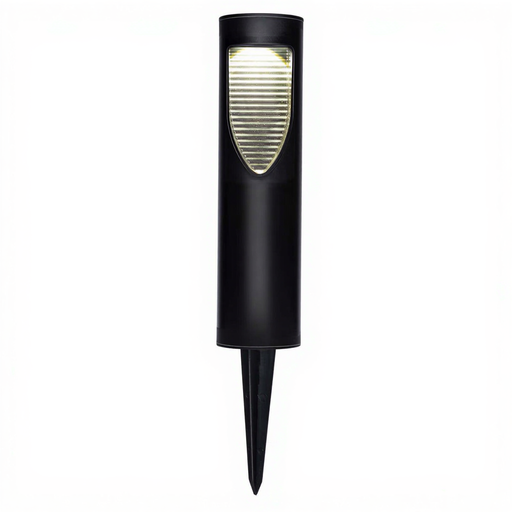
Why this product suits this profile: This warm white solar light requires no fixed electrical installation and is suitable for paths, flowerbeds or small patio areas.
The technical specifications state that it has an integrated 600 mAh NiMH battery and advise against leaving the light permanently in water.
Warm white SMD LED light, automatic switching at dusk and freestanding installation without professional electrical work.
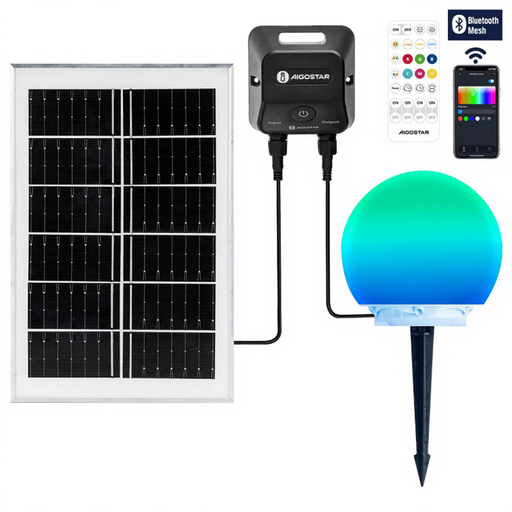
Why this product suits this profile: This model combines RGBCCT lighting and Bluetooth Mesh with a separately positionable solar panel for more sophisticated garden designs.
The stated IP67 rating and separate solar panel make it easier to adapt the light to locations where the light source itself does not receive full sunlight.
RGBCCT from 2700–6500 K, Bluetooth Mesh control and a stated battery capacity of 4000 mAh.
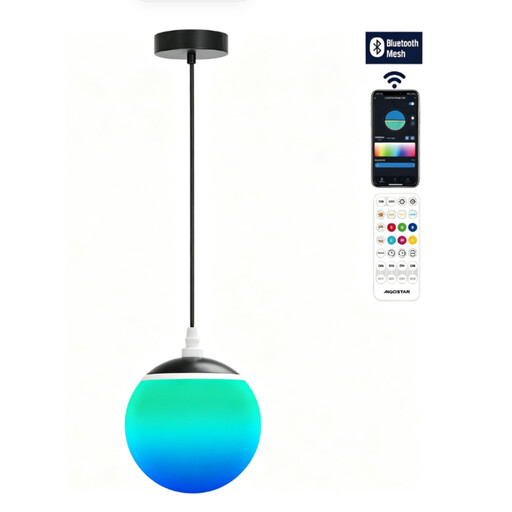
Why this product suits this profile: As a solar pendant light, this model is suitable for gazebos, covered patios and similar areas where a ground spike is not an option.
The separate solar panel can be installed in a sunny position while the light itself hangs in the shade. The IP65 rating is designed for water jets, not immersion.
RGBCCT lighting, Bluetooth Mesh, a stated luminous flux of 200 lm and a stated maximum lighting time of 24 hours.
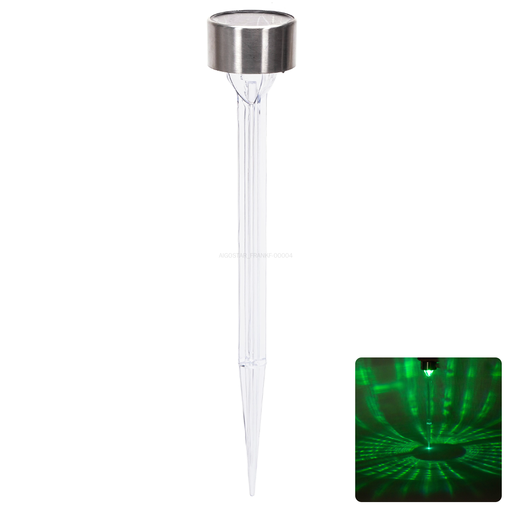
Why this product suits this profile: This RGB solar light is designed for flowerbeds, lawns and garden paths when colourful accents matter more than strong general illumination.
The product specifications state IP44, a charging time of 4–6 hours and a lighting time of 8–12 hours. This makes it easier to set realistic expectations for use.
RGB colour changing, ground-spike installation, 200 mAh NiMH battery and automatic switching on and off according to the product description.
We have put together a complete, regularly updated list of products that fully meet these strict selection criteria and the safety regulations applicable in the EU.
For reliable garden lighting without a mains connection, do not place the solar panels beneath trees, roof overhangs or in permanent shade. Before first use, follow the manufacturer’s charging instructions. Clean the panel regularly with a soft, damp cloth and avoid abrasive cleaning products.
Also check the following:
The duration depends on the solar panel, battery, light intensity, weather and time of year. Product claims of 8–12 hours usually refer to suitable charging conditions. In winter or after several overcast days, the lighting time may be shorter.
The location should receive several hours of direct sunlight wherever possible. For solar path lighting, open areas along the path are a sensible choice. With a solar pendant light, a separate panel can be helpful if the gazebo or patio itself is in the shade.
During normal operation, they do not require mains electricity because the battery is charged by sunlight during the day. However, costs may arise from replacing the battery or purchasing spare parts. Before buying, check the battery type and whether it is designed to be replaced.