
Lieferung heute & morgen

Qualitätsgarantie

Willkommens-Angebote freischalten: KOSTENLOSE Lieferung | Bis zu 80 % RABATT | Kostenlose 30-Tage-JoyPlus-Testphase
App herunterladen
Solar garden lights provide outdoor lighting without cables or a fixed power connection. They are suitable for garden paths, flower beds, lawns, patios and driveways. Installation is usually straightforward: assemble the light, push the ground spike into the soil and position the solar panel where it will receive as much sunlight as possible.
Even so, not every budget offer provides the right solution. Long illumination times or high weather resistance are often advertised without clearly explaining the conditions involved. You should therefore check three common purchasing pitfalls before placing your order:
The solar panel converts daylight into electrical energy and charges the integrated battery. Three specifications are relevant when choosing a product:
Do not place solar lights beneath dense trees or directly next to tall walls. In winter, lower levels of sunlight can increase charging times and reduce operating time at night.
For outdoor LED solar lights, the IP rating is an important point of comparison. IP44 is specified for several decorative garden lights and describes basic protection against splashing water. For locations that are permanently exposed to the elements, you should read the product description and permitted operating conditions carefully.
Important: Products described as “weatherproof solar lights” should not be left standing in water or submerged if this is not expressly permitted. With plastic housings, you should also ensure a stable position and a sheltered location. A stainless-steel effect does not automatically mean that every component is made entirely from stainless steel.
Solar lights with ground spikes are suitable for soft ground, lawns and flower beds. The spike may be difficult to insert into compacted or very dry soil. Do not apply excessive pressure to the light housing, as this could cause damage.
For solar lights for paths and flower beds, you should plan the distance between individual lights. Decorative models often create a limited area of illumination. For clear guidance along a longer path, using a larger number of small lights may be more effective than having just a few light sources placed far apart.
There are practical differences between light colours:
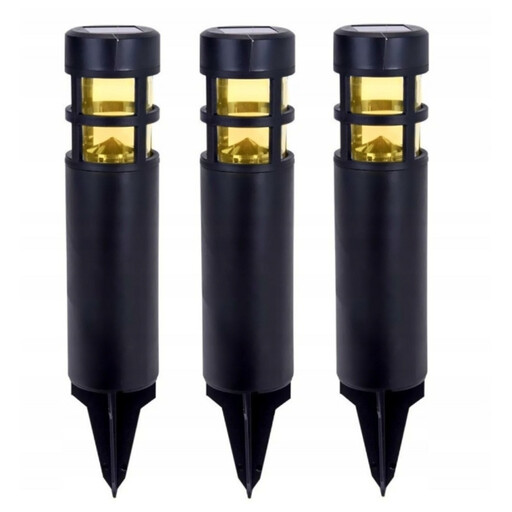
Why this product suits this profile: The three-piece set offers a simple way to illuminate flower beds, short paths or lawn edges with several points of light, without cables.
Several lights spread the illumination rather than creating just one point of light. The description specifies automatic operation at dusk, but does not make an open-ended guarantee about operating time.
Three lights in the set; automatic activation at dusk and easy installation outdoors.
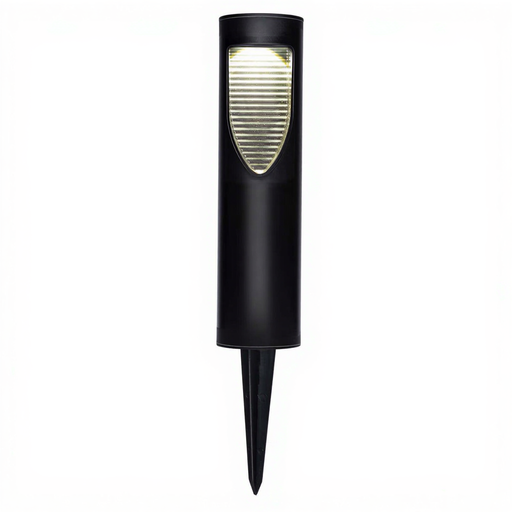
Why this product suits this profile: The warm white SMD LED and contemporary black plastic design complement understated garden lighting along paths or around an entrance.
The description specifies the battery type and capacity: an integrated Ni-MH battery, 1.2 V and 600 mAh. It also warns against prolonged immersion in water.
SMD LED with a warm white light colour; 600 mAh Ni-MH battery; freestanding use without wall mounting or electrical installation.
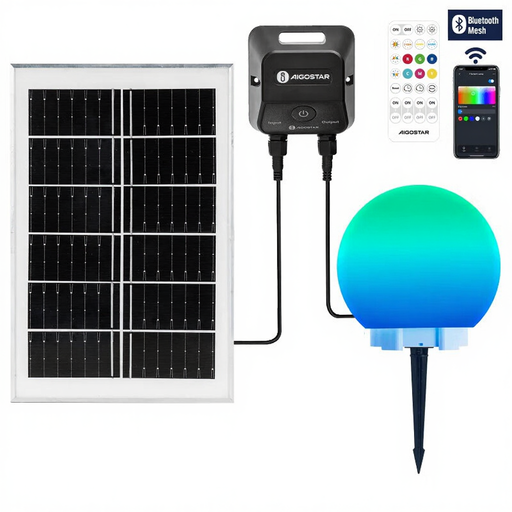
Why this product suits this profile: This model is designed for users who want to combine RGB colours, adjustable shades of white and app-based control of multiple lights.
The control method is clearly described as Bluetooth Mesh and the AigoSmart app. The IP54/IP44 protection ratings also indicate that the light should not be submerged.
RGB+CCT from 2700 to 6500 K; app control, schedules and grouping; lithium battery and solar operation without a fixed power cable.
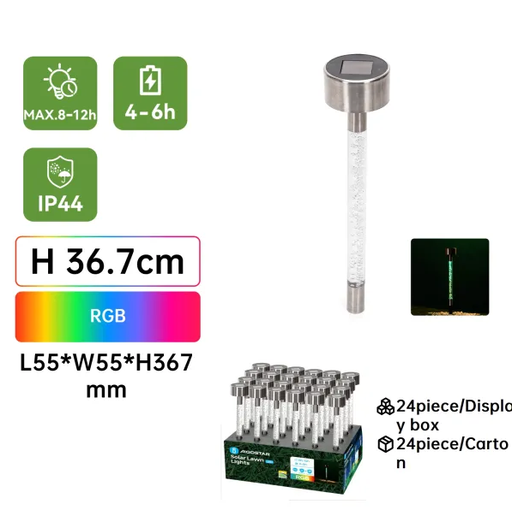
Why this product suits this profile: The 36.7 cm-high bubble design adds colourful accents to flower beds, lawns or along a patio.
The product details explicitly list RGB as the light colour and provide the charging time, operating time and IP44 rating separately. This makes it easier to assess its decorative function and weather protection realistically.
RGB lighting; ground-spike installation; stated charging time of 4 to 6 hours and operating time of 8 to 12 hours under suitable conditions.
We have put together a complete, regularly updated list of products that fully meet these strict selection criteria and the safety regulations applicable in the EU.
Before using the light for the first time, the solar panel should receive several hours of direct sunlight. Position it facing upwards and remove any protective films. On the models mentioned, automatic operation is controlled by a dusk sensor.
To maintain consistent charging performance, regular cleaning with a soft, slightly damp cloth is usually sufficient. Do not use abrasive cleaning products. Check the ground spikes after periods of frost and reposition any loose lights in firm soil. Batteries and electronic components should be placed in the appropriate collection systems when replaced or disposed of.
This depends on the battery, solar panel, light output and amount of sunlight. Some of the Aigostar lights mentioned here are specified as lasting 8 to 12 hours. On cloudy days or during winter, the actual operating time may be shorter.
Models with an IP44 rating are protected against splashing water and can be used outdoors under normal conditions. However, they should not be left standing in puddles or submerged. You should also read the safety information for the specific product.
During normal operation, they do not need to be connected to the mains. Solar energy charges the battery during the day. Potential ongoing costs may arise from replacement batteries or replacing a damaged light. The purchase price and the service life of the components should also be taken into account when comparing products.