
Lieferung heute & morgen

Qualitätsgarantie

Willkommens-Angebote freischalten: KOSTENLOSE Lieferung | Bis zu 80 % RABATT | Kostenlose 30-Tage-JoyPlus-Testphase
App herunterladen
Solar lights for the garden are suitable for many outdoor areas without a permanent mains connection. They charge during the day via a solar panel and usually switch on automatically when it gets dark. To avoid disappointment shortly after purchase, however, buyers should pay close attention to the technical specifications, installation location and intended use.
A stated lighting duration of, for example, 8 to 12 hours depends on several factors: sunlight, panel orientation, shade, battery capacity and the time of year. On a cloudy day or in the shade, the actual charging performance may be lower. A solar light with decorative illumination is therefore not automatically suitable for brightly lighting a driveway.
IP44 means protection against solid foreign objects measuring 1 millimetre or more, as well as protection against splashing water. This is sufficient for many sheltered garden areas, but not for permanent immersion in water. IP65 additionally indicates dust protection and protection against water jets. This rating does not replace proper installation. Outdoor solar lights should be positioned so that water cannot remain permanently around openings in the housing.
A silver-coloured housing may be made from plastic and simply have a stainless steel effect. This is not necessarily a disadvantage, but it does affect weight, stability and the potential for corrosion. If you want to use solar lights with ground spikes in firm or stony soil, you should check the material, dimensions and construction of the spike.
For paths, flowerbeds and seating areas, warm white solar lights of around 2700 to 3000 Kelvin are often a good choice. The light feels less cool and is ideal for decorative garden lighting. For more practical orientation lighting, more neutral or cool white light colours may be preferable.
RGB solar lights switch between different colours and are primarily suitable for accent lighting, seasonal decoration or special occasions. They do not automatically replace functional lighting along garden paths. Smart models may also offer app control, schedules, brightness adjustment or group control. Depending on the product, buyers may need a compatible app, Bluetooth connection or additional hub.
Pay attention to the stated charging time, battery type and capacity. The Aigostar models described here, for example, use Ni-MH batteries with different capacities. A higher capacity may mean more stored energy, but actual running time still depends on the panel, light source and weather.
The panel should receive as much direct sunlight as possible. Trees, house walls, canopies and dense hedges reduce charging performance. Before first use, it is advisable to charge the light for several hours in accordance with the manufacturer's instructions.
Solar ground lights and models with ground spikes are inserted into soft soil or lawn. The spike should not be forced into hard ground, as this could damage the housing or connection. Depending on their design, hanging, freestanding or recessed lights may be suitable for patios.
You should also check the operating temperature range. Some of the Aigostar lights listed are specified for a range of -10 °C to 50 °C. In frosty conditions, exceptionally heavy rain or during prolonged periods of non-use, additional protective measures may be required.
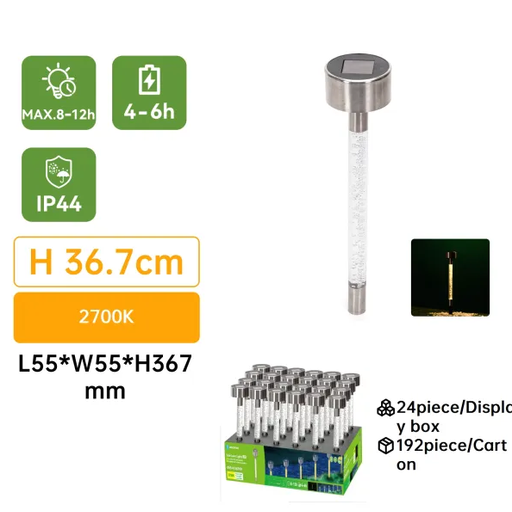
Why this product suits this profile: This compact solar garden light can be placed in a lawn, flowerbed or soft soil without cables and provides warm white light at 2700 Kelvin.
The specifications clearly state the charging time, running time, battery and IP rating. This makes it easier to assess whether the light is suitable for the intended location.
2700 Kelvin, stated running time of 8–12 hours, integrated Ni-MH battery and IP44.
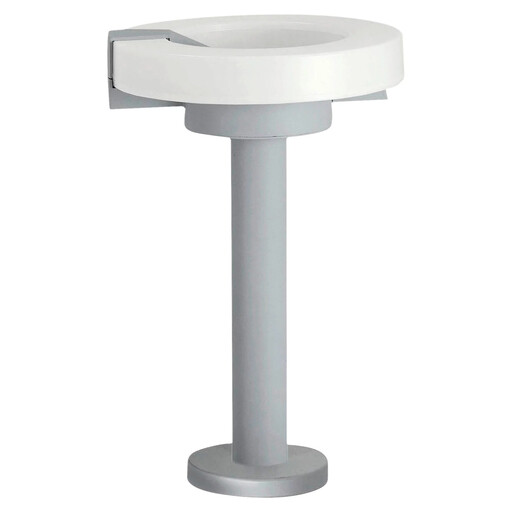
Why this product suits this profile: For driveways, paths and permanent outdoor installations, this post-style light offers 3000 Kelvin and a stated output of 470 lumens.
The IP65 rating and reference to permanent installation help you assess whether it is suitable for more demanding outdoor areas.
IP65, 470 lumens, 3000 Kelvin and an E27 fitting; however, this product is not a solar light and requires a mains connection.
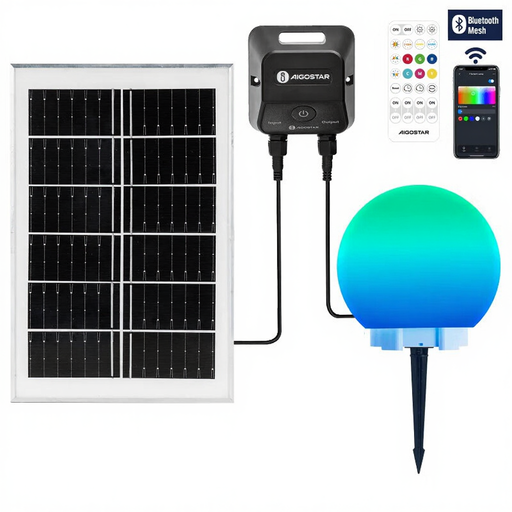
Why this product suits this profile: The combination of solar power, Bluetooth Mesh, RGB+CCT and app control is aimed at users who want to coordinate multiple light points.
The product specifications state the app, Bluetooth Mesh, colour range and IP rating. This allows buyers to check in advance whether the system suits their planned smart garden lighting setup.
RGB+CCT from 2700–6500 Kelvin, app control and grouping via Bluetooth Mesh; rated IP54/IP44.
We have put together a complete, regularly updated list of products that fully meet these strict selection criteria and the safety regulations applicable in the EU.
Running time depends on battery capacity, charge level, panel size and weather. Several of the Aigostar models listed specify 8 to 12 hours under suitable charging conditions. These figures should not be understood as a guaranteed running time for every season.
This depends on the IP rating, temperature range and the manufacturer's specifications. Frost, shorter days and frequent cloud cover can reduce charging performance. Before winter, the housing and panel should be cleaned, and the batteries and connections checked.
While operating, they draw their energy from the previously charged battery. A mains connection is not required for purely solar-powered lights. Their running costs therefore do not arise in the same way as for mains-powered lights, which continuously draw electricity from the grid. The battery and light are nevertheless wear parts, and their service life depends on use and environmental conditions.