
Lieferung heute & morgen

Qualitätsgarantie

Willkommens-Angebote freischalten: KOSTENLOSE Lieferung | Bis zu 80 % RABATT | Kostenlose 30-Tage-JoyPlus-Testphase
App herunterladen
Solar garden lights are a practical solution for outdoor areas without a permanent power connection. They can usually be installed without tools, charge during the day via a solar panel and switch on automatically when it gets dark. Even so, not every solar light is suitable for every garden.
Three common purchasing problems occur particularly often:
Checking these points before buying makes it easier to choose the right solar lights for your outdoor area and avoid unnecessary replacement purchases.
Charging performance depends on the location. A solar panel should ideally receive several hours of direct sunlight. Areas beneath trees, against north-facing walls or next to tall walls are often less suitable for solar pathway lights.
The following factors are also important:
According to the product details, the Aigostar Solar Path Light has a charging time of 4 to 6 hours and an illumination time of 8 to 12 hours. The light uses a polycrystalline solar panel and a rechargeable NiMH battery. Such figures should be understood as guidelines for suitable lighting conditions, not as a guarantee for every type of weather.
The protection rating is indicated by the IP code. The first digit refers to protection against solid foreign objects, while the second refers to protection against water. IP44 indicates, among other things, protection against solid foreign objects above a certain size and against splashing water from various directions. However, an IP44 light is not designed to be immersed in water.
For choosing the right light:
According to the product description, the Aigostar light is designed for outdoor use with IP44 protection and is specified for temperatures from -10 °C to 50 °C. Nevertheless, a sheltered location is recommended during prolonged frost, snow or persistent damp conditions.
Light colour is measured in Kelvin:
An LED solar light with a ground spike is suitable for soft ground and can be moved around easily. For hard surfaces, models with a base or a different installation method are more suitable. You should also check the dimensions before buying: a light standing 34 cm high may look very different on a narrow flower bed compared with a compact ground light.
The following products differ in light colour, size, quantity and technical specifications. This categorisation helps you find the right solar garden lighting for your intended use.
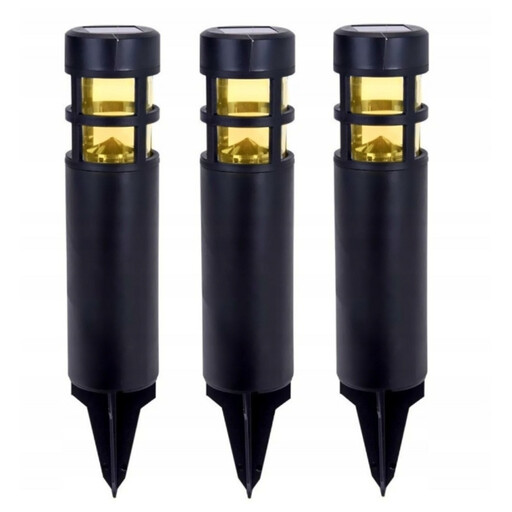
Why this product suits this profile: This set of three solar lights is ideal for shoppers who want to illuminate several points along a path, flower-bed edge or small outdoor area.
The quantity is clearly stated, making it easier to plan your requirements rather than having to buy individual lights later.
Three lights; charged by sunlight; automatic switching on at dusk according to the product description.

Why this product suits this profile: The combination of stainless steel elements, a polycrystalline solar panel and a clearly defined light colour is ideal for carefully planned garden lighting.
The specifications include charging time, operating time, protection rating and temperature range, making it easier to check the product before buying.
6500 K cool white; IP44; according to the product details, 8 to 12 hours of illumination and an LED lifespan of 15,000 hours.

Why this product suits this profile: This 34 cm-high solar light with two LEDs is suitable for longer paths, driveways or areas where a slim black light should be positioned visibly.
The dimensions, weight and number of LEDs are specified, making it easier to assess whether the design suits the intended path.
34 cm height; two LEDs; integrated solar panel and automatic illumination according to the product description.
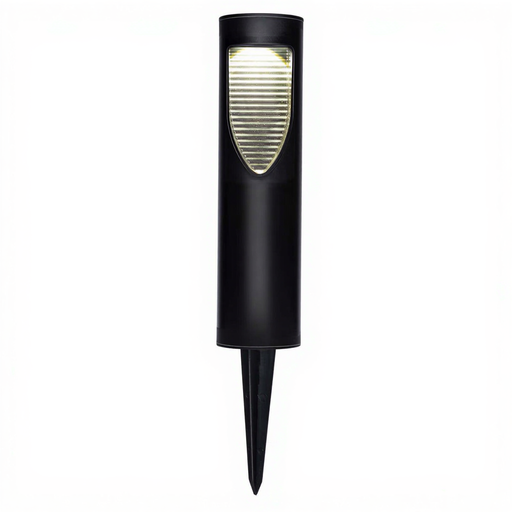
Why this product suits this profile: This compact light with a warm white SMD LED is suitable for patios, flower beds and smaller paths where a subtle lighting effect is preferred.
The light colour is explicitly stated as warm white, removing the uncertainty that can arise from unclear colour descriptions.
SMD LED; warm white light; integrated 600 mAh NiMH battery; automatic switching on and off according to the product description.
Reliable automatic garden lighting depends on more than just the model. Keep the following points in mind during installation:
For lights with replaceable or integrated batteries, follow the relevant disposal instructions. Batteries and electrical appliances must not be disposed of with household waste.
We have put together a complete, regularly updated list of products that fully meet these strict selection criteria and the safety regulations applicable in the EU.
The required charging time depends on the solar panel, battery, time of year and location. Many models need several hours of direct sunlight. When light levels are low, the night-time operating time may be shorter than stated in the product details.
First, check that the power switch is turned on and that the solar panel is receiving enough light. Dirt, shade, a flat or ageing battery, or a blocked sensor can prevent the light from switching on automatically. Stop using any damaged devices.
While operating, solar garden lights draw their energy from the charged battery and do not require a permanent mains connection. As a result, they normally incur no additional electricity costs during operation. However, the purchase price, any replacement batteries and disposal still need to be taken into account.